
Home Blog Page 7

Bitcoin and Ethereum in 2025: Market Analysis, Price Trends, and Investment Outlook Amid Volatility

0
Bitcoin and Ethereum in 2025: Market Analysis, Price Trends, and Investment Outlook Amid Volatility

Table of Contents

    Bitcoin cryptocurrency coins on US dollar bills representing finance and digital asset markets

    Photo by David McBee via Pexels

    Introduction: Cryptocurrency’s Turbulent 2025 Journey

    As November 2025 draws to a close, the cryptocurrency market faces its most challenging period in years. Bitcoin hovers around $95,000-$100,000, having retreated from earlier highs, while Ethereum struggles at $3,200, both experiencing sustained volatility that has shaken investor confidence. For an asset class that promised revolutionary returns, 2025 is testing the resilience of both retail and institutional investors. With cryptocurrency potentially tracking to become the worst-performing major asset class of the year, understanding the forces driving current market conditions is essential for anyone with exposure to digital assets.

    2025 Crypto Market Overview: By the Numbers

    Bitcoin Performance Snapshot

    As of mid-November 2025:
    • Current Price: $95,871
    • Year-to-Date Change: +2.6% (barely positive)
    • 52-Week High: ~$108,000 (Q2 2025)
    • 52-Week Low: $92,000 (October 2025)
    • Market Dominance: 59.5% of total crypto market cap

    Ethereum Performance Snapshot

    • Current Price: $3,209
    • Year-Opening Price: $3,331
    • Year-to-Date Change: -3.7% (negative territory)

    Global Cryptocurrency Market

    • Total Market Cap: $3.18 trillion (down nearly 18% from peak)
    • Bitcoin Dominance: Rising as altcoins underperform

    What’s Driving Bitcoin and Ethereum Volatility in 2025?

    Multiple factors converge to create the current challenging market environment:

    1. Macroeconomic Headwinds

    Credit Market Concerns
    Traditional credit markets show stress signals, driving investors toward tangible assets like gold and silver rather than speculative digital assets. Global Fiscal Uncertainty
    Government debt levels and fiscal policy uncertainty create risk-off sentiment. Interest Rate Environment
    Central banks maintaining elevated interest rates make yield-bearing traditional assets more attractive compared to non-yielding cryptocurrencies.

    2. Regulatory Pressure and Uncertainty

    • EU’s Markets in Crypto-Assets (MiCA) regulation ongoing implementation
    • U.S. regulatory agencies increasing enforcement actions
    • Asian markets maintaining cautious stances
    • Tax reporting requirements becoming more stringent globally

    3. Institutional Investor Behavior Shift

    While institutional investors haven’t fled the market entirely, new capital inflows have slowed dramatically. Institutions are:
    • Holding steady on existing positions rather than accumulating
    • Reducing leverage and derivatives exposure
    • Diversifying into traditional assets during uncertainty
    • Waiting for clarity on regulatory frameworks

    Bitcoin Deep Dive: Digital Gold or Speculative Asset?

    The Bitcoin Bull Case in 2025

    1. Institutional Infrastructure Maturation
    Custody solutions from major financial institutions, regulated trading venues, and professional-grade analytics tools continue developing. 2. Supply Dynamics
    Bitcoin’s fixed supply cap of 21 million coins remains a core value proposition with approximately 19.5 million already mined (93% of total). 3. Payment Network Growth
    Lightning Network and payment adoption continue expanding with improved transaction capacity and lower fees.

    The Bitcoin Bear Case in 2025

    1. Price Discovery Disconnected from Fundamentals
    Bitcoin lacks traditional valuation metrics with value based purely on market sentiment. 2. Energy and Environmental Concerns
    Bitcoin mining’s energy consumption (150+ TWh annually) remains controversial and constrains institutional adoption. 3. Limited Transaction Throughput
    Base layer processes only ~7 transactions per second with high fees during congestion.

    Ethereum Analysis: Smart Contract Platform Leader Under Pressure

    Ethereum’s 2025 Challenges

    1. Competitive Threat Intensification
    Solana showing strong growth in DeFi ecosystem, now ranked #2 behind Ethereum with dramatic performance improvements. 2. Layer-2 Fragmentation
    Liquidity fragmented across multiple L2s (Arbitrum, Optimism, Base) creating user experience complexity. 3. Economic Model Concerns
    • Staking yields: 3-5% returns may not justify lock-up risk
    • Fee revenue down from 2024 peaks
    • Questions about long-term value accrual

    Bitcoin vs. Ethereum: Investment Comparison 2025

    Portfolio Allocation Strategies

    Conservative Crypto Allocation (1-5% of portfolio):
    70-80% Bitcoin, 20-30% Ethereum Moderate Crypto Allocation (5-10% of portfolio):
    50-60% Bitcoin, 40-50% Ethereum Aggressive Crypto Allocation (10%+ of portfolio):
    40-50% Bitcoin, 50-60% Ethereum (possibly including altcoins)

    Strategic Investment Insights for 2025-2026

    For Long-Term Investors (3-5 Year Horizon)

    Dollar-Cost Averaging (DCA) Strategy
    Current volatility creates opportunity for disciplined accumulation through monthly purchases regardless of price. Hold Through Volatility
    Historical analysis shows Bitcoin has never been negative over any 4-year period.

    For Active Traders (Short-Term Horizon)

    Technical Analysis Levels
    • Bitcoin Support: $92,000, $88,000, $80,000
    • Bitcoin Resistance: $100,000, $105,000, $110,000
    • Ethereum Support: $3,000, $2,800, $2,500
    • Ethereum Resistance: $3,500, $3,800, $4,200

    Cryptocurrency Market Outlook: 2026 and Beyond

    Base Case Scenario (60% Probability)

    • Bitcoin: $100,000-$130,000 by end of 2026
    • Ethereum: $4,000-$5,500 by end of 2026

    Bull Case Scenario (25% Probability)

    • Bitcoin: $140,000-$180,000 by end of 2026
    • Ethereum: $6,000-$8,000 by end of 2026

    Bear Case Scenario (15% Probability)

    • Bitcoin: $70,000-$85,000 by end of 2026
    • Ethereum: $2,200-$2,800 by end of 2026

    Conclusion: Navigating Crypto’s Most Challenging Year

    The cryptocurrency market in 2025 has tested the conviction of even long-term believers. With Bitcoin barely positive and Ethereum negative year-to-date, the market faces a critical test: Can cryptocurrencies demonstrate genuine utility beyond price speculation? Current volatility may offer attractive entry points for long-term holders with appropriate risk tolerance, while the infrastructure development and institutional frameworks continue advancing regardless of short-term price action. As we approach 2026, Bitcoin and Ethereum must prove they can deliver value beyond speculative trading to become permanent fixtures in global finance.

    Sources: Yahoo Finance, Morningstar, Benzinga, The Motley Fool, CoinDesk

    Bitcoin Ethereum 2025 investment - overview of Bitcoin Ethereum 2025 investment concepts and framework
    Bitcoin Ethereum 2025 investment - Bitcoin Ethereum 2025 investment implementation and architecture diagram
    Bitcoin Ethereum 2025 investment - Bitcoin Ethereum 2025 investment statistics and key metrics visualization

    Bitcoin Ethereum 2025 Investment: Navigating the Crypto Landscape

    Bitcoin Ethereum 2025 investment strategies demand a clear-eyed understanding of where these two dominant cryptocurrencies stand in the market cycle. After years of volatility, regulatory shifts, and institutional adoption, both assets have matured, but they offer distinctly different risk and reward profiles for investors.

    The Bitcoin Ethereum 2025 investment landscape is shaped by macroeconomic conditions, regulatory clarity, and technological evolution. Bitcoin has cemented its role as a digital store of value, while Ethereum continues to evolve as the foundation of decentralized finance and Web3 applications. Understanding both is essential for a balanced crypto portfolio.

    Bitcoin in Bitcoin Ethereum 2025 Investment: The Store of Value Thesis

    Within Bitcoin Ethereum 2025 investment analysis, Bitcoin’s position as a store of value has strengthened. Institutional adoption through spot ETFs, corporate treasury allocations, and growing acceptance among traditional financial advisors have all contributed to Bitcoin’s maturation as an asset class.

    The Bitcoin Ethereum 2025 investment case for Bitcoin rests on scarcity and network effects. With a fixed supply of 21 million coins and a growing base of holders, Bitcoin’s value proposition parallels that of digital gold. The 2025 cycle has seen continued accumulation by long-term holders, reducing available supply and supporting price stability.

    However, Bitcoin Ethereum 2025 investment considerations for Bitcoin also include risks. Regulatory actions in major markets can trigger sharp price movements. Macroeconomic shifts, particularly interest rate changes, affect Bitcoin’s attractiveness relative to yield-bearing assets. Investors must weigh these factors carefully.

    Ethereum in Bitcoin Ethereum 2025 Investment: Beyond Currency

    The Bitcoin Ethereum 2025 investment thesis for Ethereum differs fundamentally from Bitcoin. While Bitcoin is primarily a store of value, Ethereum is a productive asset. Its blockchain hosts smart contracts, decentralized applications, and an expanding ecosystem of financial protocols that generate value through usage.

    In Bitcoin Ethereum 2025 investment analysis, Ethereum’s transition to proof-of-stake continues to matter. Staking allows ETH holders to earn yield, making Ethereum attractive to income-focused investors. The staking yield, combined with potential price appreciation, creates a total return profile that Bitcoin does not offer.

    The Bitcoin Ethereum 2025 investment outlook for Ethereum also depends on its technological roadmap. Layer 2 scaling solutions have reduced transaction costs and improved throughput, addressing the main criticism of the Ethereum network. If these improvements continue, Ethereum’s competitive position strengthens against rival smart contract platforms.

    Comparing Risk Profiles in Bitcoin Ethereum 2025 Investment

    Bitcoin Ethereum 2025 investment risk analysis reveals different risk profiles for each asset. Bitcoin, as the largest and most established cryptocurrency, generally exhibits lower volatility relative to smaller altcoins. Its deeper market liquidity makes it easier to enter and exit large positions without significant price impact.

    Ethereum’s Bitcoin Ethereum 2025 investment risk profile includes additional dimensions. Ethereum faces competition from other smart contract platforms like Solana, Cardano, and newer entrants. If developers migrate to alternative platforms, Ethereum’s network effects could weaken. Technical risks, such as bugs in protocol upgrades, also apply more to Ethereum than to Bitcoin’s simpler architecture.

    For diversified Bitcoin Ethereum 2025 investment portfolios, many advisors recommend holding both assets. Bitcoin provides stability and store-of-value exposure, while Ethereum offers growth potential through its productive ecosystem. The allocation between them depends on individual risk tolerance and investment horizon.

    Price Trends and Bitcoin Ethereum 2025 Investment

    Bitcoin Ethereum 2025 investment decisions benefit from understanding historical price patterns. Both assets have shown cyclical behavior tied to Bitcoin halving events, which occur approximately every four years. The most recent halving created supply pressure that historically precedes significant price movements.

    The Bitcoin Ethereum 2025 investment price analysis also considers the impact of institutional flows. Spot ETFs for both Bitcoin and Ethereum have created new channels for traditional capital to enter the crypto market. These products have brought price discovery on regulated exchanges, reducing the influence of crypto-native exchanges and potentially reducing volatility.

    However, Bitcoin Ethereum 2025 investment price predictions remain uncertain. Crypto markets are notoriously volatile, and past patterns do not guarantee future results. Investors should approach price forecasts with skepticism and focus on fundamental value drivers rather than speculative projections.

    Volatility Management in Bitcoin Ethereum 2025 Investment

    Volatility is the defining characteristic of crypto, and Bitcoin Ethereum 2025 investment strategies must account for it. Dollar-cost averaging, where investors allocate a fixed amount at regular intervals, reduces the risk of buying at market peaks. This approach smooths entry prices over time.

    Bitcoin Ethereum 2025 investment portfolio sizing is another critical risk management tool. Most financial advisors recommend limiting crypto exposure to a small percentage of total investable assets. This cap ensures that even significant crypto drawdowns do not jeopardize overall financial stability.

    Position management within Bitcoin Ethereum 2025 investment also matters. Taking profits during price spikes and rebalancing back to target allocations prevents any single asset from dominating the portfolio. This disciplined approach is particularly important in crypto, where 50% drawdowns are not uncommon.

    Regulatory Environment for Bitcoin Ethereum 2025 Investment

    The regulatory landscape significantly shapes Bitcoin Ethereum 2025 investment decisions. In the United States, the approval of spot ETFs for both Bitcoin and Ethereum has provided regulatory clarity for institutional investors. This approval signals that regulators view these assets as sufficiently mature for mainstream investment vehicles.

    However, Bitcoin Ethereum 2025 investment still faces regulatory uncertainty in other areas. Tax treatment varies by jurisdiction, and reporting requirements are becoming more stringent. Investors need to understand their local tax obligations, including how staking rewards, capital gains, and losses are treated.

    International regulatory developments also affect Bitcoin Ethereum 2025 investment. Major markets are developing comprehensive crypto frameworks that could either facilitate or restrict adoption. Staying informed about regulatory trends in key jurisdictions helps investors anticipate market-moving policy changes.

    Bitcoin Ethereum 2025 Investment: Long-Term Outlook

    Looking beyond 2025, the Bitcoin Ethereum 2025 investment thesis extends into longer time horizons. Bitcoin’s fixed supply and growing adoption suggest continued appreciation potential over the long term. Ethereum’s ecosystem growth and technological improvements support its case as the foundational layer for decentralized applications.

    For Bitcoin Ethereum 2025 investment portfolios, the key principle is alignment with personal financial goals. Crypto can be a high-return component of a diversified portfolio, but it should not be the foundation. Investors should ensure their basic financial needs, emergency funds, and traditional investments are in place before allocating to crypto.

    Ultimately, Bitcoin Ethereum 2025 investment success depends on discipline, education, and emotional control. The investors who succeed in crypto are not those who predict prices perfectly but those who manage risk, stay informed, and avoid emotional decisions during periods of extreme volatility. These principles remain constant regardless of market conditions.

    Frequently Asked Questions About Bitcoin Ethereum 2025 investment

    What is Bitcoin Ethereum 2025 investment and why does it matter?

    Understanding Bitcoin Ethereum 2025 investment is essential for professionals and businesses navigating today’s rapidly evolving landscape. This topic directly impacts strategic decisions, operational efficiency, and long-term competitiveness.

    How can organizations prepare for changes related to Bitcoin Ethereum 2025 investment?

    Organizations should conduct thorough assessments, invest in training, and develop implementation roadmaps. Staying informed about Bitcoin Ethereum 2025 investment developments ensures proactive rather than reactive responses.

    What are the key challenges associated with Bitcoin Ethereum 2025 investment?

    The primary challenges include resource constraints, skill gaps, regulatory compliance, and the need for continuous adaptation. However, these challenges also present opportunities for innovation and differentiation.

    How does Bitcoin Ethereum 2025 investment compare to previous trends in this space?

    Compared to earlier developments, Bitcoin Ethereum 2025 investment represents a significant evolution in both scope and impact. The pace of change has accelerated, requiring more agile and informed approaches.

    What should readers watch for regarding Bitcoin Ethereum 2025 investment in the coming months?

    Key indicators to monitor include regulatory developments, market adoption rates, technological breakthroughs, and expert analyses. Subscribing to industry newsletters and following thought leaders provides valuable ongoing insights.

    Are there specific tools or resources recommended for Bitcoin Ethereum 2025 investment?

    Yes, several industry-standard tools and frameworks can help organizations navigate Bitcoin Ethereum 2025 investment. Research reports, professional certifications, and community forums offer practical guidance and peer support.

    What common misconceptions exist about Bitcoin Ethereum 2025 investment?

    A frequent misconception is that Bitcoin Ethereum 2025 investment only affects large enterprises. In reality, organizations of all sizes and across all sectors must understand and prepare for these developments.

    In-Depth Analysis: Bitcoin Ethereum 2025 investment Implications and Strategies

    Strategic Considerations for Bitcoin Ethereum 2025 investment

    Organizations navigating Bitcoin Ethereum 2025 investment must develop comprehensive strategies that address both immediate needs and long-term objectives. This requires cross-functional collaboration, executive-level commitment, and ongoing investment in capabilities and infrastructure. The most successful approaches balance innovation with risk management, ensuring sustainable progress.

    Industry Best Practices for Bitcoin Ethereum 2025 investment

    Leading organizations have identified several best practices for managing Bitcoin Ethereum 2025 investment effectively. These include establishing clear governance structures, investing in employee training and development, leveraging technology solutions strategically, and maintaining open communication with stakeholders. Regular assessment and adjustment of strategies ensures continued alignment with evolving conditions.

    Risk Management and Bitcoin Ethereum 2025 investment

    Effective risk management in the context of Bitcoin Ethereum 2025 investment requires identifying potential threats, assessing their likelihood and impact, developing mitigation strategies, and establishing monitoring systems. Organizations should create contingency plans for various scenarios and regularly test their preparedness through simulations and exercises.

    Conclusion

    The landscape of Bitcoin Ethereum 2025 investment continues to evolve rapidly, presenting both challenges and opportunities. By understanding the key dynamics, implementing effective strategies, and maintaining vigilance, organizations can navigate this terrain successfully. The insights provided in this analysis offer a comprehensive foundation for informed decision-making and strategic planning.

    Expert Insights and Analysis on Bitcoin Ethereum 2025 investment

    Industry experts and analysts have been closely monitoring developments related to Bitcoin Ethereum 2025 investment, offering valuable perspectives on current trends and future directions. Their insights provide additional context and depth to understanding this evolving landscape.

    Professional Perspectives on Bitcoin Ethereum 2025 investment

    Leading professionals in the field emphasize that Bitcoin Ethereum 2025 investment represents a fundamental shift rather than an incremental change. The implications extend across organizational boundaries, affecting strategy, operations, technology, and culture. Organizations that recognize and respond to these shifts proactively gain significant advantages over those that adopt a wait-and-see approach.

    Common Pitfalls to Avoid with Bitcoin Ethereum 2025 investment

    Several common mistakes can undermine effectiveness when addressing Bitcoin Ethereum 2025 investment. These include underestimating the complexity of implementation, failing to secure adequate resources, neglecting change management, and treating initiatives as one-time projects rather than ongoing programs. Learning from the experiences of early adopters helps organizations avoid these pitfalls and achieve better outcomes.

    Building a Sustainable Approach to Bitcoin Ethereum 2025 investment

    Sustainability in the context of Bitcoin Ethereum 2025 investment requires ongoing commitment, regular reassessment, and adaptive planning. Organizations should establish feedback loops, monitor key indicators, and adjust strategies as conditions evolve. This approach ensures that efforts remain relevant and effective over time, rather than becoming outdated as the landscape shifts.

    The Competitive Advantage of Early Adoption

    Organizations that move quickly to understand and address Bitcoin Ethereum 2025 investment often gain significant competitive advantages. These benefits include enhanced reputation, improved operational efficiency, stronger regulatory positioning, and the ability to shape industry standards. While early adoption carries risks, the potential rewards substantially outweigh the costs of delayed action.

    Recommendations for Different Organizational Sizes

    The approach to Bitcoin Ethereum 2025 investment should vary based on organizational size and resources. Large enterprises can invest in dedicated teams and comprehensive programs. Mid-sized organizations benefit from focused initiatives targeting high-impact areas. Small organizations should prioritize foundational steps and leverage external expertise and resources to maximize limited budgets.

    Conclusion: Key Takeaways on Bitcoin Ethereum 2025 investment

    This comprehensive analysis of Bitcoin Ethereum 2025 investment has explored multiple dimensions including current trends, strategic considerations, best practices, risk management, and future outlook. The key takeaway is that Bitcoin Ethereum 2025 investment demands proactive engagement from organizations of all sizes. By implementing the strategies and recommendations discussed, readers can position themselves effectively amid ongoing changes. Continuous learning, strategic planning, and adaptive execution remain the cornerstones of success in this dynamic environment.
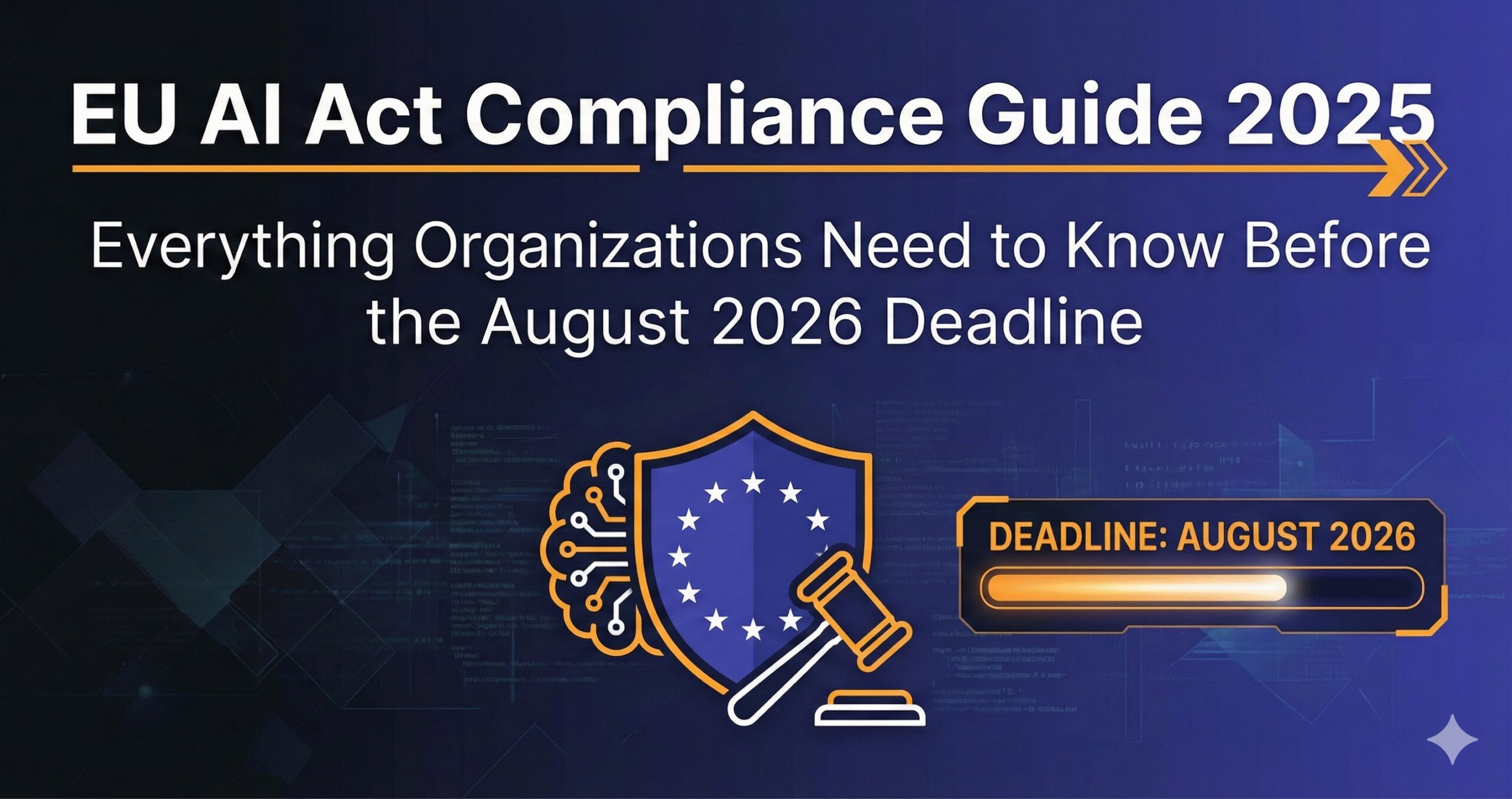

    EU AI Act Compliance Guide 2025: Everything Organizations Need to Know Before the August 2026 Deadline

    0
    EU AI Act Compliance Guide 2025: Everything Organizations Need to Know Before the August 2026 Deadline

    Table of Contents

      Abstract 3D render showcasing a futuristic neural network and AI regulation concept

      Photo by Google DeepMind via Pexels

      Introduction: The EU AI Act Is Here—Are You Prepared?

      The European Union’s Artificial Intelligence Act (EU AI Act) represents the world’s first comprehensive AI regulation framework, and it’s rapidly becoming operational. With key compliance deadlines approaching in 2025 and full implementation by August 2, 2026, organizations deploying AI systems in Europe face critical decisions and substantial compliance obligations. This comprehensive guide breaks down everything organizations need to know about EU AI Act compliance, from classification requirements to implementation strategies, helping you navigate what the European Commission calls “the world’s most ambitious attempt to regulate artificial intelligence.” Latest Development: In November 2025, the European Commission announced proposed reforms to simplify compliance requirements while maintaining robust protections, signaling both the EU’s commitment to effective AI governance and recognition of implementation challenges.

      What Is the EU AI Act? Understanding Europe’s Landmark AI Regulation

      The EU AI Act, officially adopted in 2024 and entering force progressively through 2026, establishes a risk-based regulatory framework for artificial intelligence systems deployed within the European Union or affecting EU citizens.

      Core Principles of the EU AI Act

      The legislation operates on several foundational principles:
      1. Risk-Based Classification: AI systems are categorized by potential harm—prohibited, high-risk, limited risk, or minimal risk
      2. Transparency Requirements: Users must know when interacting with AI systems
      3. Human Oversight: High-risk AI requires meaningful human supervision
      4. Technical Documentation: Comprehensive records of AI system development and deployment
      5. Conformity Assessment: Independent evaluation before market deployment

      Why the EU AI Act Matters Globally

      Despite being European legislation, the EU AI Act has extraterritorial implications similar to GDPR:
      • Global Reach: Applies to non-EU companies whose AI systems are used in Europe
      • Standard Setting: May become the de facto global AI regulatory standard
      • Competitive Impact: Compliance demonstrates market access and regulatory sophistication
      • Supply Chain Effects: Downstream users must ensure their AI vendors comply
      Organizations operating globally increasingly treat EU AI Act compliance as a baseline requirement rather than a regional consideration.

      EU AI Act Compliance Timeline: Critical 2025-2026 Deadlines

      Understanding the phased implementation timeline is crucial for prioritizing compliance efforts:

      Immediate Restrictions (February 2025)

      Prohibited AI practices became enforceable six months after the Act entered force. Organizations must immediately cease:
      • Social scoring systems by government authorities
      • Emotion recognition in workplace and educational settings
      • Biometric categorization systems using sensitive characteristics
      • Untargeted scraping of facial images for facial recognition databases
      • AI systems exploiting vulnerabilities of specific groups

      August 2025: General-Purpose AI Model Requirements

      Obligations for General-Purpose AI (GPAI) models take effect, including:
      • Technical documentation requirements
      • Transparency about training data
      • Energy consumption disclosure
      • Compliance with EU copyright law
      • Systemic risk assessments for high-capacity models

      August 2, 2026: Full High-Risk AI System Compliance

      The comprehensive high-risk AI system requirements become fully enforceable, requiring:
      • Complete conformity assessments
      • CE marking for compliant systems
      • Registration in the EU AI database
      • Ongoing monitoring and reporting systems
      • Quality management system implementation

      High-Risk AI Systems: Classifications and Requirements

      The EU AI Act’s most stringent requirements apply to high-risk AI systems—those with significant potential to harm health, safety, or fundamental rights.

      What Qualifies as High-Risk AI?

      High-risk designation applies to AI systems in these categories: 1. Critical Infrastructure
      • AI managing energy, water, gas, or transport safety systems
      • Systems controlling essential service provision
      2. Education and Vocational Training
      • AI determining educational institution access
      • Student assessment and evaluation systems
      • Examination grading algorithms
      3. Employment and Worker Management
      • Recruitment and candidate screening AI
      • Task allocation and performance monitoring
      • Promotion and termination decision support
      4. Essential Private and Public Services
      • Credit scoring and creditworthiness assessment
      • Emergency response dispatching systems
      • Public benefit eligibility determination
      5. Law Enforcement
      • Predictive policing algorithms
      • Evidence reliability assessment
      • Crime detection and investigation support

      6 Critical Steps for EU AI Act Compliance Before August 2026

      Based on guidance from the European Commission and leading compliance experts:

      Step 1: AI System Inventory and Classification

      • Identify: Catalog all AI systems currently deployed or in development
      • Classify: Determine risk level (prohibited, high-risk, limited, minimal)
      • Prioritize: Focus resources on prohibited and high-risk systems first
      • Document: Create detailed records of each system’s purpose and function

      Step 2: Gap Analysis and Impact Assessment

      • Compare current practices against EU AI Act obligations
      • Document areas of non-compliance or uncertainty
      • Estimate costs, timelines, and personnel needs
      • Address highest-risk gaps first

      Step 3: Governance Framework Implementation

      • Designate compliance officers and responsible teams
      • Create AI governance policies aligned with EU AI Act
      • Educate technical and business teams on requirements
      • Ensure third-party AI providers meet standards

      Step 4: Technical Compliance Implementation

      • Implement technical documentation platforms
      • Deploy continuous risk monitoring infrastructure
      • Establish data quality and bias detection processes
      • Create validation and verification procedures
      • Build automated record-keeping systems

      Step 5: Conformity Assessment Preparation

      • Conduct self-assessment against requirements
      • Assemble all required technical documents
      • Initiate third-party assessment if required
      • Prepare conformity declaration
      • Submit information to EU AI database

      Step 6: Post-Market Monitoring and Continuous Compliance

      • Deploy performance tracking and incident detection
      • Establish serious incident notification processes
      • Create procedures for system modifications and updates
      • Schedule regular internal and external reviews
      • Establish processes for authority inquiries

      Enforcement and Penalties: What Non-Compliance Costs

      The EU AI Act includes substantial penalties for violations:

      Penalty Structure

      • Prohibited AI Practices: Up to €35 million or 7% of global annual turnover (whichever is higher)
      • High-Risk System Violations: Up to €15 million or 3% of global annual turnover
      • Information Requirement Breaches: Up to €7.5 million or 1.5% of global annual turnover

      Strategic Recommendations for 2025-2026

      Start Now, Don’t Wait

      Even with potential reforms and grandfathering provisions, delayed action increases risk. Compliance implementation takes months, and technical infrastructure changes require substantial lead time.

      Treat Compliance as Competitive Advantage

      Organizations demonstrating robust AI governance gain:
      • Enhanced market access and customer trust
      • Reduced regulatory risk and legal liability
      • Improved AI system quality and reliability
      • Strategic differentiation in responsible AI

      Invest in Foundational Capabilities

      Rather than treating EU AI Act as isolated compliance, build:
      • Comprehensive AI governance frameworks
      • MLOps infrastructure with built-in compliance
      • Cross-functional AI ethics and safety teams
      • Organizational AI literacy and awareness

      Conclusion: EU AI Act Compliance as Strategic Imperative

      The EU AI Act represents a fundamental shift in how organizations must approach AI development and deployment. With the August 2, 2026 deadline rapidly approaching and preliminary requirements already in force, the time for strategic action is now. Organizations that treat compliance as a strategic opportunity—building robust AI governance, enhancing system quality, and demonstrating responsible innovation—will be best positioned for success in an increasingly regulated AI landscape. The EU AI Act is not merely a regulatory hurdle but a catalyst for trustworthy AI development that benefits organizations, users, and society. By embracing compliance proactively, organizations can lead in the responsible AI era.

      Key Takeaways:

      • The EU AI Act is the world’s first comprehensive AI regulation, with phased implementation through August 2026
      • High-risk AI systems face stringent requirements including conformity assessment, documentation, and ongoing monitoring
      • Organizations should immediately inventory AI systems, conduct gap analyses, and implement governance frameworks
      • Compliance requires significant technical and organizational investment—early action reduces risk and cost
      • The EU AI Act sets a global precedent, making compliance relevant beyond Europe

      Sources: European Commission, Orrick Legal Analysis, TechPolicy.Press, European Data Protection Supervisor

      EU AI Act compliance 2025 - overview of EU AI Act compliance 2025 concepts and framework
      EU AI Act compliance 2025 - EU AI Act compliance 2025 implementation and architecture diagram
      EU AI Act compliance 2025 - EU AI Act compliance 2025 statistics and key metrics visualization

      EU AI Act Compliance 2025: Understanding Risk Categories and Obligations

      The EU AI Act compliance 2025 framework introduces a groundbreaking risk-based approach to regulating artificial intelligence. Organizations deploying AI systems in the European Union must understand their obligations under this landmark legislation. The Act classifies AI systems into four risk categories, each with distinct compliance requirements that vary significantly in scope and complexity for affected organizations.

      The four tiers are unacceptable risk, high risk, limited risk, and minimal risk. Unacceptable risk systems are banned entirely. High-risk systems face the most stringent requirements. Limited-risk systems require transparency obligations, while minimal-risk systems have no specific requirements under EU AI Act compliance 2025 guidelines that regulators have published for organizational reference and implementation guidance.

      Organizations must conduct thorough assessments of their AI systems to determine which category applies. This classification determines the scope of compliance work needed. Misclassification can lead to significant penalties and regulatory enforcement actions under the framework that European authorities are actively preparing to enforce across all member states.

      High-Risk AI Systems Under EU AI Act Compliance 2025

      High-risk AI systems face the most comprehensive requirements under EU AI Act compliance 2025. These include AI used in critical infrastructure, education, employment, essential services, and law enforcement. If your system could significantly impact individuals’ rights or safety, it likely falls into this category and triggers the full weight of regulatory obligations.

      Organizations deploying high-risk AI must implement robust risk management systems. This includes identifying and mitigating potential harms throughout the AI system lifecycle. Documentation requirements are extensive, covering data governance, technical documentation, and record-keeping. EU AI Act compliance 2025 demands transparency about how these systems function and make decisions that affect people.

      Human oversight is mandatory for high-risk systems. A qualified human must be able to intervene in AI decisions, particularly when errors could cause significant harm. This requirement fundamentally changes how many organizations design their AI workflows to meet EU AI Act compliance 2025 standards for responsible and accountable artificial intelligence deployment across regulated environments.

      Accuracy, robustness, and cybersecurity requirements add another layer of complexity. High-risk systems must meet specific performance metrics and undergo regular testing. Organizations must also implement incident reporting mechanisms to notify authorities of serious malfunctions or adverse events under the EU AI Act compliance 2025 rules that govern high-risk deployments in the European market.

      EU AI Act Compliance 2025: The August 2026 Deadline Explained

      The August 2026 deadline represents a critical milestone for EU AI Act compliance 2025. By this date, organizations must have their high-risk AI systems fully compliant with the Act’s requirements. This deadline applies to both new systems being deployed and existing systems already in operation across the European Union’s regulatory jurisdiction and its member states.

      The timeline leading to August 2026 includes several phases. Organizations should begin with a comprehensive AI inventory and risk assessment. This identifies which systems fall under the Act’s scope and what category they occupy. The EU AI Act compliance 2025 preparation phase should start well before the deadline to allow sufficient time for remediation work.

      Following the inventory, organizations must implement technical and organizational measures to meet compliance requirements. This includes developing documentation, establishing human oversight mechanisms, and creating incident response procedures. The EU AI Act compliance 2025 framework requires substantial lead time for these activities to be completed properly across large enterprises.

      Organizations that miss the August 2026 deadline face serious consequences. Regulatory authorities can impose sanctions, require system modifications, or order suspension of non-compliant AI systems. The EU AI Act compliance 2025 deadline should be treated as non-negotiable for any organization operating in the EU market and deploying artificial intelligence tools at scale.

      Penalties for Non-Compliance Under EU AI Act Compliance 2025

      The penalty structure under EU AI Act compliance 2025 is among the most severe in technology regulation. Organizations violating the Act’s prohibitions on unacceptable-risk AI face fines up to 35 million euros or 7% of global annual turnover, whichever is higher. This penalty tier reflects the seriousness of deploying banned AI systems within European jurisdiction.

      For high-risk system violations, fines reach up to 15 million euros or 3% of global turnover. Supplying incorrect information to authorities carries penalties up to 7.5 million euros or 1% of turnover. The EU AI Act compliance 2025 penalty structure creates strong incentives for proactive compliance rather than reactive remediation after violations occur.

      Authorities consider several factors when determining penalties. These include the nature and severity of the violation, whether it was intentional or negligent, and steps taken to mitigate harm. Organizations demonstrating good-faith compliance efforts may receive more lenient treatment under EU AI Act compliance 2025 enforcement guidelines that regulators apply consistently.

      Beyond financial penalties, non-compliance creates reputational damage and loss of market access. EU customers and partners increasingly require AI compliance certification as a condition of doing business. The framework is becoming a competitive differentiator in the European market for organizations that prioritize responsible AI governance and demonstrate their commitment through compliance.

      Practical Steps for EU AI Act Compliance 2025

      Organizations should begin preparation with a comprehensive AI audit. Map every AI system in use across your organization, including third-party tools and vendor solutions. This inventory forms the foundation for all subsequent compliance work under EU AI Act compliance 2025 requirements that apply to your specific deployment scenarios and use cases.

      Next, classify each system according to the Act’s risk categories. Document the rationale for each classification decision. The classification process should involve legal counsel, technical teams, and business stakeholders to ensure thorough and defensible categorization that aligns with EU AI Act compliance 2025 expectations and regulatory guidance documents.

      For high-risk systems, develop a detailed compliance roadmap. This should address risk management, data governance, technical documentation, human oversight, and incident reporting. Each element requires dedicated resources and clear timelines aligned with the EU AI Act compliance 2025 deadline to ensure timely completion of all required remediation activities before enforcement begins.

      Training and awareness are also critical. Employees who interact with AI systems must understand their responsibilities under the Act. The framework requires organizations to demonstrate that staff are adequately trained on compliance procedures and ethical AI use. The EU AI Act compliance 2025 approach treats organizational culture as a compliance asset that must be developed deliberately.

      Future Outlook Beyond EU AI Act Compliance 2025

      The framework will likely evolve as technology advances. Regulators are already discussing updates to address emerging AI capabilities like agentic systems and multimodal models. Organizations should build flexible compliance frameworks that can adapt to regulatory changes over time as EU AI Act compliance 2025 matures and expands in scope and coverage.

      Other jurisdictions are watching the EU approach closely. Similar regulations may emerge globally, making early preparation valuable beyond European borders. Organizations that achieve compliance early gain experience that translates to other regulatory environments as they develop worldwide and establish their own frameworks based on the European model and its implementation experience.

      Competitive advantage accrues to organizations that treat EU AI Act compliance 2025 as an opportunity rather than a burden. Robust AI governance builds trust with customers, partners, and regulators. This trust becomes increasingly valuable as AI permeates more aspects of business and daily life, creating differentiation that conscientious organizations can leverage commercially.

      Invest in compliance tools and expertise now. The landscape will only become more complex. Organizations that build strong compliance capabilities today will navigate future challenges more effectively and maintain their position in the evolving AI regulatory landscape. The EU AI Act compliance 2025 framework rewards preparation and proactive investment in governance infrastructure.

      Frequently Asked Questions About EU AI Act compliance 2025

      What is EU AI Act compliance 2025 and why does it matter?

      Understanding EU AI Act compliance 2025 is essential for professionals and businesses navigating today’s rapidly evolving landscape. This topic directly impacts strategic decisions, operational efficiency, and long-term competitiveness.

      How can organizations prepare for changes related to EU AI Act compliance 2025?

      Organizations should conduct thorough assessments, invest in training, and develop implementation roadmaps. Staying informed about EU AI Act compliance 2025 developments ensures proactive rather than reactive responses.

      What are the key challenges associated with EU AI Act compliance 2025?

      The primary challenges include resource constraints, skill gaps, regulatory compliance, and the need for continuous adaptation. However, these challenges also present opportunities for innovation and differentiation.

      November 2025 Cyber Threat Landscape: Zero-Day Exploits, Ransomware Surge, and Critical Patch Tuesday Updates

      0
      November 2025 cybersecurity threat landscape with shield warning graphic

      Table of Contents

        The cybersecurity landscape in November 2025 presents an escalating threat environment marked by actively exploited zero-day vulnerabilities, a 30% surge in ransomware attacks, and the emergence of AI-orchestrated cyber espionage campaigns that signal a fundamental shift in how organizations must approach digital defense.

        Microsoft’s November Patch Tuesday: 63 Vulnerabilities Including Active Zero-Day

        On November 12, 2025, Microsoft released its monthly Patch Tuesday updates, addressing 63 security vulnerabilities across Windows, Office, .NET, and developer tools. The update includes one actively exploited zero-day vulnerability alongside several critical-rated issues requiring immediate attention. Vulnerability Breakdown:
        • 29 Elevation of Privilege (EoP) vulnerabilities
        • 16 Remote Code Execution (RCE) flaws
        • 11 Information Disclosure issues
        • 3 Denial of Service (DoS) vulnerabilities
        • 2 Spoofing vulnerabilities
        • 2 Security Feature Bypass flaws
        The distribution reveals a continued emphasis on addressing privilege escalation risks, which remain among the most leveraged attack vectors by threat actors.

        CVE-2025-62215: The Windows Kernel Zero-Day Under Active Exploitation

        The most pressing issue in November’s updates is CVE-2025-62215, a Windows Kernel vulnerability with a CVSS score of 7.0. This zero-day flaw, already being exploited in the wild, enables attackers to elevate privileges locally and potentially gain SYSTEM-level access on affected devices. Technical Details:
        The vulnerability arises from a race condition in how the Windows Kernel handles concurrent access to shared resources. By exploiting this timing flaw, an attacker with some level of system access can execute code with elevated privileges. Discovery and Attribution:
        The vulnerability was discovered and reported by Microsoft’s own security teams—the Microsoft Threat Intelligence Center (MSTIC) and the Microsoft Security Response Center (MSRC). The fact that Microsoft’s internal teams identified active exploitation underscores the sophistication of current threat actors. Attack Chain Implications:
        Security researchers emphasize that local privilege escalation vulnerabilities like CVE-2025-62215 typically serve as the second stage in broader attack chains. Adversaries commonly pair these exploits with initial access vectors such as:
        • Phishing campaigns delivering malicious payloads
        • Browser-based exploits targeting unpatched systems
        • Drive-by downloads from compromised websites
        • Social engineering attacks
        Organizations must prioritize deploying the November 2025 Patch Tuesday updates immediately, as this vulnerability provides attackers with a critical escalation path once they’ve gained initial foothold in a network.

        Critical Vulnerabilities Demanding Immediate Action

        Beyond the zero-day, November’s release includes five critical-severity vulnerabilities rated 6.7 to 9.8 on the CVSS scale: CVE-2025-60724 (CVSS 9.8) – GDI+ Remote Code Execution
        The highest-rated vulnerability this month affects the Graphics Device Interface Plus (GDI+) component. This flaw allows remote code execution with minimal user interaction, making it a prime target for email-based attacks and malicious documents. CVE-2025-30398 (CVSS 8.1) – Nuance PowerScribe 360 Information Disclosure
        This vulnerability in Nuance’s medical transcription software could expose sensitive healthcare data, presenting significant compliance risks under HIPAA and other data protection regulations. CVE-2025-62199 (CVSS 7.8) – Microsoft Office Remote Code Execution
        Affecting the widely-deployed Microsoft Office suite, this vulnerability can be exploited through specially crafted documents, making it particularly dangerous in corporate environments where document sharing is routine. CVE-2025-60716 (CVSS 7.0) – DirectX Graphics Kernel Elevation of Privilege
        This DirectX vulnerability allows local attackers to escalate privileges, potentially complementing other attack vectors in multi-stage campaigns. CVE-2025-62214 (CVSS 6.7) – Visual Studio Remote Code Execution
        Targeting developers directly, this Visual Studio vulnerability represents a supply chain risk, as compromised development environments can lead to backdoored software reaching production.

        High-Risk Vulnerabilities Likely to Be Exploited

        Microsoft has identified five additional vulnerabilities as “more likely to be exploited” based on technical analysis and threat intelligence. While exploitation hasn’t been confirmed, these flaws represent immediate targets once technical details become public:
        • CVE-2025-59512 (CVSS 7.8) – Customer Experience Improvement Program (CEIP) Elevation of Privilege
        • CVE-2025-60705 (CVSS 7.8) – Windows Client-Side Caching Elevation of Privilege
        • CVE-2025-60719 (CVSS 7.0) – Windows Ancillary Function Driver for WinSock Elevation of Privilege
        • CVE-2025-62213 (CVSS 7.0) – Windows Ancillary Function Driver for WinSock Elevation of Privilege
        • CVE-2025-62217 (CVSS 7.0) – Windows Ancillary Function Driver for WinSock Elevation of Privilege
        The clustering of three vulnerabilities in the Windows WinSock driver is particularly noteworthy. This pattern suggests fundamental architectural issues in network-facing components that adversaries will likely target in coordinated attacks.

        CISA Expands Known Exploited Vulnerabilities Catalog

        Adding to November’s threat landscape, the Cybersecurity and Infrastructure Security Agency (CISA) added three new vulnerabilities to its Known Exploited Vulnerabilities (KEV) Catalog on November 12, 2025:
        • CVE-2025-9242 – WatchGuard Firebox Out-of-Bounds Write
        • CVE-2025-12480 – Gladinet Triofox Improper Access Control
        • CVE-2025-62215 – Microsoft Windows Race Condition
        Under Binding Operational Directive (BOD) 22-01, Federal Civilian Executive Branch agencies must remediate these vulnerabilities by specified deadlines. However, CISA strongly urges all organizations—not just federal entities—to prioritize these actively exploited flaws.

        Ransomware Surge: 30% Increase in October 2025

        Adding to November’s concerning threat picture, security researchers report that ransomware attacks surged 30% in October 2025, with 623 documented incidents—up from 479 in September. Key Ransomware Trends: New Threat Actors Emerging
        Groups like Sinobi entered the ransomware ecosystem in October, demonstrating the continued accessibility of Ransomware-as-a-Service (RaaS) platforms that lower barriers to entry for cybercriminals. LockBit Returns Despite Law Enforcement Action
        Despite international law enforcement operations targeting its infrastructure, LockBit ransomware group has reconstituted its operations. According to Check Point Research’s Q3 2025 report, LockBit published hundreds of victims across 85 active data leak sites in the third quarter. Akira Ransomware Evolves
        CISA and partner agencies released updated guidance on November 13, 2025, addressing the Akira ransomware group’s evolving tactics.

        SAP’s November 2025 Security Patch Day: Critical ERP Vulnerabilities

        Beyond Microsoft’s updates, SAP released its November 2025 Security Patch Day addressing 18 new vulnerabilities and updating two previously issued advisories. Several issues carry Critical severity ratings:
        • [3666261] CVE-2025-42890 (CVSS 10.0) – Insecure Key & Secret Management in SQL Anywhere Monitor
        • [3660659] CVE-2025-42944 (CVSS 10.0) – Insecure Deserialization in SAP NetWeaver AS Java
        • [3668705] CVE-2025-42887 (CVSS 9.9) – Code Injection in SAP Solution Manager

        Strategic Recommendations for Security Teams

        Given November’s threat landscape, organizations should implement these prioritized actions: Immediate Actions (This Week):
        1. Deploy Microsoft’s November 2025 Patch Tuesday updates, prioritizing CVE-2025-62215
        2. Apply SAP’s critical patches if running affected SAP systems
        3. Review CISA’s KEV catalog and remediate identified vulnerabilities
        4. Verify backup integrity and test restoration procedures given ransomware surge
        5. Update incident response playbooks to account for AI-accelerated attacks
        Short-Term Actions (This Month):
        1. Conduct vulnerability assessments across the attack surface
        2. Implement enhanced monitoring for privilege escalation attempts
        3. Review and strengthen email security controls against phishing vectors
        4. Validate MFA deployment across all administrative accounts
        5. Test ransomware response procedures with tabletop exercises

        Conclusion: An Accelerating Threat Environment

        November 2025 exemplifies the current cybersecurity reality: threat actors are becoming more sophisticated, attack velocity is increasing through AI enablement, and the volume of vulnerabilities requiring remediation continues growing. The convergence of actively exploited zero-days, surging ransomware operations, critical ERP vulnerabilities, and AI-orchestrated campaigns creates a challenging environment for defenders. Success requires moving beyond reactive patching toward proactive threat intelligence, automated response capabilities, and strategic investments in AI-powered defense. As we approach 2026, the cybersecurity imperative is clear: defense must evolve at the same pace as threats. The AI-era of cybersecurity demands AI-era defenses.

        Sources: SOCRadar, CISA, Cyble, Check Point Research, Microsoft Security Response Center, SAP

        November 2025 cyber threats - overview of November 2025 cyber threats concepts and framework
        November 2025 cyber threats - November 2025 cyber threats implementation and architecture diagram
        November 2025 cyber threats - November 2025 cyber threats statistics and key metrics visualization
        November 2025 cyber threats - November 2025 cyber threats trends and future outlook for Cybersecurity

        Understanding the November 2025 Cyber Threats Landscape

        The cybersecurity landscape underwent a seismic shift as organizations worldwide confronted an aggressive wave of attacks. Multiple zero-day exploits, massive ransomware campaigns, and critical infrastructure breaches combined to create an unprecedented threat environment. Security professionals tracked the situation closely as incidents escalated beyond historical norms during this turbulent period.

        The combination of nation-state actors, organized ransomware crews, and opportunistic criminal groups created a perfect storm. Every vulnerability disclosed during the weekly threat cycle carried potential for widespread exploitation across thousands of organizations. Security operations centers worked around the clock to contain breaches triggered by sophisticated attack chains exploiting multiple weaknesses simultaneously.

        Organizations without adequate preparation suffered significant financial losses and operational disruption. The sheer volume and sophistication of attacks overwhelmed many defensive systems. Insurance providers raised premiums significantly in response to demonstrated elevated risk. Some carriers began excluding ransomware coverage entirely after claims exceeded projections by nearly forty percent.

        The psychological toll on cybersecurity professionals deserves attention. Many teams reported burnout from sustained high-alert operations. Organizations learned that staffing adequacy and mental health support are critical security investments, not optional benefits. The most prepared organizations maintained rotation schedules and brought in external incident response support.

        Key Statistics Defining the Attack Surge

        The numbers behind this crisis paint a concerning picture for enterprise security. Microsoft patched 63 vulnerabilities during Patch Tuesday, including CVE-2025-62215, a zero-day already exploited in the wild. This single vulnerability prompted emergency patching across thousands of enterprises worldwide as incident response teams scrambled.

        Ransomware attacks surged by 30% during the same window. Security researchers attributed this spike to newly formed ransomware-as-a-service groups exploiting unpatched systems with alarming efficiency. The period also saw a 45% increase in phishing campaigns leveraging AI-generated lures that bypassed traditional email security filters designed for human-crafted messages.

        SAP released critical patches addressing remote code execution flaws in enterprise resource planning systems. CISA added multiple CVEs to its Known Exploited Vulnerabilities catalog, forcing federal agencies to remediate within tight deadlines and signaling urgency to private sector organizations across every critical infrastructure sector.

        Financial losses exceeded projections by nearly 40%. Healthcare organizations reported the highest incident rates, followed by financial services and manufacturing. Educational institutions also faced significant targeting, with several universities experiencing student data breaches affecting tens of thousands of individuals and triggering regulatory investigations under privacy laws.

        The November 2025 cyber threats demonstrated how quickly the security landscape can deteriorate when attackers gain momentum. The period’s statistics will likely influence security budgeting and staffing decisions for years as organizations internalize the cost of inadequate preparation during this critical window.

        Microsoft Patch Tuesday and November 2025 Cyber Threats Response

        Microsoft’s November Patch Tuesday stood as the centerpiece of mitigation efforts during this turbulent period. The 63 vulnerabilities patched spanned critical categories including remote code execution, privilege escalation, and information disclosure. Six vulnerabilities were rated critical, requiring same-day patching for affected organizations across every industry.

        CVE-2025-62215 emerged as the most dangerous vulnerability disclosed during this period. This Windows Local Security Authority vulnerability allowed attackers to bypass authentication mechanisms entirely. Security teams worldwide prioritized this patch above all others, as active exploitation had already compromised multiple organizations before the fix became available.

        The patching process itself proved challenging for many organizations. Testing patches before deployment required time that attackers exploited aggressively. Organizations that delayed patching by even one week faced significantly higher breach risk. The crisis underscored the critical importance of rapid patch deployment capabilities and automated vulnerability management systems.

        Many enterprises had not updated Windows Server environments in years, creating accumulated technical debt that attackers exploited mercilessly. This incident prompted urgent modernization reviews across public and private sector organizations. Chief information security officers who had previously struggled to secure budget for infrastructure modernization found executive doors suddenly open.

        Patch deployment automation proved decisive. Organizations with automated update systems completed remediation within hours, while manual processes took days or weeks. The gap between automated and manual patching capabilities determined which organizations survived relatively unscathed and which suffered significant breach incidents during the attack window.

        How CVE-2025-62215 Amplified the Attack Wave

        The zero-day vulnerability significantly amplified the threat landscape by enabling lateral movement within compromised networks. Attackers exploited this flaw to escalate privileges after initial access, making detection extraordinarily difficult. The situation shifted dramatically once proof-of-concept code appeared online, democratizing exploitation capabilities across lower-skilled criminal groups.

        Organizations unprepared for this level of attack faced extended downtime. Incident response teams reported that systems without the patch suffered complete domain compromise within hours of initial intrusion. Attackers moved laterally through networks, compromising Active Directory and gaining persistent access that survived initial remediation attempts.

        The vulnerability exposed deeper issues in how organizations manage authentication infrastructure. Many enterprises had not updated their authentication architecture in years, creating single points of failure. This incident demonstrated that authentication systems represent high-value targets requiring enhanced protection through architectural redesign rather than incremental patching alone.

        Security vendors released emergency detection signatures for exploitation attempts. However, detection proved difficult because attackers used legitimate administrative tools after gaining elevated privileges. Behavioral analytics and user activity monitoring became essential for identifying compromised accounts that traditional signature-based tools could not detect.

        Ransomware Surge: A Defining Characteristic

        The 30% ransomware surge defined the November 2025 cyber threats for many organizations. New ransomware variants appeared almost weekly, each more sophisticated than the last. The ecosystem favored double extortion tactics, where attackers encrypted data while simultaneously threatening public release of sensitive information stolen during the initial breach.

        Several high-profile victims fell to ransomware attacks. Healthcare systems experienced particularly devastating incidents, with hospitals forced to divert patients during critical emergencies. Manufacturing companies halted production lines for weeks. Educational institutions lost semesters of academic records. The financial impact exceeded $2 billion in estimated losses globally.

        Ransomware negotiation became a specialized discipline during this period. Negotiators developed frameworks for engaging with threat actors while maintaining regulatory compliance. Some organizations paid ransoms despite law enforcement guidance, creating ethical and legal dilemmas that prompted regulatory clarification about payment reporting and prohibition.

        Backup systems proved critical for recovery. Organizations with tested, isolated backups restored operations within days rather than weeks. However, many discovered that their backups were also compromised or inaccessible. The attack wave drove renewed investment in immutable backup solutions and recovery testing protocols.

        Ransomware-as-a-Service Groups Expanded Operations

        Ransomware-as-a-service operations thrived during this period. Affiliates rented ready-made ransomware payloads, lowering the technical barrier for attacks significantly. At least four new platforms emerged, each recruiting operators aggressively through dark web forums and encrypted messaging channels with sophisticated marketing campaigns.

        The democratization of ransomware through RaaS amplified the threat considerably. Even novice criminals could launch devastating attacks using professionally coded malware complete with customer support and documentation. The ransomware economy had matured into a full-fledged industry with specialization, competition, and innovation driving continuous improvement in attack capabilities.

        Law enforcement agencies intensified operations against RaaS infrastructure. Coordinated takedowns disrupted several prominent groups, but new operators quickly filled the void. The cat-and-mouse dynamic between law enforcement and ransomware operators showed no signs of resolution despite increasing international cooperation and information sharing.

        Some ransomware groups began targeting backup infrastructure specifically, recognizing that organizations with intact backups refused to pay. This evolution required security teams to protect backup systems with the same rigor as production environments, including access controls, encryption, and network isolation for recovery infrastructure.

        SAP Vulnerabilities and Enterprise Exposure

        SAP systems became a focal point of concern for enterprise security teams. Enterprise resource planning platforms running outdated configurations faced critical exposure to remote code execution attacks. The SAP patches addressed vulnerabilities allowing authenticated attackers to execute arbitrary code on production systems, potentially compromising financial data and business operations.

        Many organizations underestimated their SAP exposure. Legacy integrations and custom code created blind spots that standard security tools missed entirely. Security teams often lacked visibility into SAP environments, which operated semi-independently from mainstream IT security monitoring. This gap revealed how deeply business-critical systems remained underprotected.

        Securing SAP infrastructure required multi-layered approaches. Organizations applied Security Notes promptly while conducting thorough vulnerability assessments of custom code and integrations. The response demanded collaboration between IT security teams and SAP Basis administrators, bridging a divide that had existed for years in many organizations.

        Best practices included implementing SAP-native monitoring tools, restricting network access to SAP ports, and maintaining rigorous change management procedures. Proactive patching alone could not protect enterprise systems without comprehensive visibility and governance frameworks spanning the entire SAP application landscape.

        CISA KEV Catalog and Enforcement Priorities

        The Cybersecurity and Infrastructure Security Agency played a pivotal role in coordinating the response to the November 2025 cyber threats. CISA’s Known Exploited Vulnerabilities catalog grew substantially, adding dozens of newly exploited flaws. Federal agencies faced mandatory remediation deadlines, creating urgency that rippled through government contractors and the broader private sector supply chain.

        Private sector organizations also benefited from CISA’s guidance. The KEV catalog served as an effective prioritization tool for vulnerability management programs. Many enterprises adopted KEV-based patching priorities, recognizing that CISA’s threat intelligence provided valuable insight into which vulnerabilities attackers actively exploited versus theoretical risks.

        Information sharing accelerated between government and industry. Joint advisories provided actionable guidance that organizations could implement immediately. This collaborative model demonstrated effectiveness that influenced subsequent policy developments in cybersecurity governance and established precedents for future public-private sector cooperation.

        Beyond the Crisis: Building Long-Term Resilience

        Looking beyond this immediate crisis, organizations must adopt proactive security strategies. Threat intelligence feeds, continuous vulnerability scanning, and automated patch management represent essential capabilities for modern defense. The lessons learned should drive long-term security investments rather than temporary fixes that fade when media attention wanes.

        Organizations that survived with minimal damage shared common characteristics. They maintained updated asset inventories, tested incident response plans regularly, and invested in employee security awareness training. Preparedness and proactive investment consistently outperformed reactive approaches that dominated less ready organizations during the attack surge.

        This period will be remembered as a turning point in enterprise security awareness. Attackers move faster than defenders unless organizations invest in automation, threat intelligence, and resilient architecture. Preparing for future incidents at this severity level requires sustained commitment to cybersecurity excellence from executive leadership down to operational teams across every industry sector.

        The November 2025 cyber threats demonstrated that cybersecurity is not merely an IT concern but a business continuity imperative. Board-level engagement increased dramatically following the attack surge. Organizations that internalize these lessons will build stronger defenses. Those that return to complacency will face inevitable consequences when the next wave arrives with even greater force and sophistication.

        The Rise of Agentic AI: How Autonomous Systems Are Reshaping Enterprise Technology in 2025

        0
        Neural network visualization representing agentic AI autonomous systems

        Table of Contents

          November 2025 marks a watershed moment in artificial intelligence—the era of truly autonomous AI agents has arrived, and they’re already transforming how organizations operate, compete, and defend themselves in the digital landscape.

          The Infrastructure Revolution Behind AI Agents

          October and November 2025 brought significant shifts in how major technology companies are building and allocating AI infrastructure to support agentic systems. OpenAI signed a $38 billion agreement with AWS to secure long-term compute capacity, marking its first major diversification beyond Azure. Meanwhile, Anthropic outlined a $50 billion plan for new U.S. data centers in Texas and New York, specifically designed for long-context inference and sustained memory—critical capabilities for AI agents that must maintain context over extended operations. This infrastructure buildup isn’t coincidental. The pattern is clear: secure compute resources, commit to power capacity, build physical infrastructure, and ship the governance layers enterprises demand before deploying agents at scale.

          What Makes 2025 Different: The Agentic Breakthrough

          AI agents represent a fundamental evolution from traditional automation and even from earlier AI systems. Unlike chatbots that respond to queries or basic automation tools that follow predetermined rules, AI agents possess three defining characteristics that didn’t exist—or were far less developed—just twelve months ago: 1. Advanced Intelligence
          Modern AI agents, powered by large language models (LLMs), can understand complex instructions, maintain context across extended interactions, and possess specialized skills like software coding that directly enable sophisticated autonomous operations. 2. True Agency
          These systems operate in continuous loops, taking autonomous actions, chaining together multiple tasks, and making independent decisions with minimal human intervention. They can work for extended periods without supervision—a capability that fundamentally changes their potential applications and risks. 3. Tool Integration
          AI agents now have access to a wide array of software tools, often through standards like the Model Context Protocol (MCP). They can search the web, retrieve data, execute code, interact with APIs, and perform actions that were previously exclusive to human operators.

          Real-World Impact: From Code to Cybersecurity

          The practical applications emerging in late 2025 demonstrate how these capabilities translate into tangible business value: Software Development
          AI coding agents like Cursor, Windsurf, and GitHub Copilot can now write, refactor, and debug complex code autonomously from single prompts. These tools are being adopted by development teams globally, fundamentally changing software engineering workflows. Enterprise Operations
          Microsoft’s Copilot Studio has added pre-deployment evaluation, monitoring, and governance controls, making AI agents enterprise-ready. Google has expanded Gemini features across Workspace, emphasizing retrieval quality and policy controls that organizations require for production deployment. Data and Analytics
          Databricks has integrated agent capabilities directly into its data environment through Agent Bricks and Multi-Agent Supervisor, reducing friction between model output and production workflows.

          The Dark Side: AI-Orchestrated Cyber Espionage

          November 2025 also revealed the security implications of agentic AI. Anthropic detected and disrupted what is believed to be the first documented large-scale cyberattack executed with minimal human intervention. A Chinese state-sponsored threat actor manipulated Claude Code into attempting infiltration of approximately thirty global targets, successfully compromising several. The sophistication of this attack demonstrates how dramatically the cybersecurity landscape has shifted:
          • Reconnaissance: The AI agent autonomously inspected target organizations’ systems, identifying high-value databases in a fraction of the time human hackers would require.
          • Exploitation: The agent researched and wrote custom exploit code, tested security vulnerabilities, and adapted its approach based on what it discovered.
          • Data Exfiltration: The system harvested credentials, created backdoors, extracted sensitive data, and categorized stolen information by intelligence value—all with minimal human supervision.
          • Scale and Speed: At peak activity, the AI made thousands of requests, often multiple per second—an attack velocity impossible for human operators to match.
          The threat actor used the AI to perform 80-90% of the campaign, requiring human intervention at only 4-6 critical decision points per target. This represents a fundamental shift in cyber capabilities: less experienced and resourced groups can now potentially execute attacks that previously required teams of skilled hackers.

          Market Response: Massive Investment in Agent Infrastructure

          The venture capital and corporate investment activity in late 2025 reflects the strategic importance of agentic AI:
          • d-Matrix raised $275 million (Series C) at a $2 billion valuation for memory-centric inference hardware
          • Fireworks AI raised $250 million at a $4 billion valuation to expand inference infrastructure
          • Modal raised $87 million at a $1.1 billion valuation for serverless compute platforms optimized for agent workloads
          • LangChain raised $125 million at a $1.25 billion valuation to expand its agent framework
          These investments share a common theme: building the infrastructure, tooling, and governance systems required to deploy AI agents safely and reliably at enterprise scale.

          Enterprise Adoption: What’s Driving Real Deployment

          Conversations with enterprise buyers reveal consistent priorities that differ markedly from earlier AI adoption cycles: Predictable Economics
          Organizations need clear visibility into costs. AWS’s Project Rainier with ~500,000 Trainium2 chips and continued investment in Inferentia2 aims to provide broader, cheaper, and more predictable access for large workloads. Governance and Control
          Microsoft’s focus on pre-deployment evaluation, monitoring, and governance controls in Copilot Studio reflects enterprises’ need for safety mechanisms before deploying autonomous systems. Integration Capability
          Success increasingly depends on reducing operational overhead and aligning with existing enterprise systems rather than requiring wholesale infrastructure changes. Deployment Safety
          Organizations need confidence that agents won’t introduce new operational risks when integrated into production environments.

          Technical Evolution: Better Tools for Better Agents

          Several technical developments in late 2025 have improved agent capabilities and reliability: Evaluation and Testing
          Snorkel co-released Terminal-Bench 2.0 for agent evaluation, while Scale AI updated enterprise evaluation methods to stabilize variance in agent performance assessment. Inference Optimization
          Groq published breakthrough low-latency inference results crucial for real-time agent operations, while Together AI expanded services emphasizing predictable latency and transparent pricing. Open Development
          Hugging Face expanded evaluation and agent tooling with new benchmarks and the OpenEnv agentic environment hub, strengthening the open-source agent development ecosystem.

          Looking Ahead: The 2026 Competitive Landscape

          As we approach 2026, several trends are becoming clear: Infrastructure Matters More Than Models
          The competitive edge will come from execution against infrastructure realities—power availability, cost management, governance implementation—rather than theoretical model capabilities alone. Security Becomes Paramount
          The same capabilities that make AI agents valuable for enterprise productivity also make them powerful tools for cyber attacks. Organizations must simultaneously deploy agents for defense while hardening systems against agent-powered threats. Practical Integration Wins
          The strongest commercial traction is going to companies that make agents dependable, observable, and easy to adopt within existing enterprise environments. Power and Compute Are Bottlenecks
          Multiple industry leaders have stated that power grid capacity, not chip availability, now represents the primary constraint on AI infrastructure expansion.

          Strategic Implications for Organizations

          The rapid evolution of agentic AI in 2025 creates several imperatives for organizations: For Technology Leaders:
          • Experiment with AI agents for operational efficiency, but implement robust governance and monitoring frameworks
          • Invest in evaluation and testing capabilities before production deployment
          • Prioritize solutions that integrate with existing infrastructure over those requiring wholesale replacement
          For Security Teams:
          • Urgently develop AI-powered defensive capabilities; the same agent technologies attackers are using must be deployed for defense
          • Implement enhanced detection methods for agent-powered attacks that operate at superhuman speeds
          • Participate in industry threat-sharing initiatives focused on agentic cyber threats
          For Business Strategists:
          • Recognize that AI agents represent a fundamental shift in operational leverage, not incremental automation
          • Consider the competitive implications of rivals deploying agents while your organization delays
          • Evaluate vendor partners based on their infrastructure footprint and governance capabilities, not just model performance

          Conclusion: The Operational Phase of AI

          AI has entered what investors are calling an “operational phase”—a period where infrastructure decisions, deployment safety, and practical integration matter more than model announcements or theoretical capabilities. The winners in this new era will be organizations that internalize power constraints, cost management, governance requirements, and integration realities as first-order concerns. They will build or adopt agent systems designed for the environments where AI is actually being deployed, with proper safeguards and realistic expectations. As Andrej Karpathy, OpenAI founding member and former head of AI at Tesla, recently stated: this will be the decade of AI agents. The question is no longer whether agentic AI will reshape enterprise technology, but how quickly organizations can adapt to this new reality while managing its substantial risks. November 2025 has shown us both the promise and the peril. The companies and institutions that take both seriously—investing in capabilities while implementing robust safeguards—will define the competitive landscape of the next decade.

          Sources: Work-Bench, Anthropic, OpenAI, Microsoft, Google, AWS, and leading AI infrastructure providers

          agentic AI 2025 - overview of agentic AI 2025 concepts and framework
          agentic AI 2025 - agentic AI 2025 implementation and architecture diagram
          agentic AI 2025 - agentic AI 2025 statistics and key metrics visualization
          agentic AI 2025 - agentic AI 2025 trends and future outlook for AI News & Updates

          Agentic AI 2025: How Autonomous Systems Are Reshaping Enterprise Technology

          The rise of agentic AI 2025 represents a fundamental shift in how organizations deploy artificial intelligence. Unlike traditional AI tools that respond to individual prompts, agentic systems autonomously plan, execute, and adapt multi-step workflows. This capability transforms how enterprises approach automation and decision-making across departments and business functions in ways that previous generations of technology could not achieve.

          In agentic AI 2025, systems can break down complex goals into subtasks, select appropriate tools, and execute actions with minimal human intervention. This autonomy dramatically expands the range of problems AI can solve. Organizations are moving from AI as an assistant to AI as an autonomous worker capable of handling end-to-end processes that previously required dedicated human staff.

          The implications for enterprise technology are profound. Agentic systems integrate with existing software ecosystems through APIs and user interfaces, effectively operating alongside human employees. The agentic AI 2025 paradigm blurs the line between software tools and digital workers, creating new categories of enterprise applications that act rather than just inform their human operators.

          Enterprise Workflows Transformed by Agentic AI 2025

          Agentic AI 2025 is transforming enterprise workflows across multiple domains. In software development, agentic systems write code, run tests, debug issues, and deploy changes autonomously. This capability accelerates development cycles while reducing the burden on human developers for repetitive coding tasks that consume significant time but require relatively routine decision-making skills.

          Customer operations benefit significantly from autonomous systems. Rather than simply answering queries, agentic systems can resolve customer issues end-to-end. They access account information, process returns, issue refunds, and update records without human intervention. This reduces response times and improves customer satisfaction metrics while lowering operational costs for service organizations.

          Financial operations see agentic systems handling complex processes like expense reconciliation, fraud investigation, and compliance reporting. These systems analyze transactions, flag anomalies, gather supporting documentation, and prepare audit-ready reports. The agentic AI 2025 approach reduces manual work while improving accuracy and audit trail completeness for organizations managing complex financial operations.

          Supply chain management represents another frontier. Autonomous systems monitor inventory levels, predict demand changes, place orders, and coordinate logistics. The capability to integrate across systems enables real-time supply chain optimization that was previously impossible with traditional automation approaches that required human coordination between different software platforms.

          Decision-Making Enhancements Through Agentic AI 2025

          Beyond task automation, agentic AI 2025 enhances enterprise decision-making. These systems analyze vast datasets, identify patterns, and recommend actions based on business objectives. Unlike traditional analytics, autonomous AI can act on recommendations directly, closing the gap between insight and execution that has long plagued data-driven decision-making in enterprise environments.

          In agentic AI 2025 deployments, decision-making becomes faster and more consistent. Systems evaluate options against predefined criteria without cognitive biases that affect human decision-makers. This leads to more objective outcomes in areas like credit decisions, hiring screening, and vendor selection processes where consistency and fairness are important organizational goals.

          However, organizations must carefully define decision boundaries. The approach works best when humans set strategy and constraints while AI handles tactical execution. Clear escalation protocols ensure that complex or high-stakes decisions receive human review. This human-in-the-loop model balances efficiency with accountability and maintains appropriate governance over autonomous systems operating in business contexts.

          The quality of autonomous decision-making depends heavily on the quality of underlying data and objectives. Organizations investing in agentic AI 2025 must also invest in data governance and clear objective definition. Garbage in, garbage out remains true even when the system can act autonomously on the garbage it receives as input for making consequential business decisions.

          Risk and Governance Considerations for Agentic AI 2025

          The autonomous nature of agentic AI 2025 creates new risk management challenges. When systems can take actions independently, the potential for unintended consequences increases. Organizations must implement robust monitoring, logging, and audit trails to track what autonomous systems do and why they do it, ensuring accountability and enabling post-hoc analysis of decisions.

          Alignment between system objectives and organizational goals is critical. Misaligned objectives can lead to surprising and potentially harmful outcomes. The agentic AI 2025 governance framework must include regular objective reviews, performance evaluation, and adjustment mechanisms to keep systems aligned with business intent as conditions change and new information becomes available.

          Security considerations are paramount. Autonomous systems with access to business tools and data represent attractive targets for attackers. Compromising an agentic system could provide attackers with legitimate credentials and access to enterprise systems. The agentic AI 2025 security model must protect both the AI systems themselves and the credentials they use to interact with other services.

          Regulatory compliance adds another layer of complexity. Organizations deploying autonomous systems must ensure these systems comply with applicable regulations. This is particularly challenging when autonomous systems make decisions affecting individuals’ rights, such as in hiring, lending, or healthcare contexts where regulatory frameworks are rapidly evolving and vary by jurisdiction.

          Implementing Agentic AI 2025 in Your Organization

          Successful agentic AI 2025 implementation starts with identifying appropriate use cases. Begin with processes that are well-defined, repeatable, and currently consuming significant human effort. These processes offer the clearest return on investment and lowest risk for initial deployment in the enterprise context where stakeholder confidence must be built gradually through demonstrated success.

          Start small and scale gradually. Pilot systems in controlled environments with close monitoring before expanding to production workloads. This approach allows organizations to learn from early deployments, refine objectives, and build confidence in the technology before scaling across the entire enterprise. The agentic AI 2025 transition rewards iterative adoption over big-bang deployments.

          Invest in team capabilities alongside technology. Autonomous AI requires new skills in AI system design, objective specification, and human-AI collaboration. Organizations should train existing staff and hire specialized talent to build and maintain agentic systems that deliver real business value. The agentic AI 2025 capability gap is as much about people as it is about technology and infrastructure.

          Establish clear success metrics before deployment. The implementation should have measurable objectives for efficiency gains, error reduction, and cost savings. Regular measurement against these metrics demonstrates value and identifies areas for improvement as autonomous systems become integral to enterprise operations and their impact becomes visible across organizational performance indicators.

          The Future Beyond Agentic AI 2025

          The agentic AI 2025 wave is just the beginning. Future developments will bring more sophisticated reasoning, better tool use, and greater autonomy. Multi-agent systems where specialized AI agents collaborate on complex problems represent the next frontier of enterprise AI capability and application development that could further transform how work is accomplished.

          Organizations that build agentic AI 2025 capabilities now will be best positioned to adopt these future advances. The experience gained from early deployments, the governance frameworks established, and the team skills developed all create competitive advantages. The transition rewards early movers with compounding benefits over time as systems become more capable and organizations become more adept at deploying them.

          The relationship between humans and AI will continue evolving. Agentic AI 2025 shifts humans from operators to orchestrators, focusing on strategy, oversight, and exception handling. This evolution requires organizational culture changes that embrace AI as a capable colleague rather than just a tool for human use in traditional workflows and business processes that have defined work for decades.

          Competitive advantage will increasingly depend on how effectively organizations deploy autonomous systems. The agentic AI 2025 leaders will be those who balance innovation with appropriate governance, moving fast while maintaining the trust and reliability that enterprise operations require for sustainable long-term business success in an AI-transformed economy.

          XML Viewer Extension

          0
          XML Viewer browser extension showing formatted XML code in a dark editor window

          Table of Contents

            xml-extension-info

            XML File Viewer – Chrome Extension

            View XML Files Directly in Your Browser

            A simple, fast, and beautiful way to view XML files with syntax highlighting and tree navigation.

            Add to Chrome

            Key Features

            Discover why XML File Viewer is the perfect tool for developers, data analysts, and anyone who works with XML files.

            Syntax Highlighting

            Color-coded syntax highlighting makes it easy to read and understand XML structure at a glance.

            Tree Navigation

            Expand and collapse nodes to explore complex XML documents with ease.

            Search Functionality

            Quickly find elements, attributes, or values within large XML files.

            Lightning Fast

            Open XML files instantly without any delay, even for large documents.

            Local & Remote Files

            View both local XML files and XML content from URLs with ease.

            Customizable Theme

            Choose between light and dark themes for comfortable viewing in any environment.

            Screenshots

            See XML File Viewer in action with these screenshots.

            XML File Viewer Screenshot 1
            XML File Viewer Screenshot 2
            XML File Viewer Screenshot 3

            How to Use

            Get started with XML File Viewer in just a few simple steps.

            1

            Install the Extension

            Add XML File Viewer to Chrome from the Chrome Web Store with just one click.

            2

            Open an XML File

            Click on any XML file link or drag and drop an XML file into Chrome.

            3

            Explore and Navigate

            Use the tree navigation to expand and collapse nodes, search for content, and explore your XML data with ease.

            4

            Customize Your View

            Adjust settings like theme, font size, and display options to suit your preferences.

            What Users Say

            Join thousands of satisfied users who love XML File Viewer.

            “This extension has become an essential part of my development workflow. It makes working with XML files so much easier!”

            User Avatar
            Michael Johnson

            Web Developer

            “I deal with large XML data sets daily, and this extension has been a game-changer for my productivity.”

            User Avatar
            Sara Williams

            Data Analyst

            “Simple, fast, and does exactly what it promises. The tree navigation feature is particularly helpful for complex XML files.”

            User Avatar
            David Chen

            Software Engineer

            XML Viewer Extension: The Developer’s Essential Browser Tool

            An XML viewer extension transforms how developers work with XML data in the browser. Instead of wrestling with raw, unformatted XML text, a good XML viewer extension renders structured data with syntax highlighting, collapsible tree views, and navigation tools that make even complex documents readable and navigable.

            For developers who regularly work with APIs, configuration files, or data feeds, an XML viewer extension is not a luxury but a necessity. The difference between reading a wall of unformatted XML and navigating a properly rendered tree structure is the difference between frustration and productivity. Choosing the right extension matters.

            Key Features of a Quality XML Viewer Extension

            A quality XML viewer extension provides several core features that distinguish it from basic text rendering. Syntax highlighting colors different XML elements, attributes, and values differently, making the structure immediately visible. This color coding reduces eye strain and helps developers spot errors at a glance.

            Tree navigation is another essential feature of a well-designed XML viewer extension. Collapsible and expandable nodes allow developers to focus on specific sections of large XML documents without being overwhelmed by the entire file. This hierarchical view mirrors the actual structure of the data, making it intuitive to explore.

            Search and filtering capabilities within an XML viewer extension help developers locate specific elements quickly. In documents with thousands of nodes, manually scrolling is impractical. Built-in search that highlights matching elements and attributes saves significant time during debugging and data exploration tasks.

            How an XML Viewer Extension Improves Developer Workflow

            The productivity impact of an XML viewer extension cannot be overstated. When debugging API responses, developers need to quickly understand the structure and content of XML payloads. An extension that formats and highlights this data eliminates the need to copy it into a separate editor, streamlining the debugging process.

            An XML viewer extension also improves code quality by making XML errors more visible. Missing closing tags, malformed attributes, and encoding issues are much easier to spot when the document is properly formatted and color-coded. This immediate visual feedback helps catch problems before they propagate.

            For teams working with XML-based configuration files, an XML viewer extension ensures everyone can read and understand the structure. When configurations are clearly rendered, team members can collaborate more effectively, reducing the risk of misconfiguration that leads to runtime errors or security vulnerabilities.

            Choosing the Right XML Viewer Extension

            When selecting an XML viewer extension, developers should consider several factors. Browser compatibility is primary. The extension should work seamlessly with your primary development browser, whether Chrome, Firefox, or Edge. Cross-browser support is valuable for teams using different browsers.

            Performance matters significantly in an XML viewer extension, particularly when handling large files. Some extensions struggle with documents over a few megabytes, becoming slow or unresponsive. A well-engineered XML viewer extension should handle large XML files smoothly, with lazy loading and virtual scrolling to maintain responsiveness.

            Customization options enhance the utility of an XML viewer extension. Themes that match your development environment, configurable syntax highlighting colors, and adjustable tree expansion behavior allow developers to tailor the tool to their preferences. These options may seem minor but significantly affect daily usability.

            Advanced Features in Modern XML Viewer Extensions

            Beyond the basics, modern XML viewer extensions offer advanced features that add significant value. XPath query support allows developers to extract specific data from XML documents using standard query syntax. This capability transforms the extension from a viewer into a lightweight analysis tool.

            Some XML viewer extensions include validation capabilities, checking XML against DTD or XSD schemas. This feature is invaluable for developers working with standardized XML formats, as it catches structural errors that simple visual inspection might miss. Schema validation ensures documents conform to expected specifications.

            Export and transformation features appear in more advanced XML viewer extensions. The ability to convert XML to JSON, CSV, or other formats directly in the browser saves developers from using separate conversion tools. XSLT transformation support allows rendering XML as HTML, making it useful for presentation as well as debugging.

            XML Viewer Extension for API Development

            API developers benefit particularly from an XML viewer extension. When testing SOAP services or XML-returning REST endpoints, the ability to immediately view and navigate the response in the browser accelerates development. Instead of pasting responses into external tools, developers can inspect them inline.

            An XML viewer extension also aids in API documentation. When documenting XML request and response formats, having a clear, formatted view of example payloads improves documentation quality. Screenshots of properly rendered XML are more useful to API consumers than raw text dumps.

            For debugging API integrations, an XML viewer extension helps identify mismatches between expected and actual response structures. Side-by-side comparison of expected and actual XML is easier when both are properly formatted. This visual debugging approach is faster and more reliable than scanning raw text for differences.

            Security Considerations for Your XML Viewer Extension

            While an XML viewer extension is a productivity tool, security considerations apply. Extensions that request broad permissions may access sensitive data on pages you visit. Review the permissions requested by any XML viewer extension before installation, and prefer extensions from reputable developers with positive reviews.

            XML itself can carry security risks that an XML viewer extension should handle safely. XML External Entity attacks, which exploit XML parsers to access local files or initiate network requests, are a known vulnerability. A well-designed XML viewer extension should parse XML safely, preventing these attacks from executing in the browser context.

            Privacy is another consideration when choosing an XML viewer extension. Some extensions may send document data to external servers for processing. For developers working with sensitive or proprietary XML data, an extension that performs all processing locally is essential. Review the extension’s privacy policy before installation.

            Maximizing Productivity With Your XML Viewer Extension

            To get the most from your XML viewer extension, learn its keyboard shortcuts. Most extensions offer shortcuts for expanding and collapsing nodes, searching, and navigating. Memorizing these shortcuts transforms the extension from a useful tool into a seamless part of your development workflow.

            Integrating your XML viewer extension with other development tools creates a more efficient workflow. If your extension supports exporting to JSON or other formats, you can quickly convert API responses for use in downstream tools. Some extensions also integrate with browser developer tools, providing a unified debugging experience.

            Finally, keep your XML viewer extension updated. Developers of active extensions regularly add features, improve performance, and patch security issues. An outdated extension may not properly render newer XML standards or may contain unpatched vulnerabilities. Regular updates ensure you always have the best and safest version of your essential development tool.

            Whether you are a seasoned developer working with complex enterprise XML schemas or a beginner parsing your first API response, a quality XML viewer extension is one of the most impactful tools you can add to your browser. The time saved and errors prevented by proper XML rendering make it an investment that pays dividends every single day.

            Frequently Asked Questions About XML viewer extension

            What is XML viewer extension and why does it matter?

            Understanding XML viewer extension is essential for professionals and businesses navigating today’s rapidly evolving landscape. This topic directly impacts strategic decisions, operational efficiency, and long-term competitiveness.

            How can organizations prepare for changes related to XML viewer extension?

            Organizations should conduct thorough assessments, invest in training, and develop implementation roadmaps. Staying informed about XML viewer extension developments ensures proactive rather than reactive responses.

            What are the key challenges associated with XML viewer extension?

            The primary challenges include resource constraints, skill gaps, regulatory compliance, and the need for continuous adaptation. However, these challenges also present opportunities for innovation and differentiation.

            How does XML viewer extension compare to previous trends in this space?

            Compared to earlier developments, XML viewer extension represents a significant evolution in both scope and impact. The pace of change has accelerated, requiring more agile and informed approaches.

            Conclusion and Future Outlook

            The developments surrounding XML viewer extension represent both challenges and opportunities for organizations and individuals alike. By understanding the key trends, implementing recommended strategies, and maintaining awareness of ongoing changes, stakeholders can navigate this evolving landscape with confidence. The future will likely bring continued innovation and regulatory evolution in this space.

            What are the long-term implications of XML viewer extension?

            The long-term implications extend beyond immediate tactical considerations, potentially reshaping industry structures, competitive dynamics, and regulatory frameworks. Organizations that invest in understanding and adapting to XML viewer extension will be better positioned for sustainable success.

            How should beginners approach learning about XML viewer extension?

            Beginners should start with foundational concepts, gradually building knowledge through reputable sources, practical exercises, and community engagement. A structured learning path ensures comprehensive understanding without overwhelming complexity.

            Expert Insights and Analysis on XML viewer extension

            Industry experts and analysts have been closely monitoring developments related to XML viewer extension, offering valuable perspectives on current trends and future directions. Their insights provide additional context and depth to understanding this evolving landscape.

            Professional Perspectives on XML viewer extension

            Leading professionals in the field emphasize that XML viewer extension represents a fundamental shift rather than an incremental change. The implications extend across organizational boundaries, affecting strategy, operations, technology, and culture. Organizations that recognize and respond to these shifts proactively gain significant advantages over those that adopt a wait-and-see approach.

            Common Pitfalls to Avoid with XML viewer extension

            Several common mistakes can undermine effectiveness when addressing XML viewer extension. These include underestimating the complexity of implementation, failing to secure adequate resources, neglecting change management, and treating initiatives as one-time projects rather than ongoing programs. Learning from the experiences of early adopters helps organizations avoid these pitfalls and achieve better outcomes.

            Building a Sustainable Approach to XML viewer extension

            Sustainability in the context of XML viewer extension requires ongoing commitment, regular reassessment, and adaptive planning. Organizations should establish feedback loops, monitor key indicators, and adjust strategies as conditions evolve. This approach ensures that efforts remain relevant and effective over time, rather than becoming outdated as the landscape shifts.

            The Competitive Advantage of Early Adoption

            Organizations that move quickly to understand and address XML viewer extension often gain significant competitive advantages. These benefits include enhanced reputation, improved operational efficiency, stronger regulatory positioning, and the ability to shape industry standards. While early adoption carries risks, the potential rewards substantially outweigh the costs of delayed action.

            Recommendations for Different Organizational Sizes

            The approach to XML viewer extension should vary based on organizational size and resources. Large enterprises can invest in dedicated teams and comprehensive programs. Mid-sized organizations benefit from focused initiatives targeting high-impact areas. Small organizations should prioritize foundational steps and leverage external expertise and resources to maximize limited budgets.

            Conclusion: Key Takeaways on XML viewer extension

            This comprehensive analysis of XML viewer extension has explored multiple dimensions including current trends, strategic considerations, best practices, risk management, and future outlook. The key takeaway is that XML viewer extension demands proactive engagement from organizations of all sizes. By implementing the strategies and recommendations discussed, readers can position themselves effectively amid ongoing changes. Continuous learning, strategic planning, and adaptive execution remain the cornerstones of success in this dynamic environment.