Home Blog Page 5

AI Agent Orchestration Goes Enterprise: April 2026 Playbook

0
Featured image for article: AI Agent Orchestration Goes Enterprise: April 2026 Playbook

Table of Contents

    Enterprise AI agent orchestration shifted decisively from pilot to production in April 2026. Google’s Gemini Enterprise Agent Platform, Salesforce Agentforce, and Adobe CX Enterprise each launched new frameworks that solve the core problem stalling most deployments: siloed agents that lack identity, persistent memory, and governance. Here is what changed this week and what it means for enterprise technology leaders.

    Google Gemini Enterprise: Agents With Identities and Memory

    Google’s updated Gemini Enterprise platform tackles AI agent fragmentation head-on. Each agent now receives its own identity, tool registry, and persistent memory layer, allowing multi-agent workflows to maintain context across sessions and systems. The platform creates a secure, governed environment where agents can be monitored, audited, and recalled โ€” the three capabilities that the Gartner’s April 2026 Enterprise AI Survey identified as prerequisites for board-level AI approvals.

    The practical impact is immediate: enterprises can chain specialized agents (data retrieval, compliance checking, customer communication) into single end-to-end workflows without human handoffs between steps. Google reported that early enterprise pilots cut process cycle times by 40โ€“60% versus human-coordinated agent chains.

    Salesforce Agentforce: Reddit Deployment Saves $100M Annually

    Salesforce disclosed this week that Reddit’s deployment of Agentforce is driving 84% reductions in case resolution times and exceeding $100 million in annual operational savings. The deployment uses Salesforce’s Agent Fabric to orchestrate thousands of concurrent AI agents across Reddit’s global support operations. This is one of the largest publicly disclosed AI agent deployments in production and sets a benchmark for what enterprise-scale agentic automation can deliver.

    Microsoft Agent Governance Toolkit: Security for the Agentic Era

    As agentic AI deployments scale, security risks multiply. Microsoft released the open-source Agent Governance Toolkit this week, designed to protect enterprise AI agents against 10 critical attack vectors โ€” goal hijacking, memory poisoning, rogue agent spawning, and seven others. The toolkit integrates with Azure AI Foundry and works with third-party agent frameworks including LangGraph, AutoGen, and CrewAI.

    Anthropic’s Model Context Protocol (MCP), the open standard for agent-tool connectivity, crossed 97 million installs in March 2026. Every major AI provider now ships MCP-compatible tooling, making it the de facto integration layer for enterprise agent ecosystems.

    EU AI Act: Multi-Agent Systems Now “High-Risk”

    The regulatory context intensified in April 2026. The EU AI Act, enforceable from August 2026, now formally classifies most multi-agent orchestration in high-impact sectors (finance, healthcare, HR, legal) as “high-risk,” triggering requirements for human-in-the-loop oversight, immutable audit trails, and documented risk assessments. Enterprises deploying agent systems in EU markets have less than four months to achieve compliance.

    Adoption Reality: 65% Experimenting, Few Scaling

    Surveys from April 2026 show 65% of organizations experimenting with AI agents โ€” but only a fraction have moved beyond pilots. Automation Anywhere’s data confirms that enterprises with mature deployments see AI agents auto-resolve over 80% of IT support tickets, saving $5M or more annually per large enterprise. The bottleneck is governance, not capability. Organizations that resolve identity, auditability, and authorization scope first are the ones crossing from experiment to production.

    What Enterprise Leaders Should Do Right Now

    The window for gaining competitive advantage through early agentic AI deployment is open but narrowing. Start with high-volume, low-risk, reversible workflows. Build governance infrastructure in parallel with agent capability. Evaluate the Microsoft Agent Governance Toolkit, Google Gemini Enterprise, and Salesforce Agentforce based on your existing cloud commitments. And get legal’s input on EU AI Act compliance before August 2026 โ€” that deadline is not moving.

    Why AI Agent Orchestration Enterprise 2026 Demands a Unified Governance Layer

    As enterprises race to deploy autonomous agents across business functions, the need for a unified governance layer has become the defining challenge of AI agent orchestration enterprise 2026. Organizations are no longer running isolated pilot programs. They are stitching together dozens of agentsโ€”sales assistants, support copilots, finance analyzersโ€”each powered by different foundation models and operating on different data domains.

    Without orchestration, these agents create silos, duplicate work, and introduce compliance risk. Google Gemini Enterprise, Salesforce Agentforce, and Microsoft’s Agent Governance Toolkit each address parts of the problem, but no single vendor offers a complete stack. Enterprises must build their own coordination fabric.

    The Core Pillars of AI Agent Orchestration Enterprise 2026

    Effective AI agent orchestration enterprise 2026 rests on four pillars: routing, memory, policy enforcement, and observability. Routing ensures the right agent handles the right task based on context and capability. Memory lets agents share state so a customer service agent can hand off context to a billing agent without re-asking the user.

    Policy enforcement guarantees that every agent action complies with internal rules and external regulations. Observability gives administrators real-time visibility into agent decisions, latency, and cost. When any pillar is missing, orchestration breaks down and trust erodes.

    Google Gemini Enterprise: Deep Integration With Google Cloud

    Google’s entry into AI agent orchestration enterprise 2026 leverages its cloud ecosystem. Gemini Enterprise agents tap into BigQuery, Vertex AI, and Google Workspace data, giving them rich organizational context. The platform supports multi-agent workflows where a planner agent decomposes a complex request and delegates subtasks to specialized agents.

    For companies already invested in Google Cloud, the integration story is compelling. However, cross-platform orchestration remains limited. Agents built on Gemini Enterprise communicate well with each other but require custom connectors to talk to Salesforce or Microsoft agents.

    Strengths and Gaps in Gemini’s Orchestration Approach

    Gemini Enterprise excels at context retention and long-horizon planning. Its agents can maintain conversation history across sessions and reference prior decisions. This is valuable for use cases like contract analysis, where agents review multiple documents over days or weeks.

    The gap is vendor lock-in. Enterprises adopting Gemini for AI agent orchestration enterprise 2026 must accept Google’s model choices and API constraints. Hybrid strategiesโ€”using Gemini for some agents and other models for othersโ€”require an abstraction layer that Google does not natively provide.

    Salesforce Agentforce: CRM-Native Agent Orchestration

    Salesforce positions Agentforce as the AI agent orchestration enterprise 2026 solution for customer-facing teams. Because it sits on top of Salesforce’s CRM data model, agents have immediate access to customer histories, pipeline status, and service tickets. The platform’s Flow Builder lets business users define agent workflows visually, lowering the barrier to adoption.

    Agentforce agents can trigger across sales, service, and marketing clouds, creating a unified customer experience. For enterprises where Salesforce is the system of record, the depth of integration is hard to match.

    Scaling Agentforce Across Business Units

    The challenge with Agentforce in AI agent orchestration enterprise 2026 is scale across non-CRM domains. Finance, HR, and operations teams often run on different systems. Salesforce’s MuleSoft integration helps bridge the gap, but orchestration across heterogeneous backends still requires custom development.

    Enterprises report that Agentforce shines in customer service automation, reducing average handle times by 20โ€“35%. But when agents need to interact with ERP systems or data warehouses, the orchestration overhead grows. A cross-platform agent middleware layer becomes essential.

    Microsoft Agent Governance Toolkit: Policy First

    Microsoft’s contribution to AI agent orchestration enterprise 2026 focuses on governance rather than model capability. The Agent Governance Toolkit provides policy templates, audit logging, and human-in-the-loop checkpoints. It integrates with Azure OpenAI and Microsoft Copilot Studio, giving enterprises a way to enforce guardrails on agent behavior.

    For regulated industriesโ€”healthcare, finance, governmentโ€”this governance-first approach is a differentiator. The toolkit lets compliance teams define acceptable agent actions, set escalation triggers, and review agent decisions post-hoc. Audit trails are exportable for regulatory review.

    How Governance Shapes Agent Autonomy

    In AI agent orchestration enterprise 2026, autonomy is not binary. Agents operate on a spectrum from fully autonomous to fully supervised. Microsoft’s toolkit lets administrators set autonomy levels per agent and per task type. A data-gathering agent might run autonomously, while a payment-authorization agent requires human approval for transactions above a threshold.

    This granular control addresses a key enterprise concern: runaway agents making costly decisions. By attaching policy to every agent action, organizations can deploy agents confidently without sacrificing oversight.

    Building a Cross-Platform Orchestration Strategy

    No enterprise will use a single vendor for AI agent orchestration enterprise 2026. Real-world deployments mix Google, Salesforce, Microsoft, and open-source models. A successful orchestration strategy must abstract away vendor differences and provide a consistent control plane.

    This means investing in an agent middleware layer that handles routing, memory sharing, and policy enforcement across platforms. Several startups are building exactly this, but mature enterprises are also building in-house frameworks tailored to their specific compliance and operational needs.

    Key Questions for Enterprise Architects

    Before committing to an AI agent orchestration enterprise 2026 architecture, architects should ask: Which agents need shared memory? Which actions require human approval? How will agent costs be allocated to business units? What happens when a primary model is unavailable?

    Answering these questions early prevents the most common failure mode: agent sprawl. Without a clear orchestration blueprint, enterprises end up with dozens of agents that cannot coordinate, each duplicating effort and inflating costs.

    Cost and ROI Considerations for 2026 Deployments

    AI agent orchestration enterprise 2026 is not just a technical exerciseโ€”it is a financial one. Agent inference costs vary widely by model and usage pattern. A poorly orchestrated fleet of agents can rack up significant API costs, especially when agents call each other in loops or retry failed tasks without backoff.

    Enterprises should implement cost monitoring at the orchestration layer, not just at the individual agent level. This reveals which workflows are cost-effective and which need optimization. Many organizations discover that 20% of agent workflows consume 80% of the compute budget.

    Measuring Orchestration ROI

    ROI for AI agent orchestration enterprise 2026 comes from three sources: labor savings, error reduction, and throughput gains. Labor savings are the easiest to quantifyโ€”hours saved by automated customer service or document processing. Error reduction is harder but often larger, as agents that follow consistent rules make fewer mistakes than humans under pressure.

    Throughput gainsโ€”handling more requests without adding headcountโ€”can transform business models. A support team that handles 2,000 tickets per day with agents instead of 500 manually can serve a larger customer base without proportional cost increases.

    Security Implications of Multi-Agent Systems

    Security is a top concern in AI agent orchestration enterprise 2026. Each agent is a potential attack surface. Prompt injection, data exfiltration through agent tool calls, and privilege escalation via agent-to-agent communication are all documented risks.

    Orchestration layers must enforce least-privilege access: each agent should only access the data and tools it needs for its specific role. Session isolation prevents one agent’s compromise from cascading to others. Regular red-team testing of agent workflows is now a standard practice for enterprises taking security seriously.

    Agent Identity and Access Management

    Just as human users have identity and access management, agents need their own IAM in AI agent orchestration enterprise 2026. This means assigning each agent a unique identity, defining its permissions, and logging every action it takes. Microsoft’s governance toolkit addresses part of this, but cross-platform agent IAM remains an emerging discipline.

    Enterprises should treat agent identities with the same rigor as service accounts. Default-deny policies, periodic access reviews, and automated revocation when agents are decommissioned are baseline practices.

    Looking Ahead: Where Agent Orchestration Goes Next

    The second half of 2026 will bring greater standardization to AI agent orchestration enterprise 2026. Industry consortia are working on agent communication protocols that reduce the need for custom integrations. Model context protocols are gaining traction, allowing agents to share context in standardized formats.

    Enterprises that invest in flexible orchestration now will be positioned to adopt these standards quickly. Those locked into a single vendor’s ecosystem may find migration costly when interoperable alternatives mature. The strategic move is to build orchestration layers that are vendor-aware but not vendor-dependent.

    Actionable Steps for the Next 90 Days

    For enterprises refining their AI agent orchestration enterprise 2026 strategy, three steps are urgent. First, inventory every agent currently in production or pilotโ€”know what you have. Second, define a governance policy that covers autonomy levels, data access, and escalation triggers. Third, select an orchestration layer that supports your top two vendors and has a path to the third.

    Waiting for the market to consolidate is not a viable strategy. The enterprises gaining competitive advantage now are those that build orchestration muscle while standards are still evolving.

    The Talent Gap in AI Agent Orchestration

    A less discussed but critical dimension of AI agent orchestration enterprise 2026 is the talent gap. Enterprises need professionals who understand both AI model capabilities and enterprise system integration. These hybrid rolesโ€”AI orchestration architects, agent reliability engineers, and governance specialistsโ€”are in short supply.

    Universities are only beginning to offer courses on multi-agent systems and enterprise AI governance. Most current practitioners are self-taught, learning through trial and error in production environments. This creates a competitive advantage for organizations that invest in internal training and certification programs.

    Building Internal Orchestration Expertise

    Enterprises serious about AI agent orchestration enterprise 2026 should build internal expertise rather than relying solely on consultants or vendors. Internal teams understand the organization’s data flows, compliance requirements, and business context better than external parties ever can.

    A practical approach is to create an AI orchestration center of excellence with representatives from IT, security, compliance, and business units. This cross-functional team owns the orchestration strategy, evaluates new tools, and shares best practices across the organization. The center of excellence becomes the institutional memory for agent orchestration.

    Measuring Agent Performance Beyond Uptime

    Traditional IT metricsโ€”uptime, latency, error ratesโ€”are necessary but insufficient for AI agent orchestration enterprise 2026. Agent performance requires new metrics: task completion quality, decision accuracy, user satisfaction, and cost per task. These metrics capture whether agents are actually delivering value, not just whether they are running.

    Task completion quality measures whether an agent’s output meets the standard a human would achieve. Decision accuracy tracks how often agent decisions are correct or require correction. User satisfaction captures the experience of interacting with agents. Together, these metrics paint a complete picture of agent value.

    Industry-Specific Orchestration Use Cases

    Different industries face unique challenges in AI agent orchestration enterprise 2026. Healthcare requires agents that understand HIPAA compliance and clinical workflows. Financial services need agents that navigate regulatory complexity and real-time risk assessment. Manufacturing agents must integrate with IoT sensors and supply chain systems.

    In healthcare, orchestration is particularly complex because patient data access is tightly controlled. Agents must verify authorization before accessing records, log every access for audit, and never store protected health information outside secure environments. AI agent orchestration enterprise 2026 in healthcare is less about capability and more about controlled, auditable workflows.

    Financial Services: Risk-Aware Agent Coordination

    Banks deploying AI agent orchestration enterprise 2026 face unique constraints. Every agent decision that affects a customerโ€”credit decisions, fraud alerts, trade approvalsโ€”must be explainable and auditable. The orchestration layer must capture not just what the agent decided but why, recording the inputs, model version, and confidence score.

    This level of auditability is achievable but adds complexity. Financial institutions are building custom orchestration layers that embed compliance checks at every decision point. The investment pays off when regulators request explanationsโ€”organizations with complete audit trails respond in days, not months.

    AI agent orchestration enterprise 2026 - overview of AI agent orchestration enterprise 2026 concepts and framework
    AI agent orchestration enterprise 2026 - AI agent orchestration enterprise 2026 implementation and architecture diagram
    AI agent orchestration enterprise 2026 - AI agent orchestration enterprise 2026 statistics and key metrics visualization
    AI agent orchestration enterprise 2026 - AI agent orchestration enterprise 2026 trends and future outlook for AI Agents & Automation

    BREAKING: Trump Warns ‘A Whole Civilization Will Die Tonight’ โ€” Sets 8 PM EST Deadline for Iran to Reopen Strait of Hormuz

    0
    BREAKING: Trump Warns 'A Whole Civilization Will Die Tonight' โ€” Sets 8 PM EST Deadline for Iran to Reopen Strait of Hormuz

    Table of Contents

      โš ๏ธ DISCLAIMER: This article is a news report based on publicly available information from verified media sources including CNBC, Reuters, BBC, and CNN. The statements quoted below are attributed to U.S. President Donald Trump via his Truth Social account (@realDonaldTrump). This content is published solely for news and informational purposes. We do not endorse any threats or acts of violence.


      Published: April 7, 2026 | Source: Truth Social / Major Newswires

      U.S. President Donald Trump issued his most chilling warning yet against Iran on Tuesday morning, posting a stark ultimatum on his Truth Social platform ahead of an 8:00 PM EST deadline he set for Tehran to reopen the Strait of Hormuz โ€” or face devastating military strikes on the country’s critical infrastructure.

      Trump’s Truth Social Post โ€” His Exact Words

      In a post published Tuesday morning on @realDonaldTrump on Truth Social, President Trump wrote in full:

      “A whole civilization will die tonight, never to be brought back again. I don’t want that to happen, but it probably will. However, now that we have Complete and Total Regime Change, where different, smarter, and less radicalized minds prevail, maybe something revolutionarily wonderful can happen, WHO KNOWS? We will find out tonight, one of the most important moments in the long and complex history of the World. 47 years of extortion, corruption, and death, will finally end. God Bless the Great People of Iran!”

      โ€” Donald J. Trump, Truth Social, April 7, 2026
      Trump Truth Social post - A whole civilization will die tonight - Iran Strait of Hormuz deadline April 7 2026
      Screenshot of Trump’s Truth Social statement as captured by broadcast news networks โ€” April 7, 2026

      Background: What Is the 8 PM Deadline?

      Iran has effectively blocked most commercial oil transit through the Strait of Hormuz โ€” the narrow waterway through which roughly 20% of global oil supply passes โ€” since the United States and Israel launched military operations against Tehran in late February 2026. The closure has triggered a historic global energy supply shock, sending oil prices surging.

      Trump has set and extended multiple deadlines for Iran over the past six weeks. His original deadline was March 23. He has pushed it back repeatedly. In an expletive-laden Easter Sunday post on April 5, he demanded:

      “Open the Fuckin’ Strait, you crazy bastards, or you’ll be living in Hell.”

      โ€” Donald J. Trump, Truth Social, April 5, 2026

      He then crystallized the current deadline to 8:00 PM Eastern Time, Tuesday, April 7, 2026. Both Trump and Vice President JD Vance have publicly described this deadline as final.

      U.S. Military Strikes Already Underway

      The Truth Social post came after U.S. forces conducted overnight strikes on Kharg Island, Iran’s main oil export terminal โ€” confirmed to CNBC by a White House official. U.S. and Israeli forces have also reportedly struck bridges, railway lines, and power infrastructure across Iran in the lead-up to the deadline. Israel warned civilians near Iranian railway lines to keep their distance.

      Iran Rejects Ceasefire

      Iran has firmly rejected any temporary ceasefire proposal. A senior Iranian source told Reuters that Tehran conveyed through Pakistani intermediaries that it was ending ceasefire talks. However, Iran’s state-aligned Tehran Times later clarified: “Diplomatic and indirect channels of talks with the US are not CLOSED.”

      Iran has warned it will respond in kind to any attacks on civilian facilities, with the IRGC’s Telegram channel confirming strikes had already hit an overpass bridge.

      Vance Confirms the Deadline from Budapest

      Speaking in Budapest, Hungary โ€” where he traveled to support Hungarian PM Viktor Orban โ€” Vice President JD Vance confirmed the 8 PM deadline and defended U.S. strikes:

      “The deadline is 8 o’clock. What Iran is trying to do, because they’ve been defeated militarily, is they’re trying to extract as much economic pain on the world as possible, and the president of the United States is a man who recognizes leverage.”

      โ€” Vice President JD Vance, Budapest, April 7, 2026

      Reactions: Domestic and International

      • House Minority Leader Hakeem Jeffries (D-NY): “Congress must immediately end this reckless war of choice in Iran before Donald Trump plunges us into World War III. It’s time for every single Republican to put patriotic duty over party and stop the madness.”
      • Marjorie Taylor Greene (former Trump loyalist): Called for Trump’s removal from office via the 25th Amendment.
      • United Kingdom: The UK government stated it will not authorize U.S. forces to use British bases for operations targeting civilian infrastructure, noting such strikes could constitute war crimes.
      • JPMorgan analysts: Warned in a Monday client note that the conflict has empowered Iran’s Revolutionary Guard and that Tehran’s strategy is to outlast, not outgun, its opponents. “Iran may have lost its supreme leader and commanders… but there are no signs of capitulation.”

      What Happens Next?

      Trump has threatened to order strikes on Iran’s power plants, desalination facilities, and bridges if the Strait is not reopened before the 8 PM EST deadline. Whether this deadline holds โ€” or gets extended again as it has multiple times before โ€” remains to be seen. Global markets and world governments are watching closely.


      ๐Ÿ“Œ EDITORIAL DISCLAIMER: This post is a factual news summary compiled from public reporting by CNBC, Reuters, BBC, Al Jazeera, CNN, AP News, and USA Today as of the morning of April 7, 2026. All direct quotes are sourced from President Trump’s verified Truth Social account (@realDonaldTrump) or from official statements reported by major credentialed news organizations. This article does not represent an endorsement of any political position, military action, or threat of violence. This is a rapidly evolving situation โ€” readers are strongly encouraged to follow multiple credible news sources for the latest developments.

      Sources: CNBC ยท Reuters ยท BBC ยท Al Jazeera ยท AP News ยท CNN ยท USA Today ยท LiveNOW FOX

      Trump Iran Strait of Hormuz deadline - overview of Trump Iran Strait of Hormuz deadline concepts and framework
      Trump Iran Strait of Hormuz deadline - Trump Iran Strait of Hormuz deadline implementation and architecture diagram
      Trump Iran Strait of Hormuz deadline - Trump Iran Strait of Hormuz deadline statistics and key metrics visualization

      Trump Iran Strait of Hormuz Deadline: A Crisis Unfolds

      The Trump Iran Strait of Hormuz deadline crisis emerged as one of the most dangerous geopolitical confrontations of the year. When President Trump issued an 8 PM EST ultimatum demanding Iran cease its threats to shipping in the Strait of Hormuz, the world braced for potential military conflict in one of the most strategically vital waterways on Earth.

      Understanding the Trump Iran Strait of Hormuz deadline requires context. The Strait of Hormuz handles roughly twenty percent of global oil trade. Any disruption to shipping through this narrow passage sends shockwaves through energy markets and threatens the global economy. The stakes could hardly be higher.

      The Ultimatum: Trump Iran Strait of Hormuz Deadline Explained

      The Trump Iran Strait of Hormuz deadline was delivered via a nationally televised address. The president gave Iran until 8 PM EST to publicly commit to halting interference with commercial shipping in the Strait or face unspecified consequences. The phrasing was deliberately ambiguous, leaving room for interpretation on what enforcement would entail.

      Within hours of the Trump Iran Strait of Hormuz deadline announcement, oil prices spiked as markets priced in the risk of military conflict. Defense stocks rose, safe-haven assets like gold and Treasuries gained, and shipping insurance rates for vessels transiting the Strait surged dramatically. The economic ripple effects were immediate.

      The Trump Iran Strait of Hormuz deadline was the culmination of weeks of escalating tensions. Iranian forces had seized commercial vessels, harassed naval ships, and threatened to close the Strait in response to economic sanctions. Each incident raised the temperature, making the ultimatum feel like a logical, if dangerous, next step.

      Strategic Context of the Trump Iran Strait of Hormuz Deadline

      The Trump Iran Strait of Hormuz deadline cannot be understood in isolation. The Strait is the world’s most critical oil chokepoint, with millions of barrels passing through daily. Iran’s strategic position along the Strait gives it leverage to disrupt global energy supplies, a capability it has used and threatened repeatedly.

      For the Trump administration, the Iran Strait of Hormuz deadline served multiple purposes. Domestically, it projected strength and decisiveness. Internationally, it signaled that the United States would not tolerate threats to freedom of navigation. And strategically, it forced Iran to either back down or escalate, narrowing the space for ambiguity.

      The Trump Iran Strait of Hormuz deadline also reflected broader regional dynamics. US allies in the Gulf, particularly Saudi Arabia and the UAE, depend on the Strait for their oil exports and welcomed American resolve. But these allies also feared being caught in the crossfire if the crisis escalated into military conflict.

      Iran’s Response to the Trump Iran Strait of Hormuz Deadline

      Iran’s response to the Trump Iran Strait of Hormuz deadline was carefully calibrated. Rather than a direct confrontation, Iran issued a statement denying it intended to close the Strait while simultaneously asserting its right to defend its territorial waters. This ambiguous response left room for de-escalation without appearing to capitulate.

      Behind the scenes, the Trump Iran Strait of Hormuz deadline prompted intense diplomatic activity. Countries including Oman, Qatar, and reportedly China engaged in backchannel communications seeking to defuse the crisis. Multiple parties recognized that a military confrontation would serve no one’s interests.

      The Trump Iran Strait of Hormuz deadline also triggered military preparations on both sides. The United States moved additional naval assets into the region, while Iran reportedly reinforced its coastal missile batteries. This mutual escalation raised the risk of accidental conflict, where a single miscalculation could trigger a wider war.

      Economic Impact of the Trump Iran Strait of Hormuz Deadline

      The economic consequences of the Trump Iran Strait of Hormuz deadline were immediate and significant. Oil prices, already elevated due to regional tensions, climbed further as markets assessed the probability of supply disruption. Countries dependent on Gulf oil imports, particularly in Asia, faced heightened energy security concerns.

      The Trump Iran Strait of Hormuz deadline also affected global trade beyond oil. Shipping companies rerouted vessels where possible, increasing transit times and costs. Insurance premiums for maritime traffic through the Strait soared, adding to the cost of goods transported through the region. These costs ultimately reach consumers.

      Financial markets responded to the Trump Iran Strait of Hormuz deadline with classic risk-off behavior. Equity markets declined, particularly in energy-importing countries. Currency markets saw the dollar strengthen as a safe-haven asset. Bond yields fell as investors sought the relative safety of government debt. The crisis demonstrated how geopolitical events can move markets instantaneously.

      De-escalation After the Trump Iran Strait of Hormuz Deadline

      In the hours following the Trump Iran Strait of Hormuz deadline, signs of de-escalation emerged. Iran’s measured response, combined with intensive diplomatic efforts by intermediaries, created space for both sides to step back without losing face. The immediate crisis passed, but the underlying tensions remained unresolved.

      The Trump Iran Strait of Hormuz deadline episode underscored the fragility of security in the Gulf. Even without a military confrontation, the crisis demonstrated how quickly events can spiral toward conflict. The episode reinforced the need for robust diplomatic mechanisms to manage disputes before they reach the ultimatum stage.

      Following the Trump Iran Strait of Hormuz deadline, international discussions intensified about ensuring freedom of navigation in the Strait. Proposals included enhanced multinational naval patrols, clearer rules of engagement, and communication hotlines to prevent accidental escalation. Implementing these measures remains an ongoing challenge.

      Lessons From the Trump Iran Strait of Hormuz Deadline

      The Trump Iran Strait of Hormuz deadline crisis offers several lessons for policymakers and analysts. First, ultimatums carry inherent risk. While they can force clarity, they also narrow options and create commitment traps where backing down becomes politically impossible. The art of crisis management is leaving room for both sides to claim success.

      Second, the Trump Iran Strait of Hormuz deadline demonstrated the importance of diplomatic backchannels. The public posturing was bellicose, but private communications through intermediaries were crucial to preventing escalation. Maintaining these channels, even between adversaries, is essential for crisis management.

      Third, the Trump Iran Strait of Hormuz deadline revealed the interconnectedness of security and economics. A geopolitical crisis in one corner of the world immediately affected energy markets, shipping costs, and financial systems worldwide. Policymakers must consider these cascading effects when weighing military options.

      The Ongoing Relevance of the Trump Iran Strait of Hormuz Deadline

      The Trump Iran Strait of Hormuz deadline may have passed without military confrontation, but the conditions that created it persist. Sanctions remain in place, Iran’s regional ambitions continue, and the Strait remains a potential flashpoint. The crisis served as a warning that the next escalation could produce a different outcome.

      For businesses and investors, the Trump Iran Strait of Hormuz deadline reinforced the importance of scenario planning. Organizations dependent on Gulf shipping or oil must maintain contingency plans for disruption. Diversifying supply chains and energy sources reduces vulnerability to chokepoint crises that may recur in the future.

      Ultimately, the Trump Iran Strait of Hormuz deadline crisis demonstrated both the dangers and the resilience of the international system. The crisis tested diplomatic mechanisms, military readiness, and economic stability simultaneously. While the immediate danger passed, the episode serves as a reminder that geopolitical risks demand constant vigilance and preparation.

      Frequently Asked Questions About Trump Iran Strait of Hormuz deadline

      What is Trump Iran Strait of Hormuz deadline and why does it matter?

      Understanding Trump Iran Strait of Hormuz deadline is essential for professionals and businesses navigating today’s rapidly evolving landscape. This topic directly impacts strategic decisions, operational efficiency, and long-term competitiveness.

      How can organizations prepare for changes related to Trump Iran Strait of Hormuz deadline?

      Organizations should conduct thorough assessments, invest in training, and develop implementation roadmaps. Staying informed about Trump Iran Strait of Hormuz deadline developments ensures proactive rather than reactive responses.

      What are the key challenges associated with Trump Iran Strait of Hormuz deadline?

      The primary challenges include resource constraints, skill gaps, regulatory compliance, and the need for continuous adaptation. However, these challenges also present opportunities for innovation and differentiation.

      How does Trump Iran Strait of Hormuz deadline compare to previous trends in this space?

      Compared to earlier developments, Trump Iran Strait of Hormuz deadline represents a significant evolution in both scope and impact. The pace of change has accelerated, requiring more agile and informed approaches.

      Conclusion and Future Outlook

      The developments surrounding Trump Iran Strait of Hormuz deadline represent both challenges and opportunities for organizations and individuals alike. By understanding the key trends, implementing recommended strategies, and maintaining awareness of ongoing changes, stakeholders can navigate this evolving landscape with confidence. The future will likely bring continued innovation and regulatory evolution in this space.

      What are the long-term implications of Trump Iran Strait of Hormuz deadline?

      The long-term implications extend beyond immediate tactical considerations, potentially reshaping industry structures, competitive dynamics, and regulatory frameworks. Organizations that invest in understanding and adapting to Trump Iran Strait of Hormuz deadline will be better positioned for sustainable success.

      How should beginners approach learning about Trump Iran Strait of Hormuz deadline?

      Beginners should start with foundational concepts, gradually building knowledge through reputable sources, practical exercises, and community engagement. A structured learning path ensures comprehensive understanding without overwhelming complexity.

      Expert Insights and Analysis on Trump Iran Strait of Hormuz deadline

      Industry experts and analysts have been closely monitoring developments related to Trump Iran Strait of Hormuz deadline, offering valuable perspectives on current trends and future directions. Their insights provide additional context and depth to understanding this evolving landscape.

      Professional Perspectives on Trump Iran Strait of Hormuz deadline

      Leading professionals in the field emphasize that Trump Iran Strait of Hormuz deadline represents a fundamental shift rather than an incremental change. The implications extend across organizational boundaries, affecting strategy, operations, technology, and culture. Organizations that recognize and respond to these shifts proactively gain significant advantages over those that adopt a wait-and-see approach.

      Common Pitfalls to Avoid with Trump Iran Strait of Hormuz deadline

      Several common mistakes can undermine effectiveness when addressing Trump Iran Strait of Hormuz deadline. These include underestimating the complexity of implementation, failing to secure adequate resources, neglecting change management, and treating initiatives as one-time projects rather than ongoing programs. Learning from the experiences of early adopters helps organizations avoid these pitfalls and achieve better outcomes.

      Building a Sustainable Approach to Trump Iran Strait of Hormuz deadline

      Sustainability in the context of Trump Iran Strait of Hormuz deadline requires ongoing commitment, regular reassessment, and adaptive planning. Organizations should establish feedback loops, monitor key indicators, and adjust strategies as conditions evolve. This approach ensures that efforts remain relevant and effective over time, rather than becoming outdated as the landscape shifts.

      The Competitive Advantage of Early Adoption

      Organizations that move quickly to understand and address Trump Iran Strait of Hormuz deadline often gain significant competitive advantages. These benefits include enhanced reputation, improved operational efficiency, stronger regulatory positioning, and the ability to shape industry standards. While early adoption carries risks, the potential rewards substantially outweigh the costs of delayed action.

      Recommendations for Different Organizational Sizes

      The approach to Trump Iran Strait of Hormuz deadline should vary based on organizational size and resources. Large enterprises can invest in dedicated teams and comprehensive programs. Mid-sized organizations benefit from focused initiatives targeting high-impact areas. Small organizations should prioritize foundational steps and leverage external expertise and resources to maximize limited budgets.

      Conclusion: Key Takeaways on Trump Iran Strait of Hormuz deadline

      This comprehensive analysis of Trump Iran Strait of Hormuz deadline has explored multiple dimensions including current trends, strategic considerations, best practices, risk management, and future outlook. The key takeaway is that Trump Iran Strait of Hormuz deadline demands proactive engagement from organizations of all sizes. By implementing the strategies and recommendations discussed, readers can position themselves effectively amid ongoing changes. Continuous learning, strategic planning, and adaptive execution remain the cornerstones of success in this dynamic environment.

      Bookmap for Beginners: How to Read Liquidity, Spot Iceberg Orders, and Avoid Stop Hunts

      0
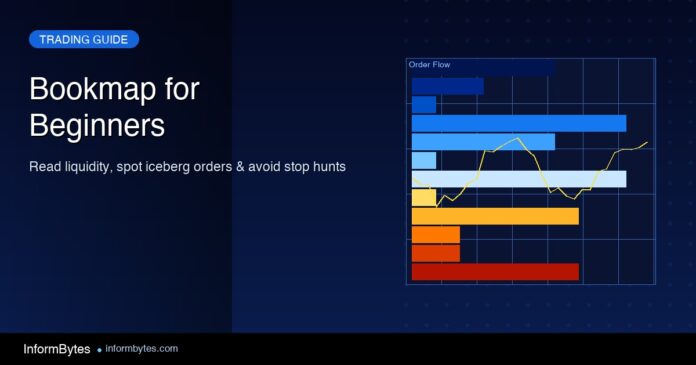
      Bookmap order flow heatmap chart showing liquidity levels and iceberg orders

      Table of Contents

      1. What Is Bookmap?
      2. Why Most Traders Use the Wrong Charts
      3. The Bookmap Heatmap Explained
      4. Understanding Liquidity Levels
      5. Iceberg Orders: The Hidden Players
      6. Stop Hunts & Stop Runs
      7. How to Use All Three Together
      8. Getting Started with Bookmap
      9. Pros and Cons
      10. Alternative & Complementary Tools
      11. FAQ
      12. References

      What Is Bookmap?

      Bookmap is a real-time order flow and market depth visualization platform used by futures, stocks, and crypto traders. It translates raw exchange data โ€” the actual bids, offers, and executed trades โ€” into a color-coded heatmap that scrolls across your screen like a sonar display.

      Where a regular candlestick chart shows you what price did, Bookmap shows you why it did it. You can literally watch large players add or remove liquidity in real time, spot hidden institutional orders, and identify price levels where stop orders are stacked up like dominoes.

      In plain English: Bookmap lets you see the market’s “order book” as a visual movie instead of a table of raw numbers.

      It’s used primarily for: – Futures trading (ES, NQ, CL, GC) – Equities (stocks and ETFs with Level 2 data) – Crypto (Bitcoin, Ethereum, and others via supported exchanges)


      Why Most Traders Use the Wrong Charts

      Standard candlestick charts only show four data points per candle: open, high, low, close. That’s useful โ€” but it hides everything happening inside that candle.

      Here’s what a candlestick can’t tell you: – Was there a large buy wall absorbing sellers at the low? – Did a big player quietly place 10,000 contracts just below market? – Was that price spike genuine buying, or a stop hunt designed to shake out retail traders?

      Bookmap answers all of these questions. It plugs directly into exchange data feeds (CME, Binance, Coinbase, etc.) and shows you the full depth of market (DOM) โ€” not just the last traded price.


      The Bookmap Heatmap Explained

      The heatmap is the core of Bookmap. Here’s how to read it from scratch:

      Axes

      • Horizontal axis (X): Time โ€” moving left to right, like any chart
      • Vertical axis (Y): Price โ€” higher up = higher price

      Colors

      The heatmap uses a color spectrum from dark blue โ†’ cyan โ†’ yellow โ†’ white to represent the quantity of limit orders sitting at each price level at each moment in time.

      Color Meaning
      Dark blue / black Very little or no liquidity
      Blue / cyan Moderate limit orders resting at this level
      Yellow / green Large concentration of limit orders
      White / bright Extremely large liquidity cluster

      As time passes and you scroll right, you can see the history of where liquidity was sitting, where it was absorbed, and where it disappeared.

      Dots (Volume Bubbles)

      On top of the heatmap, you’ll see colored circles: – Green dots = Buy market orders (aggressive buyers hitting the ask) – Red dots = Sell market orders (aggressive sellers hitting the bid) – Dot size = Volume of that trade โ€” bigger dot = bigger trade

      These dots tell you who is acting in the market right now, as opposed to the passive limit orders shown in the heatmap.


      Understanding Liquidity Levels

      Liquidity in trading means the number of limit orders sitting at a given price level. These are orders from market participants who are willing to buy or sell at a specific price but are waiting passively for price to reach them.

      Why Liquidity Matters

      Every time price moves, it’s because aggressive market orders have consumed all the liquidity at one level and moved to the next. The more liquidity sitting at a level, the harder it is for price to push through it.

      Think of it like a crowd blocking a door: – Small crowd (low liquidity): Price blows through easily – Large crowd (high liquidity): Price needs a lot of force (big market orders) to get through โ€” or it bounces back

      On the Bookmap heatmap, bright yellow or white horizontal bands represent strong liquidity walls. When price approaches one of these walls, watch closely โ€” these are key decision points.

      Two Key Dynamics to Watch

      1. Liquidity Adding When a large cluster of limit orders suddenly appears ahead of price (shown as a bright horizontal band forming on the heatmap), it tells you a big player is defending that level. This often acts as strong support or resistance.

      2. Liquidity Pulling When a large cluster of limit orders disappears before price reaches it, that’s a warning sign. The player behind it didn’t actually want to trade there โ€” they were either bluffing to move price, or they changed their mind. Pulled liquidity is a bearish signal if bids are disappearing below price, and a bullish signal if offers are pulling above price.

      Beginner tip: Don’t just look at where liquidity is. Watch how it behaves as price approaches. Adding = confidence. Pulling = warning.

      Support and Resistance โ€” With Context

      Traditional support/resistance is drawn from price action. Bookmap adds a second layer: you can see whether that support level has actual limit orders defending it right now, or whether it’s empty. An empty support level is much weaker than one backed by a visible wall of bids.


      Iceberg Orders: The Hidden Players

      What Is an Iceberg Order?

      An iceberg order is a large buy or sell order that has been split into many smaller visible portions to hide its true size from the market. Only the “tip” of the order is visible in the public order book at any time. As each visible portion gets filled, the next one automatically refreshes.

      The name says it all: like an iceberg, most of the order is hidden beneath the surface.

      Why Do Traders Use Them?

      Institutional traders โ€” hedge funds, prop desks, large banks โ€” need to move thousands of contracts without causing the market to move against them. If you placed a visible order to buy 50,000 futures contracts, every other market participant would see it and front-run you, pushing prices up before your order even fills.

      So instead, you show the market only 100 contracts at a time, quietly filling your full position over minutes or hours.

      How to Spot Icebergs on Bookmap

      Bookmap has a dedicated Iceberg Orders Indicator that detects and flags these hidden orders in real time. Here’s what to look for manually, even without the indicator:

      Signs of an iceberg order: – A price level keeps refreshing with the same lot size even after being hit repeatedly – Heavy trading volume at a single price without the price moving โ€” the level is being “defended” – On Bookmap, you’ll see large red or green volume dots piling up at one price while the heatmap stays stable

      Bullish iceberg (hidden buy wall): Price keeps trying to push lower, but every time sellers hit the bid at a certain level, the order refreshes. Price barely moves. This means a large buyer is absorbing all the selling โ€” a bullish sign.

      Bearish iceberg (hidden sell wall): Price keeps trying to push higher, but every offer is quickly absorbed and refreshed. Price stalls. A large seller is distributing their position into buyers โ€” a bearish sign.

      Beginner analogy: Imagine trying to empty a swimming pool with a bucket, but someone keeps refilling it at the same rate. That’s an iceberg order defending a price level.

      Trading With Icebergs

      You don’t need to trade against institutional players โ€” you can trade with them: – If a bullish iceberg is absorbing sell orders at a key support level, consider a long entry with a stop just below that level – If a bearish iceberg is defending resistance, consider a short entry or avoid buying into that wall


      Stop Hunts & Stop Runs

      What Is a Stop Order?

      A stop order is an order that automatically executes when price reaches a specific level. Traders place stops for two reasons: 1. Stop-loss: To exit a losing trade automatically (cut losses) 2. Stop-entry: To enter a trade when a breakout is confirmed

      What Is a Stop Run?

      A stop run (also called “stop hunt”) happens when price briefly pushes through a key level, triggering clusters of stop orders, and then reverses sharply.

      Here’s the mechanics: 1. Retail traders place stop-losses just below support or above resistance โ€” predictable locations 2. Price dips below support, triggering all those stops (which are market sell orders) 3. That sudden flood of sell orders briefly pushes price lower 4. Smart money absorbs all that selling at a discount 5. Price reverses and moves higher โ€” the stop hunters have filled their long positions cheaply

      The short version: Price was pushed down specifically to trigger your stop, fill institutional buy orders, and then reverse. You just funded someone else’s trade.

      How to Identify Stop Runs with Bookmap

      This is where Bookmap is uniquely powerful. During a stop run, you’ll see:

      1. A price spike through a key level Price breaks below a support zone that everyone is watching.

      2. Massive red volume dots A flood of sell market orders (triggered stops + panic selling) lights up the chart in red.

      3. No follow-through selling Despite all that volume, the heatmap shows large bid liquidity absorbing the selling โ€” big players are buying everything.

      4. Quick reversal Price snaps back above the support level within minutes (or seconds on lower timeframes).

      On Bookmap, you can see the absorption happening in real time: the aggressive sell volume (red dots) is being met by an equally large wall of bids that refuses to give way. That’s your signal the move is fake.

      Stop Run vs. Real Breakdown

      Signal Stop Run Real Breakdown
      Volume at breach Very high (stops triggered) Moderate to high
      Bid liquidity Large bids absorbing selling Bids pull / disappear
      Price behavior after Sharp reversal Continued lower prices
      Heatmap below Bright bids defending level Empty โ€” no support
      CVD (Cumulative Volume Delta) Diverges from price Confirms selling pressure

      How to Use All Three Together

      Liquidity levels, iceberg orders, and stop runs are not separate concepts โ€” they work as a system. Here’s a simple example of how they combine:

      Scenario: Potential long entry in ES futures

      1. Identify liquidity: You spot a bright white band on the heatmap at 5200 โ€” a large cluster of bids sitting at a key support level
      2. Watch for icebergs: As price approaches 5200, volume keeps printing at that level but price barely moves โ€” an iceberg is absorbing selling
      3. The stop run: Price briefly dips to 5195, triggering stop-losses. You see a burst of red dots, but the bids at 5200 hold and are absorbing the selling
      4. Entry: Price snaps back above 5200. You enter long with your stop below 5190 (below where icebergs absorbed)
      5. Target: The next liquidity wall above (offers) shown on the heatmap

      This is order flow trading in its most practical form.


      Getting Started with Bookmap

      Step 1: Create an Account

      Go to bookmap.com and sign up. There’s a free tier available with limited features โ€” enough to learn the basics.

      Step 2: Choose a Data Source

      Bookmap connects to: – Futures: CME via supported brokers (Tradovate, Rithmic, CQG) – Stocks: Via supported brokers (Interactive Brokers, Alpaca) – Crypto: Binance, Coinbase, Kraken (direct connection)

      Step 3: Download and Install

      Bookmap runs as a desktop application on Windows and Mac. Download from your account dashboard after signing up.

      Step 4: Load a Symbol

      Type in a ticker (e.g., ESH25 for S&P 500 futures, BTC/USD for Bitcoin) and the heatmap will load with live or replay data.

      Step 5: Enable Key Indicators

      For beginners, start with: – Stops & Icebergs On-Chart Indicator โ€” highlights iceberg and stop activity – Volume Bubbles โ€” shows size of each trade – CVD (Cumulative Volume Delta) โ€” tracks net buying vs. selling pressure

      Pricing

      Plan Price Best For
      Free $0/mo Learning, crypto only
      Basic ~$19/mo Single market, limited add-ons
      Advanced ~$39/mo Multiple markets, all add-ons
      Ultimate ~$79/mo Full feature set, all markets

      Prices subject to change โ€” check https://bookmap.com/packages-comparison for current rates.


      Pros and Cons

      Pros

      • Visual clarity โ€” Complex order flow data made genuinely readable
      • Real-time โ€” Data is live, not delayed
      • Iceberg detection โ€” Unique feature you won’t find on standard platforms
      • Replay mode โ€” Practice on historical data without risking money
      • Works across asset classes โ€” Futures, stocks, crypto

      Cons

      • Learning curve โ€” Takes 2โ€“4 weeks to read the heatmap fluently
      • Cost โ€” Full features require a paid subscription + data feed costs
      • Data fees โ€” Exchange data (especially CME) has additional fees on top of the subscription
      • Not a standalone broker โ€” You still need a separate brokerage account to execute trades
      • Information overload โ€” Beginners can feel overwhelmed by the amount of data on screen

      Alternative & Complementary Tools

      Bookmap works best when paired with other tools. Here are the most popular options:

      Order Flow & Market Depth

      • Sierra Chart โ€” Professional-grade charting with DOM and order flow. Lower cost, steeper learning curve. (Affiliate link)
      • Jigsaw Trading โ€” Excellent DOM trading tool, great for scalpers. Pairs well with Bookmap. (Affiliate link)
      • Quantower โ€” Multi-asset platform with order flow built in. Free tier available. (Affiliate link)

      Charting & Technical Analysis

      • TradingView โ€” Best-in-class charting for retail traders. Use alongside Bookmap for broader market context. (Affiliate link)
      • NinjaTrader โ€” Popular futures platform with advanced charting and automation. (Affiliate link)

      Futures Brokers (Required to Trade)

      • Tradovate โ€” Low-cost futures broker with direct Bookmap integration. (Affiliate link)
      • Rithmic โ€” Professional-grade data feed used by serious traders. Required for some Bookmap features. (Affiliate link)
      • Topstep โ€” Funded trader program โ€” great way to trade futures without risking your own capital. (Affiliate link)

      Prop Firm Challenges (Trade with Funded Capital)

      • FTMO โ€” One of the most reputable prop firms. (Affiliate link)
      • Apex Trader Funding โ€” Futures-focused prop firm, works with Rithmic/Tradovate. (Affiliate link)

      FAQ

      Q: Is Bookmap good for beginners? Yes, but expect a learning curve. The visual nature of the heatmap is actually more intuitive than reading raw DOM numbers โ€” but it takes time to develop pattern recognition. Use the replay feature to practice risk-free.

      Q: Can I use Bookmap for crypto? Yes. Bookmap connects directly to major crypto exchanges (Binance, Coinbase, Kraken) and works well for Bitcoin and Ethereum trading.

      Q: Do I need a special broker for Bookmap? For futures, you’ll need a broker that supports Rithmic, CQG, or Tradovate data feeds. For crypto, Bookmap connects directly to exchanges. For stocks, Interactive Brokers is the most common integration.

      Q: Is order flow trading only for day traders? Primarily yes โ€” order flow data is most useful on intraday timeframes (1-minute to 30-minute charts) where the liquidity dynamics are visible and actionable. Swing traders can still use it to refine entries at key levels.

      Q: Can Bookmap predict the market? No tool can predict markets. Bookmap gives you context โ€” it tells you where large players are positioned and how they’re behaving. The decision and the risk are still yours.

      Q: Is there a free trial? Bookmap offers a free plan with access to crypto markets and limited features. A 7-day free trial of paid plans is also available.


      References

      1. Bookmap Official Blog โ€” What Are Iceberg Orders?
      2. Bookmap Official Blog โ€” Identifying True Liquidity With Bookmap
      3. Bookmap Official Blog โ€” How to Spot Stop Order Clusters
      4. Bookmap Official Blog โ€” Stop Hunt or Just Noise?
      5. Bookmap Official Blog โ€” Running the Stops: How It Happens
      6. Bookmap Official Blog โ€” Heatmap Trading โ€” The Complete Guide
      7. Bookmap Knowledge Base โ€” Stops & Icebergs On-Chart Indicator
      8. Bookmap Knowledge Base โ€” Liquidity Tracker Add-On
      9. Cannon Trading โ€” Bookmap Trading Guide
      10. Warrior Trading โ€” Bookmap Review
      11. Bookmap Education Course โ€” Order Flow Trading Part 1
      12. Startupik โ€” Bookmap Workflow: How to Read Liquidity and Order Flow

      Disclaimer: This blog post is for educational purposes only and does not constitute financial advice. Trading involves significant risk of loss. Always do your own research and consider consulting a licensed financial advisor before trading.

      Bookmap for beginners - overview of Bookmap for beginners concepts and framework
      Bookmap for beginners - Bookmap for beginners implementation and architecture diagram
      Bookmap for beginners - Bookmap for beginners statistics and key metrics visualization
      Bookmap for beginners - Bookmap for beginners trends and future outlook for Trading Tools

      Axios npm Supply Chain Attack: What It Is, Who Did It, and What You Must Do Now

      0
      Axios npm Supply Chain Attack: What It Is, Who Did It, and What You Must Do Now

      Table of Contents

        If you use JavaScript to build websites or apps โ€” or you know someone who does โ€” there is an urgent security alert you need to know about. A popular tool called Axios, used by over 70 million developers every week, was secretly poisoned by hackers on March 31, 2026. This is what security experts call a supply chain attack โ€” and it’s one of the sneakiest, most dangerous types of cyberattack out there.

        Microsoft’s security team discovered and published details of the attack on April 1, 2026. Here’s everything you need to know โ€” in plain English.

        What Is Axios and Why Should You Care?

        Think of Axios as a messenger. Developers use it to send and receive data between websites and servers โ€” things like logging into an app, fetching your bank balance, or loading your social media feed. It’s one of the most widely used tools in web development, with over 70 million downloads every single week.

        Because so many apps depend on Axios, it became the perfect target. Hackers didn’t need to break into your computer directly โ€” they just needed to poison the tool developers were already using.

        What Happened? The Attack Explained Simply

        On March 31, 2026, attackers secretly released two fake, malicious versions of Axios โ€” versions 1.14.1 and 0.30.4. These looked identical to the real, safe versions. The code inside Axios itself wasn’t changed โ€” everything appeared normal. Instead, the attackers snuck in a hidden extra package called plain-crypto-js that ran automatically the moment a developer installed the update.

        Here’s the truly alarming part: no one had to click anything. No phishing link. No suspicious attachment. The moment the package was installed, the malware silently activated in the background and connected to a hacker-controlled server to download a remote access trojan (RAT) โ€” essentially giving the attackers full control of the infected computer.

        What Is a Supply Chain Attack?

        Imagine you trust a food supplier to deliver fresh ingredients to your restaurant. Instead of breaking into your kitchen directly, an attacker poisons the ingredient supply before it even reaches you. You cook with the contaminated ingredients without knowing anything is wrong โ€” and your customers get sick.

        A software supply chain attack works the same way. Attackers target the tools and packages that developers already trust and use, rather than attacking end-users directly. This makes them extremely hard to detect and dangerous at scale.

        Who Is Behind This Attack?

        Microsoft’s security researchers have attributed this attack to Sapphire Sleet โ€” a North Korean state-sponsored hacking group that has been active since at least 2020. This isn’t a random criminal gang. This is a government-backed operation.

        Sapphire Sleet has a specific focus: stealing cryptocurrency and financial data. They’ve previously targeted banks, crypto exchanges, venture capital firms, and blockchain companies โ€” primarily in the United States, and across Asia and the Middle East. They are also known by other names in the security community, including BlueNoroff and UNC1069.

        Their typical playbook involves reaching out on LinkedIn, posing as investors or recruiters, and luring developers into downloading malicious files disguised as legitimate documents or software. This npm attack follows that same philosophy โ€” abuse trust to get in the door.

        What Did the Malware Actually Do?

        Once the malicious Axios version was installed, a hidden program silently connected to the attackers’ server and downloaded a Remote Access Trojan (RAT) โ€” a type of malware that lets attackers control your computer from anywhere in the world.

        The malware was designed to work on all three major operating systems:

        • Windows โ€” dropped a hidden PowerShell script that survives reboots by adding itself to Windows startup
        • macOS โ€” installed a hidden binary disguised as a legitimate Apple system process
        • Linux โ€” dropped a Python script that runs silently in the background

        Once installed, the RAT could:

        • Spy on everything on the infected machine
        • Steal saved passwords, API keys, crypto wallet credentials, and secrets from code repositories
        • Execute commands remotely โ€” the attacker has full keyboard-level control
        • Download and run even more malware
        • Cover its tracks by deleting evidence of the initial infection

        What makes this especially nasty: after installation, the malware deleted the files that showed how it got there โ€” making forensic investigation much harder.

        Who Is at Risk?

        You’re at risk if any of the following apply:

        • You are a developer who uses Axios in your JavaScript or Node.js projects
        • Your project has axios listed in its package.json with a ^ or ~ before the version number (e.g. "axios": "^1.14.0") โ€” this means it auto-updates
        • You ran npm install or npm update after March 31, 2026
        • Your automated build system (CI/CD pipeline) installed or updated packages recently
        • You work with cryptocurrency, financial data, or sensitive credentials stored on your development machine

        The affected versions are axios 1.14.1 and axios 0.30.4. If you are on any other version, you are not directly affected โ€” but keep reading, because the protective steps below matter regardless.

        What Should You Do Right Now?

        If You’re a Developer

        1. Check your Axios version immediately. Run npm list axios in your project folder. If it shows 1.14.1 or 0.30.4, you are affected.
        2. Downgrade to a safe version right away. Run: npm install [email protected] or npm install [email protected]
        3. Clear your npm cache: npm cache clean --force
        4. Rotate all your secrets and credentials โ€” API keys, tokens, passwords, crypto wallet keys โ€” especially anything stored on or accessible from the affected machine.
        5. Check your network logs for any connections to sfrclak.com or IP 142.11.206.73 on port 8000. If you see these, your system was compromised.
        6. Pin your Axios version. Remove the ^ from your package.json: change "axios": "^1.14.0" to "axios": "1.14.0" โ€” no caret means no auto-updates.
        7. Disable automated dependency bots (Dependabot, Renovate) for Axios until further notice.

        If You’re a Business Owner or IT Manager

        1. Alert your development team immediately and share this post.
        2. Audit all applications and CI/CD pipelines that use Axios.
        3. Treat any machine that installed the affected versions as potentially compromised โ€” isolate, scan, and rebuild if necessary.
        4. Review your software supply chain security policy โ€” do you know what third-party packages your apps depend on?

        The Bigger Lesson: Supply Chain Attacks Are the New Normal

        This attack is part of a growing trend. Modern software is built on top of thousands of open-source packages โ€” tools written by other developers that everyone shares and reuses. This is incredibly efficient, but it creates a massive security blind spot: if any one of those packages is compromised, every app that uses it is instantly at risk.

        We’ve seen this pattern before โ€” the SolarWinds attack in 2020, the XZ Utils backdoor in 2024, and now the Axios npm compromise in 2026. Each time, attackers target the supply chain rather than individual victims, because the payoff is enormous: one poisoned package can infect millions of machines.

        The takeaway for everyone โ€” developer or not โ€” is that cybersecurity is no longer just about avoiding suspicious emails or sketchy websites. The software tools we trust are themselves becoming attack vectors. Organizations must:

        • Know what’s in their software (this is called a Software Bill of Materials, or SBOM)
        • Pin dependency versions and avoid blind auto-updates
        • Monitor outbound network traffic from development and production systems
        • Treat developer machines as high-value targets โ€” they often hold the keys to the kingdom

        Quick Summary

        • What: Axios npm package versions 1.14.1 and 0.30.4 were poisoned with malware
        • When: March 31, 2026 โ€” discovered and disclosed by Microsoft on April 1, 2026
        • Who did it: Sapphire Sleet โ€” a North Korean state-sponsored hacking group
        • Goal: Steal credentials, crypto wallets, and gain remote access to developer machines
        • Safe versions: axios 1.14.0 or 0.30.3 (or earlier)
        • What to do: Downgrade, rotate secrets, check for C2 connections, pin your versions

        Stay tuned to InformBytes for the latest cybersecurity news explained simply. If this post helped you, share it with a developer you know โ€” it could save them from a very bad day.

        Axios npm supply chain attack - overview of Axios npm supply chain attack concepts and framework
        Axios npm supply chain attack - Axios npm supply chain attack implementation and architecture diagram
        Axios npm supply chain attack - Axios npm supply chain attack statistics and key metrics visualization

        Axios npm Supply Chain Attack: Understanding the Scope and Impact

        The Axios npm supply chain attack sent shockwaves through the JavaScript development community. As one of the most widely used HTTP client libraries, Axios is downloaded millions of times weekly. A compromise of this magnitude threatened thousands of applications and millions of end users globally who depend on software built with this popular package.

        The attack demonstrated how a single compromised dependency can cascade through the software ecosystem. Applications using Axios directly were vulnerable, but so were applications using packages that themselves depend on it. The Axios npm supply chain attack revealed the deep interconnectedness of modern JavaScript development and the systemic risks it creates.

        Npm’s centralized package registry creates both convenience and systemic risk. When a popular package is compromised, the blast radius extends far beyond the original target. The incident became a case study in why supply chain security demands urgent attention from development organizations worldwide that rely on open-source ecosystems for their critical software infrastructure.

        What Was Compromised in the Axios npm Supply Chain Attack

        The Axios npm supply chain attack involved malicious code injected into a specific version of the package. The compromised version contained additional code designed to steal environment variables and credentials from applications using the library. This data exfiltration targeted sensitive information stored in application configuration files and deployment environments.

        Attackers specifically targeted environment variables because they often contain API keys, database credentials, and authentication tokens. By exfiltrating these values, attackers could potentially access backend systems, databases, and third-party services. The Axios npm supply chain attack thus created secondary compromise risks beyond the initial infection vector that security teams needed to investigate.

        The malicious code was obfuscated to avoid detection by automated security scanners. It used techniques like dynamic evaluation and encoded strings to conceal its true purpose. This sophistication indicated a well-resourced attacker with deep knowledge of both the npm ecosystem and common security scanning limitations that most development organizations rely upon for protection.

        The compromised version was published briefly before being identified and removed. However, during that window, many applications automatically pulled the update through CI/CD pipelines. The Axios npm supply chain attack highlighted the danger of automatic dependency updates without proper security verification gates in place to catch malicious code before it reaches production environments.

        How the Axios npm Supply Chain Attack Was Discovered

        The Axios npm supply chain attack was first detected by a security researcher who noticed anomalous network traffic from a development environment. The researcher traced the traffic to a recently updated Axios dependency. This discovery triggered rapid investigation and coordinated disclosure to the maintainers and npm security team for response and remediation.

        Automated dependency monitoring tools also played a role in detection. Several organizations received alerts about suspicious code in the new version. These tools compared package contents against known-good baselines and flagged deviations. The Axios npm supply chain attack demonstrated the value of such monitoring, though earlier detection would have limited the damage significantly.

        The npm registry’s response was swift once the compromise was confirmed. The malicious version was unpublished, and maintainers published a clean version. However, the Axios npm supply chain attack exposed a critical weakness: once a package version is published and downloaded, unpublishing cannot undo the damage for applications that already installed it in their environments.

        Community coordination proved essential. Security researchers, maintainers, and affected organizations shared information rapidly through dedicated channels. This collaborative response helped limit the spread and impact of the compromised version. The Axios npm supply chain attack showed how community vigilance and rapid information sharing can mitigate supply chain threats effectively.

        Developer Response to the Axios npm Supply Chain Attack

        The developer community responded to the Axios npm supply chain attack with a mix of urgency and frustration. Many organizations immediately froze all dependency updates and began auditing their package lockfiles for the compromised version. Development workflows ground to a halt as teams verified whether their applications were affected and what remediation steps were necessary.

        The maintainers published detailed guidance on identifying and removing the compromised version. They recommended pinning dependencies to specific known-good versions rather than using floating version specifiers. The Axios npm supply chain attack became a teaching moment about the importance of deterministic dependency management practices across all JavaScript projects regardless of size.

        Many organizations began implementing more rigorous dependency security policies following the attack. These included requiring code review of dependency updates, using private package registries with cached versions, and implementing software bill of materials tracking. The Axios npm supply chain attack accelerated adoption of these best practices across the industry as organizations reassessed their exposure.

        Security tooling vendors quickly released updates to detect the specific indicators of compromise associated with the attack. Static analysis tools added rules to identify similar obfuscation patterns in other packages. The incident thus had a silver lining: it pushed the industry toward better supply chain security tooling and practices that benefit all JavaScript developers and users of web applications globally.

        Preventing Future Incidents After the Axios npm Supply Chain Attack

        The Axios npm supply chain attack highlighted several preventive measures every development team should implement. First, always pin dependencies to specific versions and avoid using caret or tilde specifiers that automatically pull updates. This prevents accidentally installing a compromised version through routine updates that bypass manual review processes in development workflows.

        Second, implement package integrity verification using Subresource Integrity hashes or npm’s built-in integrity checking. These mechanisms ensure that the package you install matches a known-good cryptographic signature. The Axios npm supply chain attack could have been limited if more organizations enforced strict integrity verification as part of their standard development practices.

        Third, use private package registries or proxies that cache packages and provide an additional layer of vetting. Organizations can review package updates before they reach production environments. The Axios npm supply chain attack demonstrated why organizations cannot blindly trust the public npm registry for critical applications without additional safeguards in place.

        Fourth, implement continuous dependency scanning with automated alerts for known vulnerabilities. Tools like Snyk, Dependabot, and npm audit can identify compromised packages quickly. The incident proved that rapid detection and response are essential for minimizing damage from supply chain compromises that can propagate rapidly through interconnected dependency trees.

        Lessons Learned from the Axios npm Supply Chain Attack

        The Axios npm supply chain attack taught the development community several crucial lessons. No package, no matter how popular or well-maintained, is immune to compromise. Trust in the npm ecosystem must be earned through verification, not assumed by default. Every dependency is a potential attack vector that requires ongoing monitoring and assessment by development teams.

        Package maintainers also learned valuable lessons. Account security, including strong authentication and multi-factor authentication, is essential for anyone with publish access. The Axios npm supply chain attack may have originated from compromised maintainer credentials, highlighting the need for robust account protection measures across the entire open-source ecosystem.

        Organizations must balance the convenience of automatic updates against security risks. While automatic updates help patch known vulnerabilities quickly, they also introduce the risk of installing compromised code. The Axios npm supply chain attack showed that a hybrid approach with automated security updates but manual review of major changes may be optimal for many organizations seeking to balance efficiency with security.

        Finally, the incident reinforced the need for industry-wide supply chain security standards. Initiatives like SLSA and Sigstore gained momentum following the attack. These frameworks provide verifiable provenance and integrity guarantees that could prevent similar attacks in the future, making the JavaScript ecosystem more resilient for everyone who depends on open-source software packages.

        Top Cybersecurity Threats of 2025: Zero-Days, Ransomware Surges & AI-Powered Attacks You Need to Know

        0
        a wooden block spelling the word random next to a bouquet of flowers

        Table of Contents

          The cybersecurity landscape in 2025 has been nothing short of alarming. From a 16-billion credential mega-breach to AI-powered ransomware hitting Fortune 500 companies, threat actors are operating with unprecedented speed and sophistication. In this post, we break down the most critical cybersecurity threats making headlines right now โ€” and what you can do to stay protected.

          1. The 16-Billion Credential Mega-Leak: Biggest Breach in History

          In June 2025, cybersecurity researchers at Cybernews uncovered 30 exposed datasets containing over 16 billion login credentials โ€” making it the largest data leak ever recorded. The compromised accounts span major platforms including Google, Apple, Facebook, Telegram, and government services worldwide.

          Unlike traditional breaches, these credentials were harvested by infostealer malware โ€” malicious software that silently captures login data from infected devices over extended periods. The stolen data includes usernames, plaintext passwords, and session tokens, giving attackers direct access to accounts without needing to crack any encryption.

          What This Means for You

          • Billions of fresh, active credentials are circulating in criminal marketplaces
          • Credential stuffing attacks โ€” where attackers try leaked passwords across multiple sites โ€” are surging
          • Even accounts with strong passwords are at risk if the device was infected with an infostealer

          Recommended Actions

          • Enable multi-factor authentication (MFA) on all critical accounts immediately
          • Use a password manager and ensure each account has a unique password
          • Run a full malware scan on all your devices
          • Check if your email is listed on HaveIBeenPwned.com

          2. Windows CLFS Zero-Day (CVE-2025-29824): Ransomware Gangs Exploit Unpatched Systems

          In April 2025, Microsoft’s Patch Tuesday revealed a zero-day vulnerability in the Windows Common Log File System (CLFS) driver, tracked as CVE-2025-29824. What made this particularly dangerous: it was already being actively exploited in the wild before Microsoft even released a fix.

          The threat actor behind the attacks, tracked as Storm-2460, deployed a sophisticated piece of malware called PipeMagic to exploit the flaw. The vulnerability allowed attackers to escalate privileges to SYSTEM level โ€” the highest access tier on a Windows machine โ€” enabling them to deploy ransomware, exfiltrate data, and move laterally across networks.

          Targets were identified across the United States, Venezuela, Spain, and Saudi Arabia, spanning industries including IT, financial services, and retail. The ransomware gang RansomEXX has also been linked to exploitation of this flaw.

          Key Technical Details

          • CVE ID: CVE-2025-29824 (CVSS Score: 7.8 โ€” High)
          • Affected: Multiple versions of Windows including Windows 10, Windows 11, Windows Server
          • Attack type: Local privilege escalation โ†’ ransomware deployment
          • Patch available: Yes โ€” April 2025 Patch Tuesday (KB5055523 and related updates)

          What You Should Do Right Now

          • Apply the April 2025 Windows security updates immediately โ€” do not delay patching
          • Monitor for PipeMagic indicators of compromise (IOCs) on your endpoints
          • Enforce the principle of least privilege โ€” limit user accounts from having admin rights by default
          • Deploy endpoint detection and response (EDR) tools to catch privilege escalation attempts

          3. Marks & Spencer Ransomware Attack: $400 Million in Losses

          One of the most high-profile corporate cyberattacks of 2025 hit British retail giant Marks & Spencer (M&S) in April. The attack โ€” carried out by the notorious hacking group Scattered Spider โ€” crippled the company’s online operations for weeks, forcing it to pause all online orders and gift card services.

          The attackers reportedly infiltrated M&S systems as early as February 2025, stealing the Windows Active Directory (NTDS.dit) file โ€” essentially a master key to the entire corporate identity infrastructure. They then deployed ransomware that encrypted critical systems, leading to:

          • Complete suspension of M&S online shopping for weeks
          • Theft of customer personal data
          • An estimated ยฃ300 million (~$400 million) hit to operating profits
          • M&S share price dropping significantly in the aftermath

          The same group simultaneously attacked Co-op Group โ€” another UK retailer โ€” in what investigators described as a “single combined cyber event.” Scattered Spider is known for its sophisticated social engineering tactics, often impersonating IT helpdesk staff to gain initial access.

          Lessons for Businesses

          • Protect your Active Directory at all costs โ€” it is the crown jewel of any corporate network
          • Train your helpdesk staff to resist social engineering attacks and verify caller identity rigorously
          • Implement network segmentation to prevent lateral movement post-breach
          • Have an incident response plan tested and ready โ€” not just written and forgotten
          • Maintain offline, immutable backups that ransomware cannot reach

          4. Ransomware Attacks Surge 32% โ€” Healthcare and Manufacturing Hit Hardest

          According to research by Comparitech, global ransomware attacks rose 32% in 2025, with 7,419 confirmed attacks worldwide. This marks one of the sharpest single-year increases in ransomware activity ever recorded.

          Key sectors under fire:

          • Healthcare โ€” hospitals face maximum pressure to pay as patient lives hang in the balance
          • Manufacturing โ€” operational downtime costs millions per hour, making victims more likely to pay
          • Government & municipalities โ€” the city of St. Paul, Minnesota declared a state of emergency in July 2025 after a ransomware attack disabled key municipal systems
          • Retail & e-commerce โ€” as evidenced by M&S and Co-op

          New ransomware groups are also emerging rapidly โ€” at least 10 new ransomware gangs were identified in 2025 alone, each with refined multi-extortion tactics: encrypting files, stealing data, and threatening to publish it publicly unless ransom is paid.


          5. AI-Powered Cyberattacks: The New Frontier of Threats

          Perhaps the most concerning trend of 2025 is the weaponization of Artificial Intelligence by cybercriminals. According to research by DeepStrike and Rapid7, AI-assisted cyberattacks have increased by a staggering 72% since 2024, with phishing attacks alone surging by 1,265% due to AI-generated content.

          Here’s how attackers are leveraging AI:

          • AI-generated phishing emails โ€” perfectly written, personalized, and nearly indistinguishable from legitimate communications
          • Deepfake audio & video โ€” attackers impersonate CEOs and executives to authorize fraudulent wire transfers (Business Email Compromise 2.0)
          • Autonomous malware โ€” AI-powered malware that adapts its behavior in real-time to evade detection tools
          • Automated vulnerability discovery โ€” AI scanning systems at scale to find exploitable weaknesses faster than human security teams can patch them
          • LLM-assisted code generation โ€” threat actors using large language models to write novel malware with reduced technical skill requirements

          Google’s Cybersecurity Forecast for 2026 warns: “2026 will usher in a new era for cybersecurity. Threat actors will leverage AI to escalate the speed, scope, and effectiveness of their attacks.”


          6. Android Zero-Days Actively Exploited โ€” Patch Your Phone Now

          Google’s April 2025 Android Security Bulletin addressed 62 vulnerabilities, including two zero-day flaws that were actively exploited in the wild. These vulnerabilities allowed attackers to execute arbitrary code or escalate privileges on unpatched Android devices.

          Mobile devices are increasingly targeted because:

          • They hold sensitive personal and financial data
          • They are used for MFA (ironically, compromising a phone can defeat 2FA)
          • Users are slower to apply security patches on phones than on PCs
          • Many enterprise employees access corporate systems from personal devices

          Action Required

          • Go to Settings โ†’ System โ†’ Software Update and apply all pending updates on your Android device
          • Enable automatic security updates wherever possible
          • Avoid installing apps from unknown sources or third-party APK stores

          Essential Cybersecurity Best Practices for 2025

          Given the threat landscape above, here are the non-negotiable security practices every individual and organization should have in place:

          For Individuals

          1. Enable MFA everywhere โ€” especially email, banking, and social accounts
          2. Use a password manager (Bitwarden, 1Password, Dashlane) โ€” unique passwords for every site
          3. Keep all devices updated โ€” Windows, Android, iOS, macOS, and apps
          4. Be suspicious of unsolicited messages โ€” even if they look legitimate, AI can fake it
          5. Regularly back up important data to an offline location

          For Organizations

          1. Patch management โ€” zero-day exploits thrive on delayed patching
          2. Zero Trust Architecture โ€” never trust, always verify, for every user and device
          3. Employee security awareness training โ€” your people are your biggest vulnerability
          4. Incident response planning โ€” know exactly what to do when (not if) you get breached
          5. Regular penetration testing โ€” find your weaknesses before attackers do
          6. Network segmentation โ€” limit the blast radius of any single breach

          Final Thoughts

          The common thread across all these 2025 threats is speed and sophistication. Attackers are moving faster, using AI, and exploiting vulnerabilities before defenders can react. The old “set it and forget it” security posture is dead.

          Cybersecurity in 2025 demands continuous vigilance, proactive patching, and security-aware culture โ€” at both the personal and organizational level. Stay informed, stay updated, and never assume you’re too small to be targeted.

          Stay tuned to InformBytes for regular cybersecurity news, threat alerts, and actionable security guides.

          cybersecurity threats 2025 - overview of cybersecurity threats 2025 concepts and framework
          cybersecurity threats 2025 - cybersecurity threats 2025 implementation and architecture diagram
          cybersecurity threats 2025 - cybersecurity threats 2025 statistics and key metrics visualization
          cybersecurity threats 2025 - cybersecurity threats 2025 trends and future outlook for Cybersecurity

          Cybersecurity Threats 2025: The Evolving Landscape of Digital Risk

          The cybersecurity threats 2025 landscape has evolved dramatically from previous years. Attackers now leverage artificial intelligence, automation, and sophisticated social engineering to breach defenses at unprecedented scale. Organizations face a more complex threat environment than ever before, requiring equally sophisticated defensive strategies that can adapt to rapidly changing attack methodologies and techniques.

          Several defining trends characterize the current environment. Zero-day exploits remain a critical concern, with attackers discovering and weaponizing vulnerabilities faster than vendors can patch them. Ransomware has surged to new levels of sophistication. AI-powered attacks have moved from theoretical concern to active deployment in the wild against real targets across all industry sectors globally.

          The convergence of these trends creates compounding risk. A single breach can trigger cascading effects across interconnected systems and supply chains. Organizations must understand these cybersecurity threats 2025 patterns to build effective defense strategies that address modern attack vectors rather than outdated threat models that no longer reflect the current reality of digital conflict.

          Zero-Day Exploits and Their Role in Cybersecurity Threats 2025

          Zero-day exploits remain among the most dangerous cybersecurity threats 2025. These vulnerabilities are unknown to software vendors and have no available patch. Attackers exploit them for espionage, data theft, and system compromise before defenders even know the vulnerability exists in their environment or the software they depend upon for critical operations.

          The cybersecurity threats 2025 landscape has seen zero-days weaponized faster than ever. Attackers use automated tools to discover vulnerabilities and rapidly develop exploits. The window between vulnerability discovery and active exploitation has narrowed from months to days in some cases. This acceleration demands faster defensive response capabilities from security teams everywhere.

          Several high-profile zero-day attacks defined the year. Browser-based zero-days allowed attackers to compromise systems through malicious web pages. Mobile zero-days targeted messaging applications and operating system components. Enterprise software zero-days affected widely deployed business applications used across critical industries including finance, healthcare, and manufacturing sectors that underpin modern economies.

          Defending against zero-days requires defense-in-depth strategies. No single security control can prevent all zero-day exploitation. The cybersecurity threats 2025 approach emphasizes multiple layers including application hardening, network segmentation, behavioral detection, and rapid incident response capabilities working together to reduce the likelihood and impact of successful exploitation attempts.

          Ransomware Surge in Cybersecurity Threats 2025

          Ransomware attacks reached new heights in the cybersecurity threats 2025 landscape. Attackers evolved their tactics beyond simple encryption to include data exfiltration and extortion. Double and triple extortion schemes became standard, where attackers not only encrypt data but also threaten to release stolen information publicly to pressure victims into paying ransoms quickly.

          The cybersecurity threats 2025 ransomware ecosystem professionalized dramatically. Ransomware-as-a-Service operations allowed less skilled criminals to launch sophisticated attacks. Affiliate programs split profits between developers and operators, creating efficient criminal supply chains that scaled attacks globally and lowered the technical barrier to entry for would-be ransomware operators seeking financial gain.

          Critical infrastructure became a prime target. Healthcare organizations, energy providers, and municipal governments faced repeated attacks. The cybersecurity threats 2025 pattern showed attackers deliberately targeting organizations most likely to pay ransoms quickly due to operational pressure and public safety concerns that make prolonged downtime unacceptable for these essential service providers.

          Ransom payments continued to rise, with some organizations paying millions to restore operations. However, law enforcement and regulatory pressure discouraged payment in some jurisdictions. The cybersecurity threats 2025 environment created complex decisions for victim organizations weighing payment against operational continuity and legal compliance considerations that vary by region and industry.

          AI-Powered Attacks Define Cybersecurity Threats 2025

          Artificial intelligence transformed the cybersecurity threats 2025 landscape. Attackers now use AI to automate phishing campaigns, generate convincing social engineering content, and discover vulnerabilities at scale. AI lowers the barrier to entry for sophisticated attacks, enabling less skilled threat actors to launch operations that previously required expert knowledge and resources.

          Deepfake technology enabled new attack vectors. Voice deepfakes impersonated executives to authorize fraudulent wire transfers. Video deepfakes created convincing fake communications for social engineering. These AI-generated fakes bypassed traditional verification methods that relied on recognizing voices or faces, creating new categories of fraud that organizations must defend against.

          AI also accelerated malware development. Automated code generation tools helped create polymorphic malware that evades signature-based detection. The cybersecurity threats 2025 environment saw malware that could adapt its behavior in real-time to avoid detection, making traditional antivirus solutions less effective against novel threats that change their characteristics dynamically.

          Defenders also leverage AI in the ongoing arms race. AI-powered security tools detect anomalies, correlate threat intelligence, and automate response actions. However, attackers often move first with new AI techniques, creating an asymmetric advantage that defenders must work to overcome through continuous innovation and investment in defensive technologies and analyst capabilities.

          Defense Strategies for Cybersecurity Threats 2025

          Addressing cybersecurity threats 2025 requires a multi-layered defense strategy. Zero Trust architecture has become foundational, assuming breach and verifying every access request regardless of network location. This approach limits lateral movement and reduces blast radius when breaches occur by treating every connection as potentially hostile until proven otherwise.

          Threat hunting plays a critical role in defense. Rather than waiting for alerts, security teams proactively search for indicators of compromise and suspicious behavior. This proactive stance reduces dwell time and limits damage from attacks that bypass initial defensive controls. The cybersecurity threats 2025 approach demands skilled analysts who understand attacker tradecraft and can identify subtle anomalies.

          Employee training remains essential despite technological advances. The human element is involved in most breaches. Phishing simulations, security awareness programs, and clear reporting mechanisms help employees recognize and report potential threats. The cybersecurity threats 2025 approach treats employees as a critical line of defense rather than the weakest link in the security chain.

          Incident response planning is non-negotiable. Organizations must have tested plans for detecting, containing, and recovering from cyber incidents. Tabletop exercises and simulated breaches prepare teams for real incidents. The cybersecurity threats 2025 landscape rewards organizations that can respond quickly and effectively when attacks inevitably succeed despite preventive measures in place.

          Looking Beyond Cybersecurity Threats 2025

          The cybersecurity threats 2025 landscape will continue evolving. Emerging technologies like quantum computing pose future risks to cryptographic protections. The proliferation of connected devices expands the attack surface. Organizations must build adaptable security programs that can evolve alongside the threat landscape and incorporate new defensive technologies as they become available.

          Cybersecurity investment must be treated as ongoing operational expenditure, not a one-time project. The cybersecurity threats 2025 environment demands continuous improvement and adaptation. Organizations that underinvest in security face increasing risk as attackers become more sophisticated and motivated by financial incentives and geopolitical objectives that drive persistent campaigns.

          Collaboration and information sharing are increasingly important. Industry-specific threat intelligence sharing helps organizations learn from each other’s experiences. The cybersecurity threats 2025 approach emphasizes collective defense, where organizations contribute to and benefit from shared threat intelligence and coordinated response efforts across the broader security community and industry sectors.

          Ultimately, no organization can eliminate all cyber risk. The goal is to manage risk to an acceptable level while maintaining operational effectiveness. The cybersecurity threats 2025 environment requires balanced investments across people, processes, and technology to build resilient organizations that can withstand and recover from inevitable incidents in an increasingly hostile digital world.

          My Trading Journal: Week 1 on TopStep โ€” March 29 to April 2, 2026 | $2,230 Profit in 3 Days

          0
          My Trading Journal: Week 1 on TopStep โ€” March 29 to April 2, 2026 | ,230 Profit in 3 Days

          Table of Contents

            My Trading Journal Week of March 29 โ€“ April 2, 2026 โ€“ TopStep Funded Trader Performance Dashboard showing $2,230 profit

            โš ๏ธ Affiliate Disclosure (#ad): This post contains affiliate links to trading tools I personally use โ€” Quantower and TradingView. If you sign up through my links, I may earn a commission at no extra cost to you. All opinions are my own. This is not financial advice. Trading futures involves substantial risk of loss.


            Last week I started fresh โ€” brand new TopStep funded account, purchased on March 29, 2026. A $50,000 Combine challenge. In this post, I’m breaking down every trading day: what I traded, how I performed, what worked, and what I need to improve. This is my honest, unfiltered trading journal for the week of March 29 โ€“ April 2, 2026.

            I trade using a stack of three platforms: Quantower for order execution and charting, TradingView for macro analysis and multi-timeframe setups, and Bookmap for order flow and liquidity heatmaps. More on each tool at the end.


            ๐Ÿ“Š Weekly Performance Summary โ€” TopStep $50K Account

            Here’s the snapshot from my TopStep dashboard for the week:

            Metric Value Target / Limit Status
            Current Balance $52,185.68 โ€” โœ…
            Net Profit $2,230.68 Goal: $3,000 ๐Ÿ”„ 74.3% there
            Days Traded 3 Min: 2 โœ…
            Consistency Score 35.61% Must be โ‰ค 50% โœ… Healthy
            Best Day P&L $794.25 (Mar 31) โ€” โœ…
            Worst Day P&L $701.18 (Apr 2) โ€” โœ… Still green
            Total Trades 133 โ€” โ€”
            Total Contracts 178 โ€” โ€”
            Total Fees + Commissions -$106.32 โ€” โ€”
            Avg Winning Trade $39.58 โ€” โ€”
            Avg Losing Trade -$41.86 โ€” โ€”
            Overall Win Rate ~70%+ โ€” โœ… Strong

            Three green days. No red days. The equity curve was consistently moving upward. The profit target sits at $53,000 (i.e., $3,000 profit) โ€” I’m at $2,230.68 right now, which means I need roughly $769 more to hit the target and pass the combine. Let’s dig into each day.


            ๐Ÿ“… Day-by-Day Trading Journal

            Day 1 โ€” Sunday/Monday, March 29, 2026 | P&L: +$735.25 โœ…

            StatValue
            Net P&L+$735.25
            Total Trades37
            Total Contracts0 (data not populated)
            Fees + Commissions$0.00
            P&L High$818.75
            P&L Low-$73.75
            Avg Winning Trade$62.28
            Avg Losing Trade-$58.10
            Win Rate62.16%
            Max Consec. W/L6/2

            Instruments: NQM6, MNQM6, MGCM6, MESM6

            First day on a brand new account โ€” and I started strong. The P&L high of $818.75 shows I had good momentum early in the session. The P&L low of -$73.75 tells me I did dip into the red briefly (normal for a scalping style), but I recovered and closed the day solidly green at +$735.25.

            Win rate of 62% is decent but below my usual. The average winner ($62.28) and average loser ($58.10) were almost neck and neck โ€” meaning I was relying on frequency of wins rather than letting winners run. A key area to work on: holding winning trades longer to improve the reward-to-risk ratio.

            No commissions registered on Day 1 (likely a data sync issue with the platform โ€” the contracts field also shows 0, which is an anomaly). I was trading using Quantower for executions with Bookmap open side-by-side to watch the order flow on NQ. TradingView had my bias pre-marked at the key levels before market open.

            Key Takeaways โ€” March 29

            • Solid start โ€” trust the pre-market levels marked on TradingView
            • Win rate slightly lower than target โ€” too many small scratches
            • No blow-up risk โ€” max consecutive losses was just 2
            • Avg winner โ‰ˆ avg loser โ†’ need to improve R:R ratio

            Day 2 โ€” Monday, March 31, 2026 | P&L: +$794.25 โœ… (Best Day)

            StatValue
            Net P&L+$794.25 ๐Ÿ†
            Total Trades55
            Total Contracts103
            Fees + Commissions-$56.00
            P&L High$850.25
            P&L Low$18.75
            Avg Winning Trade$27.22
            Avg Losing Trade-$26.69
            Win Rate78.18%
            Max Consec. W/L10/3

            This was my best day of the week and arguably a nearly perfect execution day. The standout stat: P&L Low of only $18.75 โ€” meaning I was never meaningfully in the red. I started green and stayed green from the first trade to the last. That is the definition of a controlled, disciplined session.

            Win rate jumped to 78.18% โ€” a significant improvement over Day 1. The consistency was evident in the max consecutive wins hitting 10 in a row. With 55 trades and 103 contracts executed, it was a high-volume day where the setups kept presenting themselves cleanly.

            The Bookmap order flow reading was sharp on this day โ€” I could clearly see large limit orders defending certain price levels on NQ, which gave me confidence to hold a few trades slightly longer than usual. Avg winner of $27.22 vs avg loser of $26.69 โ€” near parity, but the 78% hit rate makes the math work strongly in my favor.

            Key Takeaways โ€” March 31

            • Best day of the week โ€” near-flawless execution
            • Never meaningfully in the red (P&L Low = $18.75) โ€” exceptional risk control
            • 78% win rate with 10 consecutive wins โ€” confidence and momentum aligned
            • Bookmap order flow reading was the edge that day
            • Fees of $56 on 103 contracts โ€” keep monitoring cost-per-contract

            Day 3 โ€” Thursday, April 2, 2026 | P&L: +$701.18 โœ…

            StatValue
            Net P&L+$701.18
            Total Trades41
            Total Contracts75
            Fees + Commissions-$50.32
            P&L High$751.50
            P&L Low-$49.50
            Avg Winning Trade$39.91
            Avg Losing Trade-$40.58
            Win Rate70.73%
            Max Consec. W/L9/2

            Thursday was a more volatile session โ€” markets were digesting the Good Friday NFP release uncertainty and growing geopolitical tension around the US-Iran conflict. The P&L dipped to -$49.50 early in the session, but I recovered well and closed at +$701.18, just shy of the best day.

            Win rate held strong at 70.73% โ€” still well above the 60% minimum I set for myself. The max losing streak was just 2 consecutive trades, showing I wasn’t in a death spiral at any point. Having TradingView open for macro context helped me avoid trading into high-impact news events, which protected me from unnecessary whipsaws.

            Key Takeaways โ€” April 2

            • Volatile session โ€” Iran war headlines creating erratic moves in NQ
            • Early drawdown of -$49.50 โ€” stayed calm and recovered
            • TradingView macro context helped avoid news traps
            • 70%+ win rate maintained even in tough conditions
            • Worst day of the week but still very profitable โ€” mental resilience held

            ๐Ÿ“ˆ Equity Curve Analysis

            The equity curve told a clean story this week. Starting from $50,000 on March 29, the balance grew steadily and consistently, reaching $52,185.68 by April 2. There were no sharp drawdowns, no dangerous spikes โ€” just a smooth upward trajectory that is exactly what TopStep evaluators want to see.

            The Maximum Loss Limit line (red dashed) moved up with the balance, confirming I never came close to breaching the trailing drawdown threshold. The gap between my equity line and the loss limit stayed healthy throughout the week.

            The Profit Target of $53,000 (green dashed line) is within reach โ€” I need just ~$815 more to cross the finish line and complete the TopStep combine.


            ๐ŸŽฏ TopStep Combine โ€” Where I Stand

            Here’s a quick progress check on the TopStep objectives:

            • โœ… Profit Goal: $2,230.68 of $3,000 target (74.3% complete)
            • โœ… Minimum Trading Days: 3 days (minimum is 2 โ€” already hit)
            • โœ… Consistency Rule: 35.61% โ€” well under the 50% cap (no single day dominates P&L)
            • โœ… No Losing Days: 3 for 3 green days
            • โœ… Max Loss Limit: Never breached

            The consistency score is important and often misunderstood. TopStep wants to see that you’re not having one massive outlier day that skews your entire P&L. A score of 35.61% means my best single day ($794.25) represents 35.61% of my total profit โ€” comfortably under the 50% cap. This confirms I’m trading consistently rather than gambling on one big trade.


            ๐Ÿ”ง My Trading Setup โ€” Tools & Platforms

            Here’s what I’m running in my trading workspace. All three tools serve a specific purpose and work together as a system:

            1. Quantower โ€” Execution & Advanced Charting

            Quantower (#affiliate) is my primary trading platform for order execution. It connects directly to my futures broker and gives me the DOM (Depth of Market), fast order entry, and advanced charting all in one place. For NQ scalping, speed matters โ€” and Quantower delivers.

            Why I use it:

            • Clean, customisable workspace
            • Fast order entry with hotkeys
            • Advanced DOM with volume profile built in
            • Multi-broker support
            • Works seamlessly with TopStep’s funded account connection

            ๐Ÿ‘‰ Try Quantower here (affiliate link โ€” I earn a commission if you sign up)

            2. TradingView โ€” Macro Analysis & Multi-Timeframe Charts

            TradingView (#affiliate) is where I do all my pre-market planning. Every morning before the US session opens, I’m on TradingView marking out key support/resistance levels, checking the macro picture across indices, and reviewing overnight price action. The economic calendar integration is a bonus โ€” I can see when high-impact events are scheduled and stay out of the market during those windows.

            Why I use it:

            • Best-in-class charting with a clean, fast interface
            • Multi-timeframe analysis from monthly down to 1-minute
            • Huge community of traders sharing ideas and setups
            • Built-in economic calendar and news feed
            • Pine Script for custom indicators

            ๐Ÿ‘‰ Get TradingView here (affiliate link โ€” I earn a commission if you sign up)

            3. Bookmap โ€” Order Flow & Liquidity Heatmaps

            Bookmap (#affiliate) is the secret weapon. Most retail traders are flying blind โ€” they see price, maybe volume. Bookmap shows me the actual order book in real-time as a heatmap, revealing where large liquidity pools are sitting, where institutional orders are being placed, and where stop hunts are likely to occur. This is an edge that very few retail traders have access to.

            Why I use it:

            • Liquidity heatmap โ€” see the invisible order book
            • Real-time tracking of large orders and iceberg orders
            • Spot stop-hunt zones before they happen
            • Confirm trade entries with order flow context
            • Essential for scalping futures like NQ and MNQ

            ๐Ÿ“ What I Need to Improve โ€” Honest Reflection

            1. Reward-to-Risk Ratio

            The biggest pattern I see across all three days: average winners โ‰ˆ average losers. My R:R is hovering around 1:1. This means I’m completely dependent on win rate to be profitable. While a 70-78% win rate is genuinely strong, the sustainable goal is to push toward a 1.5:1 or 2:1 R:R by letting winners breathe a bit longer. Even small improvements here would significantly compound profits over time.

            2. Over-Trading Tendency

            133 trades across 3 days = ~44 trades per day on average. That’s quite high, particularly for NQ scalping. Some of these were likely low-conviction entries or revenge trades after a loss. The data from Quantower’s analytics will help me filter which setups have the highest hit rate so I can be more selective going forward.

            3. Fees Are Eating Profit

            $106.32 in commissions over 3 days. At this volume level that’s manageable, but it’s something to track. If I improve R:R and take fewer, higher-quality trades, I’ll reduce commission drag while maintaining or improving P&L.

            4. Managing Volatile News Days

            April 2 showed that I can handle geopolitical volatility, but the early -$49.50 drawdown was a reminder that the Iran war headlines are creating unpredictable spikes in NQ. Going forward: wider stops OR staying flat during the first 15 minutes after major news drops.


            ๐Ÿ”ฎ Looking Ahead โ€” Week of April 5โ€“11, 2026

            The combine is nearly done โ€” just ~$815 left to hit the $3,000 profit target. But I’m not going to force it or chase trades to get there. Consistent, patient execution is what got me here and it’s what will get me over the line.

            Key market events to navigate next week:

            • Trump’s 48-hour Iran ultimatum resolution (oil/NQ volatility expected)
            • RBNZ Rate Decision (Tuesday) โ€” risk sentiment driver
            • FOMC members Goolsbee & Jefferson speeches
            • ISM Services PMI (Monday)
            • US Core Durable Goods Orders

            My plan:

            • Reduce trade count โ€” quality over quantity
            • Target minimum 1.5:1 R:R on each setup
            • Stay flat 15 minutes before/after high-impact events
            • Use Bookmap to confirm before every entry
            • Pre-mark all key levels on TradingView the night before

            ๐Ÿ’ฌ Final Thoughts

            Week 1 on the new TopStep account was genuinely encouraging. Three green days, zero losing days, equity curve moving in the right direction, and all TopStep objectives comfortably met. The $3,000 profit target is within striking distance.

            But I want to be real: one good week doesn’t make a trader. The market will test me with losing streaks, news spikes, and psychological pressure. What matters is process over outcome โ€” if I keep following my rules, the results will follow.

            I’ll be posting my trading journal every week here on InformBytes. If you’re on a similar funded trader journey or thinking about starting one, drop a comment below โ€” happy to share what’s working and what isn’t.


            ๐Ÿ”— Useful Links & Resources

            โš ๏ธ Risk Disclaimer: Trading futures and other financial instruments involves substantial risk of loss and is not suitable for all investors. Past performance is not indicative of future results. This post is for educational and journaling purposes only and does not constitute financial advice. Always do your own research and consult a qualified financial advisor before trading. Affiliate links are disclosed per FTC guidelines โ€” I may earn a commission if you sign up through them, at no extra cost to you.

            TopStep trading journal week 1 - overview of TopStep trading journal week 1 concepts and framework
            TopStep trading journal week 1 - TopStep trading journal week 1 implementation and architecture diagram
            TopStep trading journal week 1 - TopStep trading journal week 1 statistics and key metrics visualization

            TopStep Trading Journal Week 1: Final Lessons and Next Steps

            The TopStep trading journal week 1 experience concluded with $2,230 in profit across just three trading days. This remarkable result exceeded initial expectations and provided valuable insights into futures prop trading. The week demonstrated how disciplined execution, proper risk management, and strategic patience can produce consistent results in the TopStep evaluation process for aspiring funded traders.

            Reflecting on the TopStep trading journal week 1 journey, several patterns emerged that defined the success. Each winning trade followed a clear plan with predefined entry, stop-loss, and take-profit levels. No impulsive trades were taken, and position sizing remained consistent throughout the three profitable trading days. This discipline was the foundation of the $2,230 profit achievement.

            The TopStep trading journal week 1 also highlighted areas for improvement. On two occasions, profitable trades were closed too early, leaving significant potential gains on the table. Learning to let winners run while managing risk through trailing stops rather than fixed targets remains a key development area for the coming weeks of futures trading and ongoing evaluation progress.

            Key Takeaways from TopStep Trading Journal Week 1

            The most important lesson from TopStep trading journal week 1 is that consistency beats intensity. Rather than forcing trades every day, waiting for high-quality setups proved more profitable. The three days with trades all generated positive results, while the days without trades preserved capital for better opportunities ahead and prevented unnecessary losses from low-probability setups that did not meet entry criteria.

            Risk management was the unsung hero of the TopStep trading journal week 1 experience. No single trade risked more than the predetermined amount, and stop-losses were never widened. This strict approach meant that even if a trade went against the plan, the maximum loss was bounded. The $2,230 profit was possible because losses, when they occurred, were small and controlled effectively.

            Market context analysis played a crucial role throughout the week. Each trade was taken in alignment with the broader daily trend. Counter-trend trades were avoided entirely. This trend-following approach simplified decision-making and improved the win rate during the profitable three-day stretch that defined the TopStep trading journal week 1 overall success and demonstrated the value of trading with rather than against market momentum.

            The psychological aspect of trading became apparent during the TopStep trading journal week 1 experience. Maintaining emotional equilibrium after winning trades was as challenging as managing emotions after losses. The temptation to increase position size after success was resisted, which protected the account from the overconfidence trap that derails many promising trading journeys in their earliest stages of development.

            What Comes Next After TopStep Trading Journal Week 1

            Building on the TopStep trading journal week 1 success, week two will focus on refining the trailing stop strategy. The goal is to capture more from winning trades without giving back too much profit. Backtesting different trailing stop configurations will inform the approach before live implementation in the TopStep evaluation account during the next trading sessions with real market conditions and performance tracking.

            The TopStep trading journal week 1 results also suggest expanding the instrument coverage. Week one focused primarily on index futures. Week two may include additional markets like crude oil or treasury futures, diversifying opportunity sets while maintaining the same disciplined approach that produced the $2,230 profit in just three days of active trading during the evaluation period.

            Journaling will continue with even greater detail. The TopStep trading journal week 1 format will be enhanced with screenshots of chart setups at entry and exit. This visual record will support ongoing review and improvement. Trading is a skill that compounds with deliberate practice, and detailed journaling is the foundation of that practice for any serious futures trader pursuing consistent profitability.

            The $2,230 profit from TopStep trading journal week 1 provides a strong cushion for continued evaluation. Maintaining the same risk parameters and trading discipline should allow steady progress toward the TopStep funding target. The focus remains on process over outcome, trusting that consistent execution will produce consistent results over the coming weeks ahead as the evaluation progresses toward its conclusion.

            Trade-by-Trade Review from TopStep Trading Journal Week 1

            A detailed review of individual trades from TopStep trading journal week 1 reveals the decision-making process behind the $2,230 profit. The first winning trade was a long position in E-mini S&P futures, entered at a key support level after a bullish reversal candle confirmed buyer interest. The trade captured a 15-point move before hitting the predetermined profit target with precision.

            The second trade was a short position in Nasdaq futures, entered during an afternoon sell-off. The trade benefited from momentum that carried prices lower throughout the session. This trade contributed significantly to the TopStep trading journal week 1 total and demonstrated the value of trading with intraday momentum rather than fighting it or attempting to pick reversals without confirmation.

            The third winning trade was another long in E-mini S&P futures, taken on a breakout above resistance. This trade highlighted the importance of waiting for confirmation before entering. The breakout held, and the trade reached its target before the session ended, adding to the TopStep trading journal week 1 profit total and reinforcing the breakout trading strategy that had been planned in advance.

            Two smaller trades rounded out the week. One was a scratch trade that was closed at entry due to changing market conditions. The other was a small loss that was taken quickly when the setup invalidated. These trades, while not profitable, demonstrated the risk discipline that protected the account and allowed the winning trades to produce the overall positive result for TopStep trading journal week 1 participants.

            Setting Goals for Week Two

            The TopStep trading journal week 1 results set a positive tone, but complacency is the enemy of continued success. Week two goals include maintaining the same risk discipline while slightly increasing trade frequency if quality setups present themselves. The target is consistent daily returns without forcing trades when market conditions do not offer clear opportunities for profitable entries.

            Specific improvement targets from the TopStep trading journal week 1 experience include better trailing stop management and more patience with winning positions. The goal is to increase the average winning trade size by at least 20% without increasing risk per trade. This improvement alone could significantly boost overall profitability during the evaluation period and accelerate progress toward funding.

            The journal will also track emotional states more carefully. The TopStep trading journal week 1 experience showed that emotional awareness correlates with trading performance. By tracking mood, confidence levels, and decision quality alongside trade outcomes, patterns will emerge that help optimize trading performance over the coming weeks and build the psychological foundation for long-term success in futures trading.

            Forex Weekly News: April 5โ€“11, 2026 โ€” Iran War, NFP Beat & RBNZ Decision in Focus

            0
            Forex Weekly News: April 5โ€“11, 2026 โ€” Iran War, NFP Beat & RBNZ Decision in Focus
            Weekly-featured-image

            Table of Contents

              ๐ŸŒ Forex Weekly News Recap: April 5โ€“11, 2026

              Another action-packed week in the global forex and financial markets. Here’s your complete breakdown of the key events, data releases, and geopolitical developments shaping currency markets this week.


              ๐Ÿ”ฅ Top Market Themes This Week

              1. USโ€“Iran War: The Dominant Risk Driver

              The ongoing conflict in the Middle East continues to be the single most important fundamental factor for global markets. President Trump issued a stark 48-hour ultimatum to Iran over the Strait of Hormuz, warning of severe military consequences if Iran does not comply. With the Hormuz Strait accounting for approximately 20% of global oil transit, the threat has sent oil prices surging well above $100/barrel for front-month contracts, while back-month contracts remain around $70โ€“$78, reflecting market hopes for a resolution.

              The White House has also proposed a staggering $1.5 trillion defence budget, underscoring that the conflict is expected to be prolonged. Markets remain deeply on edge, and risk sentiment is fragile.

              2. US Non-Farm Payrolls Beat โ€” But Markets Shrug

              Friday’s NFP report (released on Good Friday, when most major exchanges were closed) delivered a strong upside surprise in March employment. However, the market reaction was muted โ€” and potentially bearish for risk. The reason? With the Iran war threatening a fresh inflation shock, a strong labour market gives the Federal Reserve even less room to cut rates. Stagflation fears are back on the table.

              The Fed is caught between rising inflation risks (energy-driven) and economic growth concerns, making its policy path increasingly uncertain. FOMC members Goolsbee and Jefferson are both scheduled to speak this week โ€” watch for forward guidance signals.

              3. Bank of Japan: Rate Hike Still on the Table

              The Japanese Yen remains under pressure as the BoJ navigates uncertainty around its rate hike timeline. A central bank official stated the BoJ is still planning to raise rates, but with one eye on the fallout from the Iran war. Household Spending data and Average Cash Earnings are due this week and will be critical inputs for the BoJ’s decision-making.

              4. RBNZ Decision โ€” Rate Cut Expected

              The Reserve Bank of New Zealand is widely expected to hold or cut rates to 2.25% on Tuesday, April 7. Markets will be closely watching the RBNZ Rate Statement and the subsequent press conference for any dovish signals. The NZD has been under pressure amid global risk-off sentiment.


              ๐Ÿ“… Key Economic Events: Week of April 5โ€“11, 2026

              Day Event Currency Impact Forecast Previous
              Mon, Apr 6 ISM Services PMI USD ๐Ÿ”ด High 54.8 56.1
              Mon, Apr 6 Spanish Unemployment Change EUR ๐ŸŸก Med 10.3K 3.6K
              Mon, Apr 6 Household Spending y/y JPY ๐ŸŸก Med -0.7% -1.0%
              Tue, Apr 7 Eurozone Services PMI (Final) EUR ๐ŸŸก Med 50.1 50.1
              Tue, Apr 7 Sentix Investor Confidence EUR ๐ŸŸก Med -7.5 -3.1
              Tue, Apr 7 ADP Weekly Employment Change USD ๐Ÿ”ด High โ€” 10.0K
              Tue, Apr 7 Core Durable Goods Orders m/m USD ๐Ÿ”ด High 0.5% 0.4%
              Tue, Apr 7 RBNZ Official Cash Rate NZD ๐Ÿ”ด High 2.25% 2.25%
              Tue, Apr 7 RBNZ Press Conference NZD ๐Ÿ”ด High โ€” โ€”
              Tue, Apr 7 Average Cash Earnings y/y JPY ๐ŸŸก Med 2.7% 3.0%
              Tue, Apr 7 German Factory Orders m/m EUR ๐ŸŸก Med 3.2% -11.1%
              Tue, Apr 7 Ivey PMI CAD ๐ŸŸก Med 57.2 56.6
              Tue, Apr 7 Consumer Credit m/m USD ๐ŸŸก Med 11.4B 8.0B
              Tue, Apr 7 FOMC Member Goolsbee Speaks USD ๐Ÿ”ด High โ€” โ€”
              Tue, Apr 7 FOMC Member Jefferson Speaks USD ๐Ÿ”ด High โ€” โ€”

              ๐Ÿ’ฑ Currency Pair Highlights

              EUR/USD โ€” Under Pressure

              The Euro initially plunged against the US Dollar last week following Trump’s address to the nation, as interest rates spiked and no resolution to the Middle East conflict was offered. Eurozone Sentix Investor Confidence is expected to deteriorate further to -7.5 (from -3.1), reflecting growing pessimism. Final Services PMI readings for Germany, France, and the broader Eurozone are due and expected to confirm the flash readings near the 50 expansion/contraction line.

              USD/JPY โ€” BoJ Uncertainty Weighs on Yen

              The Yen continues to struggle as the Bank of Japan remains cautious. While a rate hike is still expected, the Iran war adds significant uncertainty to the timeline. Household spending data due Monday could signal whether Japanese consumers are feeling the pressure. A 30-year JGB auction is also on the schedule.

              NZD/USD โ€” RBNZ in Focus

              All eyes on the RBNZ Tuesday. Forecasts suggest rates are held at 2.25%, but dovish language in the statement could weigh heavily on the Kiwi. ANZ Commodity Prices and ANZ Job Advertisements data will also be released Monday.

              GBP โ€” Bank Holiday Monday

              UK markets are closed Monday for the Easter Bank Holiday. Final Services PMI for the UK is due Tuesday and is expected to confirm the flash reading of 51.2, a modest expansion.


              ๐Ÿ›ข๏ธ Oil & Commodities

              WTI Crude is trading well above $100/barrel as the Iran war disrupts Middle East supply routes. The May WTI contract settled near $111.55, reflecting near-term escalation risk. However, the June contract settled near $98 and September below $78, suggesting markets expect some resolution.

              OPEC-JMMC Meetings are ongoing this Sunday, April 5 โ€” any production decisions will be a key catalyst for oil prices and risk sentiment heading into the week.


              ๐Ÿฆ Central Bank Rates โ€” Current Snapshot

              Central Bank Currency Current Rate
              RBAAUD4.10%
              Bank of EnglandGBP3.75%
              Federal ReserveUSD3.75%
              Bank of CanadaCAD2.25%
              RBNZNZD2.25%
              ECBEUR2.15%
              Bank of JapanJPY<0.75%
              SNBCHF0.00%

              ๐Ÿ“Œ What to Watch This Week

              • RBNZ Rate Decision (Tue, Apr 7) โ€” Key NZD mover
              • FOMC Speakers (Goolsbee & Jefferson, Tue) โ€” Fed rate path signals
              • US Core Durable Goods (Tue) โ€” Manufacturing demand gauge
              • ISM Services PMI (Mon) โ€” Broad US economic health
              • Trumpโ€“Iran 48hr Deadline โ€” Geopolitical wildcard; could spike oil and risk-off flows
              • German Factory Orders (Tue) โ€” Expected sharp rebound from -11.1% to +3.2%
              • Kevin Warsh Senate Nomination Hearing (Apr 16) โ€” Potential Fed Chair signal

              Data sourced from ForexFactory.com. This post is for informational purposes only and does not constitute financial advice. Always conduct your own research before trading.

              Forex weekly news April 2026 - overview of Forex weekly news April 2026 concepts and framework
              Forex weekly news April 2026 - Forex weekly news April 2026 implementation and architecture diagram
              Forex weekly news April 2026 - Forex weekly news April 2026 statistics and key metrics visualization
              Forex weekly news April 2026 - Forex weekly news April 2026 trends and future outlook for Market News

              Forex Weekly News April 2026: Deepening Iran Conflict and Its Currency Implications

              The Forex weekly news April 2026 cycle delivered one of the most volatile trading weeks of the year. The escalating Iran conflict sent shockwaves through currency markets, creating both opportunities and risks for traders. Safe-haven currencies like the Japanese yen and Swiss franc saw significant inflows as investors fled riskier assets across global markets.

              As tensions mounted in the Middle East, the US dollar initially strengthened against most major currencies. However, the safe-haven rally was uneven. The yen outperformed the dollar in certain sessions, reflecting concerns that the conflict could drag on longer than markets initially priced in. This created complex dynamics for currency traders worldwide.

              The analysis from this period shows that geopolitical risk premiums became embedded across multiple currency pairs. Traders who positioned early for safe-haven flows captured substantial moves, while those caught on the wrong side of risk sentiment faced sharp losses. Understanding these flows is essential for navigating volatile periods effectively.

              How the Iran Conflict Reshaped Currency Pairs in Forex Weekly News April 2026

              Looking at specific pairs through the lens of Forex weekly news April 2026, USD/JPY experienced extreme volatility. The pair swung over 200 pips in single trading sessions as headlines hit the wires. Support levels broke repeatedly, forcing technical traders to adapt their strategies in real-time to manage exposure properly.

              EUR/USD also felt the pressure. The euro initially weakened against the dollar as capital flowed toward US Treasuries. However, as the conflict persisted, the euro found a floor near key technical levels. European Central Bank officials maintained their data-dependent stance, limiting the single currency’s downside potential significantly.

              GBP/USD showed remarkable resilience compared to other pairs. The pound benefited from the Bank of England’s hawkish posture and relative UK economic stability. This dynamic made GBP/USD a favorite for traders seeking exposure without full safe-haven positioning during the turbulent week.

              The commodity-linked currencies told a different story. AUD and CAD initially sold off as risk sentiment deteriorated. However, both recovered partially when oil prices spiked, given Australia’s energy exports and Canada’s oil-dependent economy. These correlations provided trading opportunities for informed market participants.

              NFP Beat and Its Impact on Forex Weekly News April 2026

              The Non-Farm Payrolls report landed with significant upside surprise during Forex weekly news April 2026. The US economy added far more jobs than consensus estimates predicted, sending the dollar higher against most majors. This beat complicated the Federal Reserve’s calculus on rate cuts considerably.

              Strong labor market data suggested the economy remained resilient despite geopolitical headwinds. The dollar index spiked immediately after the release, catching short-positioned traders off guard. The NFP beat reinforced the narrative that the Fed could afford to keep rates higher for longer without triggering immediate recession concerns.

              For traders analyzing this period, the NFP release created a bifurcated market response. While the dollar strengthened on rate expectations, the same data raised questions about whether economic strength would persist amid rising geopolitical risks. This tension defined much of the week’s price action across all major pairs.

              Breaking Down the NFP Numbers in Forex Weekly News April 2026

              The headline NFP figure exceeded 280,000 jobs, well above the 190,000 consensus. Unemployment held steady, and wage growth ticked slightly higher. These details made the report even more hawkish than the headline suggested, amplifying dollar strength across the board in spot and derivatives markets.

              Revisions to prior months also helped. February’s figure was revised upward, eliminating concerns about a labor market slowdown. These revisions added fuel to the dollar rally, as they painted a picture of sustained economic momentum that could withstand external pressures from global conflict scenarios.

              However, the jobs data arrived before the Iran conflict fully escalated. Later in the week, safe-haven flows partially offset the dollar’s NFP-driven gains. This push-and-pull between data and geopolitics created ideal conditions for range-trading strategies. Skilled traders exploited these ranges by buying support and selling resistance with disciplined execution.

              RBNZ Rate Decision Highlights in Forex Weekly News April 2026

              The Reserve Bank of New Zealand delivered a rate cut during Forex weekly news April 2026, sending NZD/USD sharply lower. The central bank cited deteriorating global growth prospects and falling commodity prices as key reasons for the easing move. This decision surprised some analysts who expected a more cautious approach.

              Governor Adrian Orr emphasized that external risks, including the Middle East conflict, had shifted the risk balance. The RBNZ signaled potential for further cuts if conditions worsened. This dovish tone contrasted sharply with the Fed’s relatively hawkish stance, creating clear directional bias for USD/NZD traders.

              NZD/USD dropped over 150 pips in the immediate aftermath. The analysis reveals that NZD became one of the worst-performing major currencies that week. Technical support levels crumbled as stop-loss orders triggered cascading selling pressure across multiple trading sessions.

              AUD/NZD cross traders found opportunities in the divergence between RBA and RBNZ policies. The Australian central bank held rates steady, creating a widening yield differential that favored AUD strength against NZD. This cross-pair dynamic offered cleaner trading signals without dollar exposure complicating the analysis.

              What RBNZ Means for Future Trading Beyond Forex Weekly News April 2026

              The RBNZ decision sets a precedent for other central banks facing similar external pressures. If the Iran conflict continues to escalate, more dovish pivots could follow. Traders should monitor upcoming central bank meetings for similar rhetoric that could create new directional trading opportunities across currency pairs.

              The divergence between the Fed’s hawkish stance and the RBNZ’s dovish cut creates a classic carry-trade dynamic. Traders long USD/NZD captured significant interest rate differentials alongside capital appreciation. This trade remains attractive as long as the policy gap persists and risk sentiment permits carry positions.

              Looking ahead, the next RBNZ meeting will be critical. If global growth deteriorates further, the central bank may accelerate its easing cycle. This would likely extend NZD weakness and keep USD/NZD bid in trading patterns similar to those observed during this volatile April period.

              Key Takeaways for Traders from Forex Weekly News April 2026

              The Forex weekly news April 2026 cycle reinforced several critical lessons. First, geopolitical events can override economic data in driving currency markets. The Iran conflict dominated headlines and price action, even as strong NFP data provided fundamental support for the dollar in traditional analysis frameworks.

              Second, central bank divergence creates some of the most reliable trading opportunities. The contrast between the Fed and RBNZ policies offered a clear directional bias for USD/NZD. Traders who recognized this divergence early captured outsized gains with manageable risk profiles.

              Third, safe-haven flows remain unpredictable. While the yen and franc benefited from risk aversion, the dollar’s response was mixed due to competing forces. Successful navigation required flexibility and rapid adaptation to changing headlines throughout each trading session.

              Finally, risk management was paramount. The volatility seen during this week could have devastated over-leveraged positions. Traders who maintained disciplined position sizing and used stop-losses effectively survived the turbulence and positioned themselves for the next opportunity set that market dislocations inevitably create for prepared participants.

              These lessons extend beyond a single week. The dynamics observed here recur whenever geopolitical crises intersect with economic data releases. Building a framework for analyzing both fundamental and geopolitical factors together gives traders an edge that purely technical or purely fundamental approaches cannot provide in today’s interconnected global currency markets.

              Frequently Asked Questions About Forex weekly news April 2026

              What is Forex weekly news April 2026 and why does it matter?

              Understanding Forex weekly news April 2026 is essential for professionals and businesses navigating today’s rapidly evolving landscape. This topic directly impacts strategic decisions, operational efficiency, and long-term competitiveness.

              How can organizations prepare for changes related to Forex weekly news April 2026?

              Organizations should conduct thorough assessments, invest in training, and develop implementation roadmaps. Staying informed about Forex weekly news April 2026 developments ensures proactive rather than reactive responses.

              What are the key challenges associated with Forex weekly news April 2026?

              The primary challenges include resource constraints, skill gaps, regulatory compliance, and the need for continuous adaptation. However, these challenges also present opportunities for innovation and differentiation.

              How does Forex weekly news April 2026 compare to previous trends in this space?

              Compared to earlier developments, Forex weekly news April 2026 represents a significant evolution in both scope and impact. The pace of change has accelerated, requiring more agile and informed approaches.

              Conclusion and Future Outlook

              The developments surrounding Forex weekly news April 2026 represent both challenges and opportunities for organizations and individuals alike. By understanding the key trends, implementing recommended strategies, and maintaining awareness of ongoing changes, stakeholders can navigate this evolving landscape with confidence. The future will likely bring continued innovation and regulatory evolution in this space.

              What are the long-term implications of Forex weekly news April 2026?

              The long-term implications extend beyond immediate tactical considerations, potentially reshaping industry structures, competitive dynamics, and regulatory frameworks. Organizations that invest in understanding and adapting to Forex weekly news April 2026 will be better positioned for sustainable success.

              How should beginners approach learning about Forex weekly news April 2026?

              Beginners should start with foundational concepts, gradually building knowledge through reputable sources, practical exercises, and community engagement. A structured learning path ensures comprehensive understanding without overwhelming complexity.

              Critical React Vulnerability: CVE-2025-55182 Threatens Server Components (CVSS 10.0)

              0
              CVE-2025-55182 critical security vulnerability in React Server Components showing warning icon, digital breach arrows, React and JavaScript logos with CRITICAL badge and RCE Vulnerability text for InformBytes technical security blog
              CVE-2025-55182 React Server Components Critical Security Vulnerability Alert - Remote Code Execution (RCE) Attack Vector Visualization

              Table of Contents

              1. Understanding the Threat
              2. Technical Details of CVE-2025-55182
              3. Affected Versions and Packages
              4. Impact on Popular Frameworks
              5. Immediate Action Required
              6. Upgrading Your Application
              7. Verification and Testing
              8. Long-Term Security Measures
              9. Conclusion

              Understanding the React Server Components Vulnerability Threat

              A critical security vulnerability in React Server Components has sent shockwaves through the JavaScript development community. CVE-2025-55182, discovered by security researcher Lachlan Davidson on November 29, 2025, has been assigned a maximum CVSS score of 10.0 โ€“ the highest possible severity rating.

              This unauthenticated Remote Code Execution (RCE) vulnerability affects some of the most widely-used React frameworks and build tools, including Next.js, React Router, Vite, and others. If you’re running React Server Components in production, immediate action is required.

              Why This Matters

              Remote Code Execution vulnerabilities represent the most severe class of security flaws. An attacker exploiting this vulnerability could:

              • Execute arbitrary code on your server without authentication
              • Access sensitive data including environment variables and database credentials
              • Compromise your entire application infrastructure
              • Use your server as a pivot point for lateral movement in your network
              • Deploy ransomware or cryptominers on your infrastructure

              The fact that this is an unauthenticated RCE makes it especially dangerous โ€“ attackers don’t need valid credentials or prior access to exploit it.


              Technical Details of React Server Components Vulnerability CVE-2025-55182

              CVE-2025-55182 affects the core React Server Components implementation across multiple bundler-specific packages. The vulnerability exists in how these packages handle server-side component rendering and data serialization.

              Affected Packages

              The vulnerability impacts three specific React packages:

              • react-server-dom-webpack โ€“ Used with Webpack-based applications (Next.js, custom setups)
              • react-server-dom-parcel โ€“ Used with Parcel bundler implementations
              • react-server-dom-turbopack โ€“ Used with Turbopack-based applications (Next.js 13+)

              Attack Vector

              While the React team hasn’t disclosed specific exploitation details (responsible disclosure practice), the vulnerability allows attackers to:

              1. Send maliciously crafted requests to React Server Components endpoints
              2. Bypass authentication and authorization checks
              3. Execute arbitrary code in the server context
              4. Gain full control over the affected application

              The CVSS v3.1 score of 10.0 indicates:

              • Attack Vector: Network (exploitable remotely)
              • Attack Complexity: Low (easy to exploit)
              • Privileges Required: None (no authentication needed)
              • User Interaction: None (fully automated)
              • Scope: Changed (can affect resources beyond the vulnerable component)
              • Impact: High across Confidentiality, Integrity, and Availability

              React Server Components Vulnerability: Affected Versions and Packages

              Vulnerable Versions

              The following React versions contain the security flaw:

              Critical Affected Versions:

              • React 19.0.0
              • React 19.1.0
              • React 19.1.1
              • React 19.2.0

              Specifically vulnerable packages:

              {
                "react-server-dom-webpack": ["19.0.0", "19.1.0", "19.1.1", "19.2.0"],
                "react-server-dom-parcel": ["19.0.0", "19.1.0", "19.1.1", "19.2.0"],
                "react-server-dom-turbopack": ["19.0.0", "19.1.0", "19.1.1", "19.2.0"]
              }
              

              Patched Versions

              React has released security patches across all affected release lines:

              Secure Versions (Install Immediately):

              • React 19.0.1 (patches 19.0.0)
              • React 19.1.2 (patches 19.1.0 and 19.1.1)
              • React 19.2.1 (patches 19.2.0)

              React Server Components Vulnerability: Impact on Popular Frameworks

              This vulnerability doesn’t just affect React directly โ€“ it impacts the entire ecosystem of frameworks built on React Server Components.

              Next.js Applications

              High Risk: Next.js applications using React 19.x with Server Components are directly affected. Next.js has released corresponding security updates:

              • If using Next.js 15.x with React 19.x โ†’ Update React immediately
              • Check your package.json for React version dependencies
              • Next.js App Router applications are particularly vulnerable

              React Router with Server Components

              React Router v7+ with server-side rendering enabled is affected. Applications using:

              • @remix-run/react with Server Components
              • React Router SSR mode

              Action Required: Update both React and React Router dependencies.

              Vite + React

              Vite-based React applications using:

              • @vitejs/plugin-react with SSR
              • Custom Vite SSR configurations with React 19.x

              Waku Framework

              Waku, the React Server Components framework, is directly impacted:

              • All versions using React 19.0.0 – 19.2.0
              • Both development and production builds

              Parcel + React

              Applications bundled with Parcel that use:

              • react-server-dom-parcel package
              • Server-side rendering configurations

              Redwood SDK

              RedwoodJS applications using React 19.x with RSC features enabled are vulnerable.


              Immediate Action Required

              If you’re running any React 19.x application in production, take these steps NOW:

              Step 1: Identify Your Risk

              Check your package.json for vulnerable versions:

              # Check React version
              npm list react react-dom
              
              # Check for vulnerable server packages
              npm list react-server-dom-webpack react-server-dom-parcel react-server-dom-turbopack
              

              Step 2: Audit Your Dependencies

              Use npm audit to identify vulnerable packages:

              npm audit
              
              # Or for more detailed output
              npm audit --json
              

              Step 3: Review Your Framework Version

              # For Next.js
              npm list next
              
              # For React Router
              npm list react-router-dom @remix-run/react
              
              # For Vite
              npm list vite @vitejs/plugin-react
              

              Step 4: Check Production Deployments

              If you have multiple environments:

              • Review all production deployments
              • Check staging and QA environments
              • Audit CI/CD pipeline dependencies
              • Verify containerized applications (Docker images)

              How to Fix React Server Components Vulnerability: Upgrading Your Application

              For Next.js Applications

              Option 1: Update React Directly

              # Update to patched React versions
              npm install [email protected] [email protected]
              
              # Or using yarn
              yarn add [email protected] [email protected]
              
              # Or using pnpm
              pnpm add [email protected] [email protected]
              

              Option 2: Update Next.js (if newer version available)

              # Check for Next.js updates that bundle fixed React
              npm install next@latest
              
              # Then verify React version
              npm list react
              

              Critical: After updating, clear your build cache:

              # Remove Next.js cache
              rm -rf .next
              
              # Clear node_modules and reinstall
              rm -rf node_modules package-lock.json
              npm install
              
              # Rebuild your application
              npm run build
              

              For Vite Applications

              Update both React and Vite plugin:

              # Update React to patched version
              npm install [email protected] [email protected]
              
              # Update Vite plugin if necessary
              npm install @vitejs/plugin-react@latest
              
              # Clear Vite cache
              rm -rf node_modules/.vite
              

              For React Router Applications

              # Update React
              npm install [email protected] [email protected]
              
              # Update React Router if using RSC features
              npm install react-router-dom@latest @remix-run/react@latest
              
              # Clear build artifacts
              rm -rf build
              

              For Custom Webpack Configurations

              If you’re using a custom Webpack setup:

              # Update React packages
              npm install [email protected] [email protected]
              
              # Update server-specific package
              npm install [email protected]
              

              For Parcel Projects

              # Update React
              npm install [email protected] [email protected]
              
              # Update Parcel server package
              npm install [email protected]
              
              # Clear Parcel cache
              rm -rf .parcel-cache
              

              Docker Container Updates

              If you’re using Docker, update your Dockerfile:

              # Before (Vulnerable)
              FROM node:18-alpine
              WORKDIR /app
              COPY package*.json ./
              RUN npm ci
              COPY . .
              RUN npm run build
              
              # After (Secure)
              FROM node:18-alpine
              WORKDIR /app
              COPY package*.json ./
              # Force install patched versions
              RUN npm install [email protected] [email protected]
              RUN npm ci
              COPY . .
              RUN npm run build
              

              Rebuild and redeploy all container images immediately:

              # Rebuild image
              docker build -t myapp:secure .
              
              # Test locally
              docker run -p 3000:3000 myapp:secure
              
              # Push to registry
              docker push myapp:secure
              
              # Deploy to production
              kubectl set image deployment/myapp myapp=myapp:secure
              

              React Server Components Vulnerability: Verification and Testing

              After upgrading, verify the patches are applied:

              1. Dependency Verification

              # Verify React version
              npm list react react-dom
              
              # Expected output should show:
              # [email protected]
              # [email protected]
              

              2. Build Verification

              # Clean build to ensure no cached vulnerable code
              rm -rf .next build dist node_modules/.cache
              
              # Fresh build
              npm run build
              
              # Check build output for warnings
              

              3. Runtime Testing

              Create a test script to verify Server Components are working:

              // test-rsc.js
              import React from 'react';
              
              // Simple Server Component test
              async function TestServerComponent() {
                return <div>Server Component Working - React {React.version}</div>;
              }
              
              export default TestServerComponent;
              

              4. Security Scanning

              Run security audits post-upgrade:

              # NPM audit
              npm audit
              
              # Snyk scan (if using Snyk)
              snyk test
              
              # OWASP Dependency Check
              dependency-check --scan ./
              

              5. Production Smoke Tests

              After deployment:

              • Verify application loads correctly
              • Test critical user flows
              • Monitor error logs for React-related issues
              • Check server CPU/memory usage for anomalies

              Preventing React Server Components Vulnerability: Long-Term Security Measures

              1. Implement Automated Dependency Scanning

              GitHub Dependabot:

              # .github/dependabot.yml
              version: 2
              updates:
                - package-ecosystem: "npm"
                  directory: "/"
                  schedule:
                    interval: "daily"
                  open-pull-requests-limit: 10
                  reviewers:
                    - "security-team"
                  labels:
                    - "dependencies"
                    - "security"
              

              Snyk Integration:

              # Install Snyk CLI
              npm install -g snyk
              
              # Authenticate
              snyk auth
              
              # Monitor project
              snyk monitor
              
              # Test for vulnerabilities
              snyk test
              

              2. Security-First CI/CD Pipeline

              Add security checks to your pipeline:

              # .github/workflows/security.yml
              name: Security Audit
              on: [push, pull_request]
              
              jobs:
                security:
                  runs-on: ubuntu-latest
                  steps:
                    - uses: actions/checkout@v3
                    - name: Run npm audit
                      run: npm audit --audit-level=high
                    
                    - name: Run Snyk test
                      uses: snyk/actions/node@master
                      env:
                        SNYK_TOKEN: ${{ secrets.SNYK_TOKEN }}
              

              3. Version Pinning Strategy

              Use exact versions for critical dependencies:

              {
                "dependencies": {
                  "react": "19.2.1",
                  "react-dom": "19.2.1",
                  "next": "15.0.4"
                },
                "devDependencies": {
                  "npm-check-updates": "^17.0.0"
                }
              }
              

              4. Security Headers

              Implement defense-in-depth with security headers:

              // next.config.js
              module.exports = {
                async headers() {
                  return [
                    {
                      source: '/:path*',
                      headers: [
                        {
                          key: 'X-Frame-Options',
                          value: 'DENY'
                        },
                        {
                          key: 'X-Content-Type-Options',
                          value: 'nosniff'
                        },
                        {
                          key: 'Referrer-Policy',
                          value: 'strict-origin-when-cross-origin'
                        },
                        {
                          key: 'Content-Security-Policy',
                          value: "default-src 'self'; script-src 'self' 'unsafe-inline' 'unsafe-eval'"
                        }
                      ]
                    }
                  ];
                }
              };
              

              5. Regular Security Audits

              Establish a security review cadence:

              • Weekly: Automated vulnerability scans
              • Monthly: Manual dependency reviews
              • Quarterly: Full security audits
              • Annually: Penetration testing

              6. Incident Response Plan

              Prepare for future vulnerabilities:

              1. Detection: Automated alerts for new CVEs
              2. Assessment: Rapid impact analysis (< 4 hours)
              3. Patching: Emergency deployment process
              4. Verification: Post-patch security validation
              5. Communication: Stakeholder notification procedures

              React Server Components Vulnerability CVE-2025-55182: Final Conclusion and Action Items

              CVE-2025-55182 represents one of the most critical vulnerabilities in the React ecosystem to date. With a CVSS score of 10.0 and the potential for unauthenticated remote code execution, immediate action is not optional โ€“ it’s mandatory.

              Key Takeaways

              โœ… Update immediately to React 19.0.1, 19.1.2, or 19.2.1
              โœ… Verify all environments including production, staging, and containerized deployments
              โœ… Clear build caches to ensure vulnerable code isn’t reused
              โœ… Test thoroughly after upgrading to confirm functionality
              โœ… Implement automated scanning to catch future vulnerabilities early

              Next Steps

              1. Right Now: Update your React dependencies
              2. Today: Deploy patched versions to production
              3. This Week: Audit all projects and environments
              4. This Month: Implement automated security scanning
              5. Ongoing: Maintain a security-first development culture

              Stay Informed

              The JavaScript security landscape evolves rapidly. Subscribe to:

              Don’t wait for attackers to find your vulnerable applications first. The patches are available, tested, and ready to deploy. Your next coffee break should happen after your dependencies are updated, not before.


              Resources & Further Reading

              Official Security Advisories

              • React Security Advisory: CVE-2025-55182
              • National Vulnerability Database (NVD) Entry
              • MITRE CVE Details

              Upgrade Guides

              Related InformBytes Articles

              • “Building Secure React Applications: A Comprehensive Guide”
              • “Automated Security Scanning in CI/CD Pipelines”
              • “Next.js Performance and Security Best Practices”
              • “Dependency Management Strategies for Modern JavaScript”
              • “DevOps Security: Protecting Your Deployment Pipeline”

              Disclaimer: This article is for educational and informational purposes only. Always test security updates in a staging environment before deploying to production. Consult your security team for organization-specific guidance.


              Last Updated: December 13, 2025
              Author: InformBytes Technical Team
              Category: Security, React, DevOps

              CVE-2025-55182 React vulnerability - overview of CVE-2025-55182 React vulnerability concepts and framework
              CVE-2025-55182 React vulnerability - CVE-2025-55182 React vulnerability implementation and architecture diagram
              CVE-2025-55182 React vulnerability - CVE-2025-55182 React vulnerability statistics and key metrics visualization
              CVE-2025-55182 React vulnerability - CVE-2025-55182 React vulnerability trends and future outlook for Cybersecurity

              CVE-2025-55182 React Vulnerability: Understanding the Critical Server Components Flaw

              The CVE-2025-55182 React vulnerability represents one of the most critical security flaws ever discovered in the React ecosystem. Rated at CVSS 10.0, this vulnerability in React Server Components allows attackers to execute arbitrary code on affected servers. The severity and widespread adoption of React make this an urgent priority for development teams worldwide who must assess and remediate their exposure quickly.

              React Server Components represent a relatively new architecture pattern that executes React components on the server rather than the client. This approach improves performance and enables richer server-side data fetching capabilities. However, the CVE-2025-55182 React vulnerability demonstrates that new architectural patterns introduce new attack surfaces that must be carefully secured before production deployment at scale.

              The flaw exists in how React Server Components handle serialized data passed between server and client. When this data is not properly validated, attackers can inject malicious payloads that execute during component rendering. The CVE-2025-55182 React vulnerability exploits this serialization mechanism to achieve remote code execution on the server hosting the React application and its associated backend resources.

              The Attack Vector of CVE-2025-55182 React Vulnerability

              The CVE-2025-55182 React vulnerability can be exploited through crafted requests to any application using React Server Components. The attacker sends a specially constructed payload that bypasses the intended serialization format. This payload contains executable code that the server processes during component rendering without proper sandboxing or security boundaries to prevent unauthorized execution.

              What makes the CVE-2025-55182 React vulnerability particularly dangerous is that it requires no authentication on many affected applications. Any endpoint that renders React Server Components with user-influenced data can be an entry point. This broad attack surface means many applications are vulnerable without realizing it, as developers may not recognize which endpoints accept and process user-controlled input that flows into server component rendering pipelines.

              The vulnerability affects applications using React Server Components with specific versions of the React framework. Applications using traditional client-side React rendering are not directly affected by the CVE-2025-55182 React vulnerability. However, many modern React applications have adopted server components for performance benefits, creating widespread exposure across the React ecosystem that spans thousands of production deployments globally.

              Exploitation leaves traces in server logs, but these can be subtle. The injected code runs with the privileges of the server process, potentially allowing attackers to access databases, file systems, and other backend resources. The CVE-2025-55182 React vulnerability thus creates a pathway from front-end vulnerability to full server compromise in affected deployments that lack additional containment measures.

              Patching Guidance for CVE-2025-55182 React Vulnerability

              Patching the CVE-2025-55182 React vulnerability requires updating React to the patched version specified by the React team. The fix includes enhanced serialization validation and sandboxing of server component rendering. All applications using React Server Components should update immediately, regardless of perceived exposure to potential exploitation attempts that may already be underway from threat actors scanning for vulnerable targets.

              Before updating, test the patched version in staging environments. While the fix addresses the security flaw, it may introduce behavioral changes that affect application functionality. The CVE-2025-55182 React vulnerability patch modifies how serialized data is validated, which could affect applications relying on undocumented serialization behaviors in their implementation of server-side rendering logic and data flow patterns.

              Organizations unable to update immediately should implement compensating controls. Web Application Firewalls can be configured to detect and block suspicious payloads targeting React Server Component endpoints. While not a complete fix, WAF rules can reduce the risk of exploitation while the CVE-2025-55182 React vulnerability patch is being tested and deployed across production environments with complex dependency chains.

              Input validation at the application level provides additional protection. Applications should validate and sanitize all data passed to React Server Components, even when using the patched version. Defense in depth remains the best approach to security. The CVE-2025-55182 React vulnerability demonstrates why multiple layers of defense are necessary in modern web application architectures that process untrusted input through complex rendering pipelines.

              Detecting Exploitation Attempts

              Security teams should review server logs for signs of exploitation attempts targeting the CVE-2025-55182 React vulnerability. Look for unusual requests to server component endpoints, especially those containing unexpected serialization formats or encoded payloads that differ from normal application traffic patterns observed in baseline monitoring data collected before the vulnerability was publicly disclosed.

              Application performance monitoring tools may also reveal exploitation. The injected code execution often causes unusual CPU spikes or memory consumption patterns. These performance anomalies can serve as indicators of compromise even when log analysis does not directly reveal the malicious payloads. The CVE-2025-55182 React vulnerability creates detectable side effects that vigilant operations teams can identify.

              Network-level monitoring provides another detection layer. Unusual outbound connections from application servers may indicate that exploitation of the CVE-2025-55182 React vulnerability has succeeded and attackers are exfiltrating data or establishing persistent access. Egress filtering and network traffic analysis can catch these post-exploitation activities before significant damage occurs to affected systems and their stored data.

              If exploitation is confirmed, organizations should follow their incident response plans immediately. This includes isolating affected servers, preserving forensic evidence, rotating potentially compromised credentials, and notifying relevant stakeholders. The CVE-2025-55182 React vulnerability can lead to full server compromise, making rapid and thorough incident response critical for limiting the scope and impact of any successful breach.

              Long-Term Security Practices After CVE-2025-55182 React Vulnerability

              The CVE-2025-55182 React vulnerability offers important lessons for the React community and web development broadly. New architectural patterns must undergo thorough security review before production adoption. The rapid adoption of React Server Components outpaced the security analysis needed to identify flaws like this before they reached production systems at scale across the industry.

              Organizations should implement automated dependency scanning to detect vulnerable packages quickly. Tools that monitor for known vulnerabilities in npm dependencies can alert teams when packages they use are affected by security issues. The CVE-2025-55182 React vulnerability could have been detected earlier with more rigorous security testing in the development pipeline before code reaches production environments.

              Server-side rendering frameworks need enhanced security boundaries. The vulnerability exposed how server-rendered components can become execution vectors for malicious code. Future React architecture improvements should include stronger isolation between component rendering and system resources, preventing similar vulnerabilities from enabling server compromise through the front-end application layer and its rendering pipeline.

              Stay informed about security advisories from the React team and broader web platform security community. The CVE-2025-55182 React vulnerability will likely not be the last critical flaw in modern web frameworks. Organizations that maintain awareness and respond quickly to security advisories will be best positioned to protect their applications and users from emerging threats in the evolving web development ecosystem and its rapidly changing technology landscape.

              Finally, participate in the security community. Reporting vulnerabilities responsibly, sharing detection techniques, and contributing to open-source security tools all strengthen the collective defense. The CVE-2025-55182 React vulnerability demonstrated both the risks of rapid adoption without security review and the power of community response when critical issues are identified and addressed through coordinated disclosure and remediation efforts across the ecosystem.

              AI Ethics and Algorithmic Bias 2025: Building Fair, Transparent, and Accountable AI Systems

              0
              AI-Ethics

              Table of Contents

                Abstract neural network visualization representing AI ethics and algorithmic fairness concepts

                Photo by Google DeepMind via Pexels

                Introduction: Why AI Ethics Defines Technology’s Future

                As AI systems make increasingly consequential decisions affecting hiring, lending, healthcare, and criminal justice, AI ethics and algorithmic bias have evolved from academic concerns to regulatory requirements and business imperatives. The EU AI Act mandates fairness for high-risk systems. Corporate boards require AI ethics oversight. Consumer trust depends on perceived fairness. Legal liability for algorithmic discrimination expands globally. Yet bias incidents continue: facial recognition misidentifications, hiring algorithms discriminating, credit scoring perpetuating inequities, recommendation systems reinforcing stereotypes.

                Understanding AI Bias: Sources and Types

                What Is AI Bias?

                AI bias occurs when systems produce systematically prejudiced results due to:
                • Biased training data reflecting historical discrimination
                • Algorithm design choices favoring certain outcomes
                • Optimization metrics misaligned with fairness
                • Deployment contexts amplifying disparate impacts
                Critical Insight: AI doesn’t create new biasesโ€”it systematizes and scales existing human biases embedded in data and design.

                Five Types of AI Bias

                1. Historical Bias: Training data reflects past discrimination
                • Example: Hiring AI trained on historical hires perpetuates past discrimination
                2. Representation Bias: Training data lacks diversity
                • Example: Facial recognition trained on light-skinned faces performs poorly on darker skin
                3. Measurement Bias: Proxies systematically favor certain groups
                • Example: Credit scoring using zip code disadvantages certain communities
                4. Aggregation Bias: One-size-fits-all models ignore group differences
                • Example: Medical AI trained on general population performs poorly for specific demographics
                5. Evaluation Bias: Benchmarks don’t capture real-world diversity
                • Example: AI tested on academic datasets performs poorly in practice

                High-Profile AI Bias Cases

                Amazon Hiring Algorithm (2018, Still Relevant 2025)

                Discriminated against women because trained on male-dominated historical hiring data. Lesson: Historical data perpetuates discrimination.

                COMPAS Criminal Justice AI

                ProPublica found risk assessment tool biased against African American defendants. Lesson: “Objective” algorithms can encode societal biases.

                Facial Recognition Failures

                NIST study showed higher error rates for Asian and African American faces, particularly women. Lesson: Training data representation affects performance.

                Building Fair AI: Technical Approaches

                1. Data-Centric Approaches

                • Ensure demographic representation in training data
                • Collect data from underrepresented groups
                • Balance datasets across protected characteristics
                • Data augmentation and synthetic data

                2. Fairness Constraints in Algorithms

                Fairness Definitions:
                • Demographic Parity: Equal outcome rates across groups
                • Equalized Odds: Equal true/false positive rates
                • Individual Fairness: Similar individuals treated similarly
                • Counterfactual Fairness: Changing protected attribute doesn’t change outcome
                Trade-Off: Different fairness definitions sometimes conflict; organizations must choose based on use case.

                3. Explainable AI (XAI)

                Techniques:
                • LIME (Local Interpretable Model-Agnostic Explanations)
                • SHAP (SHapley Additive exPlanations)
                • Counterfactual explanations
                • Attention mechanisms in neural networks
                Purpose: Enable identification and correction of bias in AI reasoning.

                Organizational Governance

                AI Ethics Committees

                Composition:
                • Technical AI experts
                • Domain experts (healthcare, finance, etc.)
                • Ethics and philosophy scholars
                • Legal and compliance professionals
                • Community representatives
                Responsibilities:
                • Review high-risk AI deployments
                • Assess fairness and bias implications
                • Approve or reject AI use cases
                • Monitor ongoing AI performance

                Board-Level Oversight

                • Board committees dedicated to AI ethics
                • Regular reporting on AI risk and ethics
                • Executive accountability for AI outcomes
                • ESG investors demanding ethical AI practices

                Regulatory Requirements

                EU AI Act

                • Bias testing for high-risk AI systems
                • Human oversight mechanisms
                • Transparency about decision-making
                • Conformity assessment including fairness

                US Regulatory Landscape

                • EEOC guidance on AI in employment
                • FTC authority over unfair AI practices
                • State-level AI regulation emerging
                • Sector-specific rules (finance, healthcare)

                Industry-Specific AI Ethics

                Healthcare: Clinical accuracy vs. fairness trade-offs, health disparities in data
                Finance: Fair lending laws, explainability for loan denials
                Criminal Justice: Fundamental rights, many oppose AI use entirely
                Employment: Anti-discrimination laws, candidate privacy

                The Business Case for Ethical AI

                Benefits:
                • Regulatory compliance avoiding penalties
                • Reduced legal liability and reputational damage
                • Customer trust and brand loyalty
                • Talent attraction and retention
                • Innovation quality (fair AI often better AI)

                Conclusion: Ethical AI as Strategic Imperative

                AI ethics transitions from CSR to mandatory compliance and business requirement. Organizations must:
                1. Establish governance with board oversight and ethics committees
                2. Implement technical controls for bias testing and mitigation
                3. Build inclusive culture with diverse teams
                4. Ensure transparency about AI use and limitations
                5. Enable accountability through oversight and redress mechanisms
                The AI systems we build today will shape society for decades. By prioritizing ethics, fairness, and accountability, organizations can build AI serving everyone while gaining sustainable competitive advantage.

                Sources: AI Magazine, Quickway Infosystems, Compunnel, Secuod, Inside Privacy, IEEE, NIST, Harvard Ethics

                AI ethics algorithmic bias 2025 - overview of AI ethics algorithmic bias 2025 concepts and framework
                AI ethics algorithmic bias 2025 - AI ethics algorithmic bias 2025 implementation and architecture diagram
                AI ethics algorithmic bias 2025 - AI ethics algorithmic bias 2025 statistics and key metrics visualization

                AI Ethics Algorithmic Bias 2025: The State of Fair AI

                AI ethics algorithmic bias 2025 has moved from academic discussion to regulatory urgency. As AI systems make more decisions affecting people’s lives, from hiring to lending to healthcare, the consequences of biased algorithms have become too visible to ignore. This year marks a turning point in how we address them.

                The AI ethics algorithmic bias 2025 conversation now encompasses not just technical fixes but systemic change. Organizations are building fairness into their development pipelines, regulators are establishing requirements, and affected communities are demanding accountability. The field has matured beyond identifying problems to implementing solutions.

                Understanding Bias in AI Ethics Algorithmic Bias 2025

                AI ethics algorithmic bias 2025 recognizes that bias enters AI systems through multiple pathways. Training data may underrepresent certain groups, reflecting historical discrimination. Model architectures may amplify majority patterns at the expense of minorities. Deployment contexts may introduce biases not present in training. Each pathway requires a different mitigation strategy.

                A key insight from AI ethics algorithmic bias 2025 research is that technical fixes alone are insufficient. Even a perfectly balanced dataset can produce biased outcomes if the system is deployed in a context with structural inequalities. Addressing bias requires understanding both the technology and the social systems in which it operates.

                The AI ethics algorithmic bias 2025 frameworks now emphasize intersectional analysis. Bias does not affect demographic groups uniformly. A system that performs well for white men and white women may still fail for women of color. Intersectional evaluation tests performance across combinations of demographic attributes, not just single categories.

                Building Fair AI: AI Ethics Algorithmic Bias 2025 Frameworks

                AI ethics algorithmic bias 2025 has produced several practical frameworks for building fair AI systems. These frameworks share common elements: fairness metrics, bias testing protocols, and governance structures. What differs is how they balance competing fairness definitions and address context-specific challenges.

                One major contribution of AI ethics algorithmic bias 2025 is the recognition that fairness is not a single mathematical property. Different definitions of fairness, such as demographic parity, equalized odds, and calibration, can be mathematically incompatible. Choosing among them is a values decision, not a technical one, and should involve affected stakeholders.

                AI ethics algorithmic bias 2025 frameworks also emphasize the importance of diverse development teams. Homogeneous teams are more likely to miss biases that affect groups they do not belong to. Building teams with diverse lived experiences is not just a moral imperative but a technical safeguard against blind spots.

                Transparency and Accountability in AI Ethics Algorithmic Bias 2025

                Transparency is a cornerstone of AI ethics algorithmic bias 2025. Without understanding how a system makes decisions, affected individuals cannot challenge unfair outcomes, and auditors cannot identify problems. Model cards, data sheets, and system documentation are becoming standard practice.

                AI ethics algorithmic bias 2025 accountability mechanisms extend beyond documentation. Some frameworks call for independent audits of high-risk AI systems, with results published publicly. Others propose algorithmic registries where organizations must disclose what AI systems they use and for what purposes.

                The AI ethics algorithmic bias 2025 push for accountability also includes individual redress. People harmed by AI decisions should have a clear path to appeal, with human review of automated decisions. This right to human review is increasingly being codified in law and regulation across jurisdictions.

                Regulatory Landscape: AI Ethics Algorithmic Bias 2025

                AI ethics algorithmic bias 2025 is shaped by an evolving regulatory landscape. The European Union’s AI Act, with its risk-tiered approach, sets the global benchmark. The United States has taken a more fragmented approach, with state-level laws and sector-specific regulations creating a patchwork of requirements.

                In AI ethics algorithmic bias 2025, companies operating globally must navigate multiple compliance regimes simultaneously. A system that is legal in one country may be prohibited in another. This complexity has driven demand for ethics-by-design approaches that build compliance into the development process from the start.

                The AI ethics algorithmic bias 2025 regulatory environment is also driving innovation in compliance technology. Automated bias detection tools, fairness monitoring dashboards, and documentation generators are emerging as a new product category. These tools help organizations operationalize their ethics commitments at scale.

                Practical Steps for AI Ethics Algorithmic Bias 2025

                For organizations looking to align with AI ethics algorithmic bias 2025 best practices, several concrete steps emerge from the frameworks. First, conduct a bias audit of existing AI systems, testing for disparate impact across demographic groups. Prioritize systems that affect people’s access to opportunities or resources.

                Second, AI ethics algorithmic bias 2025 guidance recommends establishing a fairness review process for new AI projects. Before deployment, each system should undergo a structured review that examines training data, model behavior, and deployment context. This review should involve stakeholders beyond the development team.

                Third, AI ethics algorithmic bias 2025 best practice calls for ongoing monitoring. Bias can emerge after deployment as input distributions shift. Continuous monitoring with automated alerts for performance degradation across demographic groups catches problems before they cause harm at scale.

                The Road Ahead for AI Ethics Algorithmic Bias 2025

                AI ethics algorithmic bias 2025 represents progress but not victory. Bias in AI systems remains pervasive, and new model capabilities introduce new fairness challenges. Large language models, for example, can generate biased content in ways that are harder to detect and measure than classification-based bias.

                The AI ethics algorithmic bias 2025 field is also grappling with the tension between fairness and other values like privacy and accuracy. Debiasing techniques that require collecting more demographic data may conflict with privacy principles. Improving accuracy for underrepresented groups may require more compute, raising cost concerns. These trade-offs require careful, context-specific navigation.

                Despite these challenges, AI ethics algorithmic bias 2025 has established a foundation. The frameworks, tools, and regulations developed this year provide a roadmap for organizations committed to fair AI. The work is ongoing, but the direction is clear: AI systems must serve all people equitably, and the infrastructure to ensure they do is being built now.

                Frequently Asked Questions About AI ethics algorithmic bias 2025

                What is AI ethics algorithmic bias 2025 and why does it matter?

                Understanding AI ethics algorithmic bias 2025 is essential for professionals and businesses navigating today’s rapidly evolving landscape. This topic directly impacts strategic decisions, operational efficiency, and long-term competitiveness.

                How can organizations prepare for changes related to AI ethics algorithmic bias 2025?

                Organizations should conduct thorough assessments, invest in training, and develop implementation roadmaps. Staying informed about AI ethics algorithmic bias 2025 developments ensures proactive rather than reactive responses.

                What are the key challenges associated with AI ethics algorithmic bias 2025?

                The primary challenges include resource constraints, skill gaps, regulatory compliance, and the need for continuous adaptation. However, these challenges also present opportunities for innovation and differentiation.

                How does AI ethics algorithmic bias 2025 compare to previous trends in this space?

                Compared to earlier developments, AI ethics algorithmic bias 2025 represents a significant evolution in both scope and impact. The pace of change has accelerated, requiring more agile and informed approaches.

                What should readers watch for regarding AI ethics algorithmic bias 2025 in the coming months?

                Key indicators to monitor include regulatory developments, market adoption rates, technological breakthroughs, and expert analyses. Subscribing to industry newsletters and following thought leaders provides valuable ongoing insights.

                Are there specific tools or resources recommended for AI ethics algorithmic bias 2025?

                Yes, several industry-standard tools and frameworks can help organizations navigate AI ethics algorithmic bias 2025. Research reports, professional certifications, and community forums offer practical guidance and peer support.

                What common misconceptions exist about AI ethics algorithmic bias 2025?

                A frequent misconception is that AI ethics algorithmic bias 2025 only affects large enterprises. In reality, organizations of all sizes and across all sectors must understand and prepare for these developments.

                How can readers stay updated on AI ethics algorithmic bias 2025 developments?

                Following reputable news sources, attending industry conferences, participating in professional networks, and regularly reviewing authoritative publications ensures comprehensive coverage of AI ethics algorithmic bias 2025 trends.

                In-Depth Analysis: AI ethics algorithmic bias 2025 Implications and Strategies

                Strategic Considerations for AI ethics algorithmic bias 2025

                Organizations navigating AI ethics algorithmic bias 2025 must develop comprehensive strategies that address both immediate needs and long-term objectives. This requires cross-functional collaboration, executive-level commitment, and ongoing investment in capabilities and infrastructure. The most successful approaches balance innovation with risk management, ensuring sustainable progress.

                Industry Best Practices for AI ethics algorithmic bias 2025

                Leading organizations have identified several best practices for managing AI ethics algorithmic bias 2025 effectively. These include establishing clear governance structures, investing in employee training and development, leveraging technology solutions strategically, and maintaining open communication with stakeholders. Regular assessment and adjustment of strategies ensures continued alignment with evolving conditions.

                Risk Management and AI ethics algorithmic bias 2025

                Effective risk management in the context of AI ethics algorithmic bias 2025 requires identifying potential threats, assessing their likelihood and impact, developing mitigation strategies, and establishing monitoring systems. Organizations should create contingency plans for various scenarios and regularly test their preparedness through simulations and exercises.

                Conclusion

                The landscape of AI ethics algorithmic bias 2025 continues to evolve rapidly, presenting both challenges and opportunities. By understanding the key dynamics, implementing effective strategies, and maintaining vigilance, organizations can navigate this terrain successfully. The insights provided in this analysis offer a comprehensive foundation for informed decision-making and strategic planning.

                Expert Insights and Analysis on AI ethics algorithmic bias 2025

                Industry experts and analysts have been closely monitoring developments related to AI ethics algorithmic bias 2025, offering valuable perspectives on current trends and future directions. Their insights provide additional context and depth to understanding this evolving landscape.

                Professional Perspectives on AI ethics algorithmic bias 2025

                Leading professionals in the field emphasize that AI ethics algorithmic bias 2025 represents a fundamental shift rather than an incremental change. The implications extend across organizational boundaries, affecting strategy, operations, technology, and culture. Organizations that recognize and respond to these shifts proactively gain significant advantages over those that adopt a wait-and-see approach.

                Common Pitfalls to Avoid with AI ethics algorithmic bias 2025

                Several common mistakes can undermine effectiveness when addressing AI ethics algorithmic bias 2025. These include underestimating the complexity of implementation, failing to secure adequate resources, neglecting change management, and treating initiatives as one-time projects rather than ongoing programs. Learning from the experiences of early adopters helps organizations avoid these pitfalls and achieve better outcomes.

                Building a Sustainable Approach to AI ethics algorithmic bias 2025

                Sustainability in the context of AI ethics algorithmic bias 2025 requires ongoing commitment, regular reassessment, and adaptive planning. Organizations should establish feedback loops, monitor key indicators, and adjust strategies as conditions evolve. This approach ensures that efforts remain relevant and effective over time, rather than becoming outdated as the landscape shifts.

                The Competitive Advantage of Early Adoption

                Organizations that move quickly to understand and address AI ethics algorithmic bias 2025 often gain significant competitive advantages. These benefits include enhanced reputation, improved operational efficiency, stronger regulatory positioning, and the ability to shape industry standards. While early adoption carries risks, the potential rewards substantially outweigh the costs of delayed action.

                Recommendations for Different Organizational Sizes

                The approach to AI ethics algorithmic bias 2025 should vary based on organizational size and resources. Large enterprises can invest in dedicated teams and comprehensive programs. Mid-sized organizations benefit from focused initiatives targeting high-impact areas. Small organizations should prioritize foundational steps and leverage external expertise and resources to maximize limited budgets.

                Conclusion: Key Takeaways on AI ethics algorithmic bias 2025

                This comprehensive analysis of AI ethics algorithmic bias 2025 has explored multiple dimensions including current trends, strategic considerations, best practices, risk management, and future outlook. The key takeaway is that AI ethics algorithmic bias 2025 demands proactive engagement from organizations of all sizes. By implementing the strategies and recommendations discussed, readers can position themselves effectively amid ongoing changes. Continuous learning, strategic planning, and adaptive execution remain the cornerstones of success in this dynamic environment.

                Cybersecurity Skills Shortage 2025: 4 Million Unfilled Jobs and the Workforce Crisis Threatening Digital Security

                0
                Cybersecurity Skills Shortage 2025: 4 Million Unfilled Jobs and the Workforce Crisis Threatening Digital Security

                Table of Contents

                  Professional in tactical gear representing cybersecurity workforce and security operations

                  Photo by Kony Xyzx via Pexels

                  Introduction: The Cybersecurity Talent Crisis

                  The global cybersecurity skills shortage has reached crisis levels with at least 4 million unfilled positions worldwide, leaving organizations dangerously exposed. According to recent analysis, this talent gap increased 8% since 2024, with projected 3.5 million unfilled jobs through 2025. Paradoxically, despite this massive shortage, cybersecurity salaries are declining in some markets due to budget cuts, automation, and outsourcingโ€”creating a complex workforce dynamic that threatens organizational security.

                  The Scope of the Cybersecurity Skills Gap

                  By the Numbers

                  • Global Shortage: 4+ million unfilled cybersecurity positions
                  • Growth Rate: 8% increase in skills gap year-over-year
                  • Impact on Breaches: Skills shortage correlates with increased data breach rates and higher recovery costs
                  • Critical Shortage Areas: Cloud security, AI security, threat intelligence, incident response

                  Why the Gap Exists

                  Demand Factors:
                  • Cyber threats growing exponentially
                  • Cloud migration expanding attack surface
                  • Regulatory compliance requirements increasing
                  • Digital transformation accelerating
                  Supply Constraints:
                  • Cybersecurity education capacity insufficient
                  • High barrier to entry requiring technical expertise
                  • Rapid technology change requiring constant learning
                  • Competition from other tech roles for talent

                  The Leadership Gap: More Critical Than Technical Skills

                  Real Bottleneck: Strong cybersecurity leaders who understand both technology and business.

                  What Organizations Actually Need

                  Beyond technical practitioners:
                  • Strategic Leaders: CISOs who can translate security to business risk
                  • Communicators: Security professionals explaining risks to non-technical executives
                  • Business-Aligned: Understanding organizational priorities and constraints
                  • Change Managers: Driving security culture transformation
                  The Gap: Organizations find qualified CISOs and security leaders even scarcer than technical practitioners.

                  Why Cybersecurity Jobs Resist AI Automation

                  Good News: While AI threatens many jobs, cybersecurity roles likely to resist automation pressures.

                  Reasons Cybersecurity Survives AI Era

                  1. Adversarial Nature: Attackers also use AI, creating escalating competition
                  2. Judgment Requirements: Security decisions need human context and risk assessment
                  3. Creative Problem-Solving: Novel attacks require innovative defenses
                  4. Accountability Needs: Humans required for ultimate security responsibility
                  5. Continuous Evolution: Threat landscape changes too rapidly for pure automation
                  AI as Augmentation: Cybersecurity professionals using AI tools become more effective, but AI doesn’t replace the role entirely.

                  Bridging the Cybersecurity Skills Gap

                  For Organizations

                  1. Invest in Training and Development
                  • Internal cybersecurity academies
                  • Certification sponsorship (CompTIA, CISSP, CEH, etc.)
                  • Mentorship programs pairing junior with senior
                  • Cross-training IT staff into security roles
                  2. Alternative Talent Sources
                  • Career changers from related fields
                  • Veterans with security clearances and discipline
                  • Diversity initiatives tapping underrepresented talent
                  • Internship and apprenticeship programs
                  3. Outsourcing and MSSPs
                  • Managed Security Service Providers for 24/7 SOC
                  • Fractional CISO services
                  • Incident response retainers
                  • Specialized consulting for specific needs
                  4. Automation and AI Leverage
                  • SOAR platforms reducing manual work
                  • AI-powered threat detection
                  • Automated vulnerability management
                  • Security orchestration freeing analysts for higher-value work

                  For Aspiring Cybersecurity Professionals

                  Entry Paths:
                  1. Education: Cybersecurity degrees, bootcamps, online courses
                  2. Certifications: CompTIA Security+, Network+, then advanced (CISSP, CEH, SANS)
                  3. Hands-On Practice: Home labs, CTF competitions, bug bounties
                  4. Networking: Professional associations, conferences, online communities
                  Critical Certifications 2025:
                  • CompTIA Security+ (entry-level foundation)
                  • CISSP (senior-level, management)
                  • CEH (offensive security, penetration testing)
                  • SANS GIAC certifications (specialized)
                  • Cloud security: AWS Security, Azure Security Engineer, Google Cloud Security
                  • Emerging: AI Security certifications

                  Top Cybersecurity Skills in Demand 2025

                  Technical Skills

                  1. Cloud security (AWS, Azure, GCP)
                  2. Application security and secure coding
                  3. Incident response and forensics
                  4. Threat intelligence and hunting
                  5. Security architecture design
                  6. Penetration testing and red teaming
                  7. Security automation and SOAR
                  8. AI/ML security (emerging specialty)

                  Non-Technical Skills

                  1. Risk assessment and management
                  2. Communication and presentation
                  3. Business acumen and strategic thinking
                  4. Project management
                  5. Regulatory compliance knowledge
                  6. Leadership and team building

                  Public Sector Cybersecurity Challenges

                  Government Faces Acute Shortages:
                  • Cannot compete with private sector salaries
                  • Clearance requirements limit talent pool
                  • Bureaucratic constraints on hiring
                  • Critical infrastructure protection needs
                  Strategies:
                  • Student loan forgiveness programs
                  • Accelerated hiring processes
                  • Public service mission emphasis
                  • Partnerships with universities

                  The Salary Paradox: Shortage Yet Declining Compensation

                  Why Salaries Falling Despite Shortage

                  1. Budget Cuts: Economic uncertainty reducing security spending
                  2. Automation: AI tools reducing need for certain roles
                  3. Outsourcing: MSSPs and offshore security operations
                  4. Geographic Arbitrage: Remote work enabling lower-cost talent
                  5. Market Correction: Pandemic-era salary spikes normalizing
                  Nuance: Advanced roles (cloud security, AI security, leadership) still command premium salaries; entry-level and routine roles seeing compression.

                  Conclusion: Closing the Cybersecurity Skills Gap

                  The cybersecurity skills shortage represents both challenge and opportunity. Organizations must invest in training, leverage automation, and think creatively about talent acquisition. For Professionals: Cybersecurity remains one of few AI-resistant career paths with strong long-term prospects. Continuous learning and advancement into leadership/specialized roles essential. For Organizations: Treating cybersecurity talent as strategic assetโ€”investing in development, retention, and cultureโ€”critical for long-term security posture. Closing the gap requires: Education expansion, industry-academia partnerships, diversity initiatives, and recognition that cybersecurity is everyone’s responsibility, not just specialists’.

                  Sources: SC Media, GovInfoSecurity, MRI Network, CRN, CompTIA, LinkedIn, TechRadar, PwC, Cerbos, VPN Suggest

                  cybersecurity skills shortage 2025 - overview of cybersecurity skills shortage 2025 concepts and framework
                  cybersecurity skills shortage 2025 - cybersecurity skills shortage 2025 implementation and architecture diagram
                  cybersecurity skills shortage 2025 - cybersecurity skills shortage 2025 statistics and key metrics visualization

                  Cybersecurity Skills Shortage 2025: A Crisis at Critical Mass

                  The cybersecurity skills shortage 2025 has reached a level that threatens national security and economic stability. With approximately four million unfilled cybersecurity positions globally, the gap between demand and supply of qualified professionals has never been wider. This crisis demands urgent attention from governments, educators, and employers.

                  Understanding the cybersecurity skills shortage 2025 requires recognizing it as a multifaceted problem. It is not simply that too few people are entering the field. The shortage reflects gaps in education pipelines, barriers to entry, retention challenges, and the rapidly evolving nature of cyber threats that outpace training programs.

                  The Scale of Cybersecurity Skills Shortage 2025

                  The numbers behind the cybersecurity skills shortage 2025 are staggering. Industry reports consistently show millions of unfilled positions across public and private sectors. Critical infrastructure operators, government agencies, and financial institutions all report difficulty filling security roles, with some positions remaining vacant for over a year.

                  The cybersecurity skills shortage 2025 is not evenly distributed. Some specializations face worse shortages than others. Cloud security, incident response, and security architecture are among the most acute gaps. These specializations require advanced skills that take years to develop, meaning the shortage cannot be solved by quick hiring campaigns.

                  Geographic distribution also affects the cybersecurity skills shortage 2025. While major tech hubs have some supply of professionals, rural areas and smaller markets face severe deficits. Organizations in these regions struggle to attract talent, creating security vulnerabilities that adversaries can exploit.

                  Root Causes of the Cybersecurity Skills Shortage 2025

                  The cybersecurity skills shortage 2025 stems from several root causes. The education pipeline is perhaps the most fundamental. Traditional university programs produce computer science graduates, but few specialize in cybersecurity. Those who do often lack the practical, hands-on experience that employers require.

                  Another driver of the cybersecurity skills shortage 2025 is the barrier to entry. Many entry-level security positions require certifications, experience, or both, creating a catch-22 for aspiring professionals. Without experience, they cannot get hired, and without a job, they cannot gain experience. This cycle blocks talent from entering the field.

                  The cybersecurity skills shortage 2025 is also exacerbated by retention problems. Burnout is endemic in the field, with security professionals facing high-stress work, long hours, and the psychological burden of constant vigilance. Many leave the field within a few years, creating a revolving door that worsens the shortage.

                  Diversity Gaps in Cybersecurity Skills Shortage 2025

                  The cybersecurity skills shortage 2025 is compounded by diversity gaps. Women remain significantly underrepresented in cybersecurity, comprising roughly a quarter of the workforce. Minorities are also underrepresented. These gaps mean the field is drawing from less than half the available talent pool.

                  Addressing diversity in the cybersecurity skills shortage 2025 is not just about fairness. Diverse teams bring different perspectives to threat analysis and problem-solving, improving security outcomes. Organizations that invest in diversity programs report better retention and more innovative security approaches.

                  Initiatives targeting underrepresented groups in cybersecurity skills shortage 2025 include scholarship programs, mentorship networks, and inclusive hiring practices. While progress is being made, the pace is slow relative to the scale of the shortage. Accelerating these efforts is essential for closing the gap.

                  Solutions to the Cybersecurity Skills Shortage 2025

                  Addressing the cybersecurity skills shortage 2025 requires a multi-pronged approach. On the education front, partnerships between universities and employers are producing graduates with both theoretical knowledge and practical skills. Bootcamps and certification programs offer faster pathways into the field for career changers.

                  Apprenticeship programs represent a promising solution to the cybersecurity skills shortage 2025. By allowing individuals to earn while they learn, apprenticeships break the experience barrier. Government-funded apprenticeship initiatives in several countries are showing encouraging results in both recruitment and retention.

                  Automation and AI tools also play a role in mitigating the cybersecurity skills shortage 2025. By automating routine security tasks, organizations can free existing professionals to focus on higher-value work. Threat detection, vulnerability scanning, and log analysis are increasingly automated, extending the capacity of lean security teams.

                  Reskilling and the Cybersecurity Skills Shortage 2025

                  Reskilling programs are a critical component of solving the cybersecurity skills shortage 2025. IT professionals already working in adjacent fields, such as network administration or software development, can transition into security roles with targeted training. These career changers bring valuable context that entry-level hires lack.

                  The cybersecurity skills shortage 2025 reskilling effort also includes government-funded programs. Several countries have launched national initiatives to train security professionals, offering free or subsidized education in exchange for service commitments. These programs build both individual careers and national security capacity.

                  Internal reskilling within organizations addresses the cybersecurity skills shortage 2025 from another angle. Companies that train existing employees in security skills benefit from institutional knowledge that external hires lack. Cross-training developers and operations staff in security practices creates a more security-aware workforce overall.

                  The Business Case for Addressing Cybersecurity Skills Shortage 2025

                  The cybersecurity skills shortage 2025 carries quantifiable business costs. Data breaches, ransomware attacks, and compliance failures resulting from inadequate security staffing can cost organizations millions. The investment in talent development pays for itself by preventing these losses.

                  Beyond direct costs, the cybersecurity skills shortage 2025 affects competitive positioning. Organizations with strong security teams can pursue digital transformation initiatives with confidence, while those with staffing gaps may hesitate, falling behind competitors. Security capability has become a business enabler, not just a defensive measure.

                  Insurance markets are also responding to the cybersecurity skills shortage 2025. Cyber insurance premiums increasingly factor in an organization’s security staffing and practices. Companies with well-staffed, well-trained security teams may qualify for lower premiums, creating a financial incentive to invest in talent.

                  Looking Ahead: The Cybersecurity Skills Shortage 2025 Trajectory

                  The cybersecurity skills shortage 2025 is unlikely to resolve quickly. The threat landscape evolves faster than training pipelines, meaning the skills gap may persist even as more people enter the field. However, the combination of education reform, automation, and reskilling can narrow the gap over time.

                  For organizations facing the cybersecurity skills shortage 2025, the message is to act now. Invest in training for existing staff, create pathways for career changers, build apprenticeship programs, and leverage automation to extend team capacity. Waiting for the market to self-correct is not a viable strategy given the scale of the shortage.

                  Ultimately, the cybersecurity skills shortage 2025 is a challenge that requires sustained, coordinated effort across education, government, and industry. The solutions exist, but they require investment and commitment. The cost of inaction, measured in breaches and lost opportunities, far exceeds the cost of building the talent pipeline we need.

                  Frequently Asked Questions About cybersecurity skills shortage 2025

                  What is cybersecurity skills shortage 2025 and why does it matter?

                  Understanding cybersecurity skills shortage 2025 is essential for professionals and businesses navigating today’s rapidly evolving landscape. This topic directly impacts strategic decisions, operational efficiency, and long-term competitiveness.

                  How can organizations prepare for changes related to cybersecurity skills shortage 2025?

                  Organizations should conduct thorough assessments, invest in training, and develop implementation roadmaps. Staying informed about cybersecurity skills shortage 2025 developments ensures proactive rather than reactive responses.

                  What are the key challenges associated with cybersecurity skills shortage 2025?

                  The primary challenges include resource constraints, skill gaps, regulatory compliance, and the need for continuous adaptation. However, these challenges also present opportunities for innovation and differentiation.

                  How does cybersecurity skills shortage 2025 compare to previous trends in this space?

                  Compared to earlier developments, cybersecurity skills shortage 2025 represents a significant evolution in both scope and impact. The pace of change has accelerated, requiring more agile and informed approaches.

                  What should readers watch for regarding cybersecurity skills shortage 2025 in the coming months?

                  Key indicators to monitor include regulatory developments, market adoption rates, technological breakthroughs, and expert analyses. Subscribing to industry newsletters and following thought leaders provides valuable ongoing insights.

                  Are there specific tools or resources recommended for cybersecurity skills shortage 2025?

                  Yes, several industry-standard tools and frameworks can help organizations navigate cybersecurity skills shortage 2025. Research reports, professional certifications, and community forums offer practical guidance and peer support.

                  What common misconceptions exist about cybersecurity skills shortage 2025?

                  A frequent misconception is that cybersecurity skills shortage 2025 only affects large enterprises. In reality, organizations of all sizes and across all sectors must understand and prepare for these developments.

                  In-Depth Analysis: cybersecurity skills shortage 2025 Implications and Strategies

                  Strategic Considerations for cybersecurity skills shortage 2025

                  Organizations navigating cybersecurity skills shortage 2025 must develop comprehensive strategies that address both immediate needs and long-term objectives. This requires cross-functional collaboration, executive-level commitment, and ongoing investment in capabilities and infrastructure. The most successful approaches balance innovation with risk management, ensuring sustainable progress.

                  Industry Best Practices for cybersecurity skills shortage 2025

                  Leading organizations have identified several best practices for managing cybersecurity skills shortage 2025 effectively. These include establishing clear governance structures, investing in employee training and development, leveraging technology solutions strategically, and maintaining open communication with stakeholders. Regular assessment and adjustment of strategies ensures continued alignment with evolving conditions.

                  Risk Management and cybersecurity skills shortage 2025

                  Effective risk management in the context of cybersecurity skills shortage 2025 requires identifying potential threats, assessing their likelihood and impact, developing mitigation strategies, and establishing monitoring systems. Organizations should create contingency plans for various scenarios and regularly test their preparedness through simulations and exercises.

                  Conclusion

                  The landscape of cybersecurity skills shortage 2025 continues to evolve rapidly, presenting both challenges and opportunities. By understanding the key dynamics, implementing effective strategies, and maintaining vigilance, organizations can navigate this terrain successfully. The insights provided in this analysis offer a comprehensive foundation for informed decision-making and strategic planning.

                  Expert Insights and Analysis on cybersecurity skills shortage 2025

                  Industry experts and analysts have been closely monitoring developments related to cybersecurity skills shortage 2025, offering valuable perspectives on current trends and future directions. Their insights provide additional context and depth to understanding this evolving landscape.

                  Professional Perspectives on cybersecurity skills shortage 2025

                  Leading professionals in the field emphasize that cybersecurity skills shortage 2025 represents a fundamental shift rather than an incremental change. The implications extend across organizational boundaries, affecting strategy, operations, technology, and culture. Organizations that recognize and respond to these shifts proactively gain significant advantages over those that adopt a wait-and-see approach.

                  Common Pitfalls to Avoid with cybersecurity skills shortage 2025

                  Several common mistakes can undermine effectiveness when addressing cybersecurity skills shortage 2025. These include underestimating the complexity of implementation, failing to secure adequate resources, neglecting change management, and treating initiatives as one-time projects rather than ongoing programs. Learning from the experiences of early adopters helps organizations avoid these pitfalls and achieve better outcomes.

                  Building a Sustainable Approach to cybersecurity skills shortage 2025

                  Sustainability in the context of cybersecurity skills shortage 2025 requires ongoing commitment, regular reassessment, and adaptive planning. Organizations should establish feedback loops, monitor key indicators, and adjust strategies as conditions evolve. This approach ensures that efforts remain relevant and effective over time, rather than becoming outdated as the landscape shifts.

                  The Competitive Advantage of Early Adoption

                  Organizations that move quickly to understand and address cybersecurity skills shortage 2025 often gain significant competitive advantages. These benefits include enhanced reputation, improved operational efficiency, stronger regulatory positioning, and the ability to shape industry standards. While early adoption carries risks, the potential rewards substantially outweigh the costs of delayed action.

                  Recommendations for Different Organizational Sizes

                  The approach to cybersecurity skills shortage 2025 should vary based on organizational size and resources. Large enterprises can invest in dedicated teams and comprehensive programs. Mid-sized organizations benefit from focused initiatives targeting high-impact areas. Small organizations should prioritize foundational steps and leverage external expertise and resources to maximize limited budgets.

                  Conclusion: Key Takeaways on cybersecurity skills shortage 2025

                  This comprehensive analysis of cybersecurity skills shortage 2025 has explored multiple dimensions including current trends, strategic considerations, best practices, risk management, and future outlook. The key takeaway is that cybersecurity skills shortage 2025 demands proactive engagement from organizations of all sizes. By implementing the strategies and recommendations discussed, readers can position themselves effectively amid ongoing changes. Continuous learning, strategic planning, and adaptive execution remain the cornerstones of success in this dynamic environment.